Skip to content
Insights
Outsight's Truck Volume sensor Measurement Solution

Optimizing truck volumes measurement with LiDAR technology

Discover Dunakontroll's General Manager Gabor Dévai's testimonial about Outsight's latest industrial application in the paper industry.


Discover Gábor Dévai’s testimony on Outsights input for moisture measurement.

Founded in 1994, Dunakontroll KFT is an Hungarian research company that develops microwave-based moisture measurement systems for the Paper Industry. One of the key issues in this industry is measuring the moisture content of materials.

As the quantity of water has a direct impact on the weight of the goods, it has a direct impact on the operational costs associated with handling these goods (storage, transportation, sale…). It is therefore imperative to be able to measure both the volume of materials and their water content, in order to optimize these costs for all players in the chain.

Traditional methods, often manual, are on one hand extremely time-consuming, and on the other hand unable to generate accurate data when dealing with large volumes of materials.

To address this challenge, Dunakontroll developed the HPNA Moisture-Measurement System that combines Microwave technology with LiDAR technology.
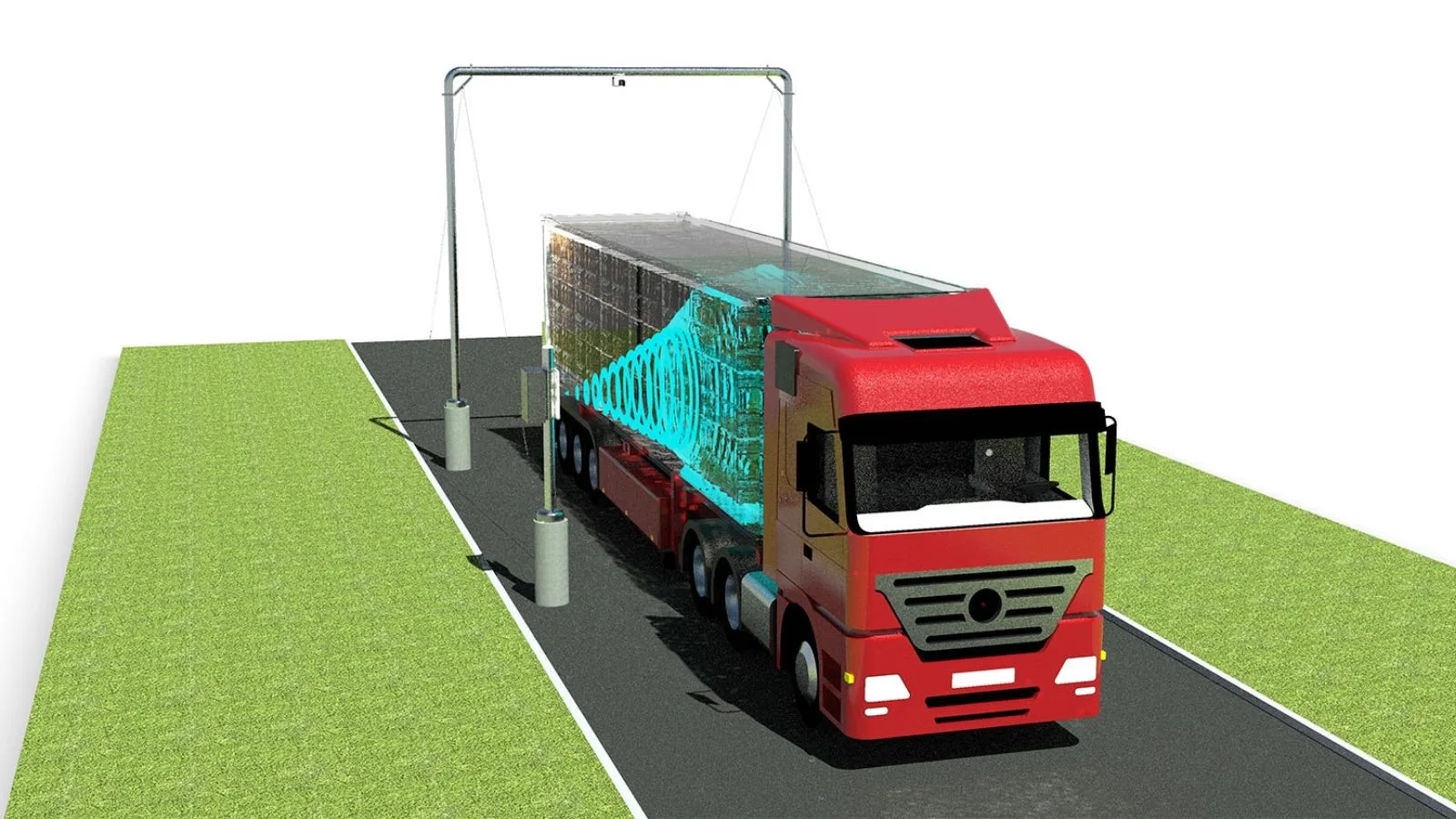
Dunakontroll's HPNA Moisture Measurement System: Accurate and reliable moisture measurement solution.

Dunakontroll’s HPNA Moisture Measurement System

Why choose Outsight as a LiDAR Partner?

Overview of Outsight

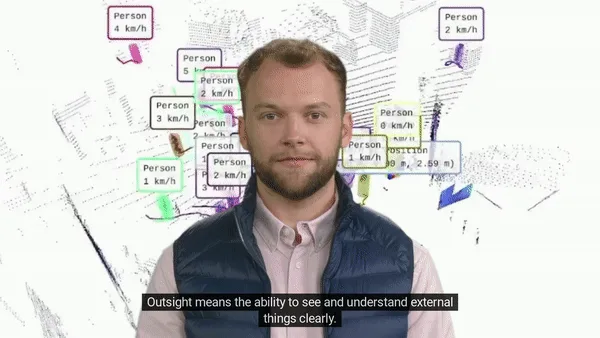
Outsight means the ability to see and understand things clearly: we transform Raw 3D data from different manufacturers into actionable information.

Read article →
In order to offer measurement systems that are increasingly adapted to their customers’ needs, Dunakontroll turned to LiDAR for its high accuracy and ability to operate in all weather and light conditions.
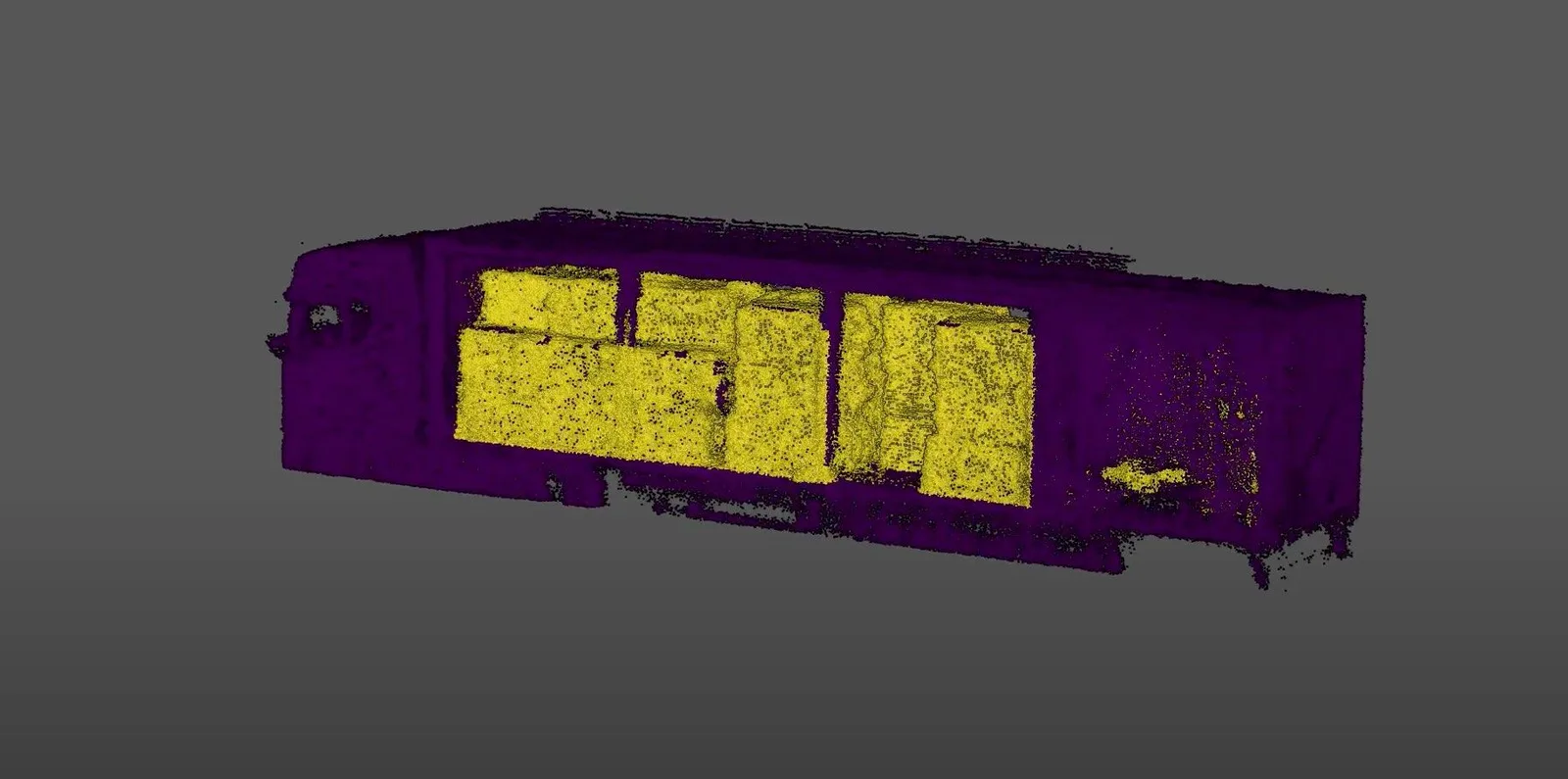
A 3D model of a purple and yellow box, separated from a truck by Outsight's processing software.

Outsight’s processing software separates truck from load

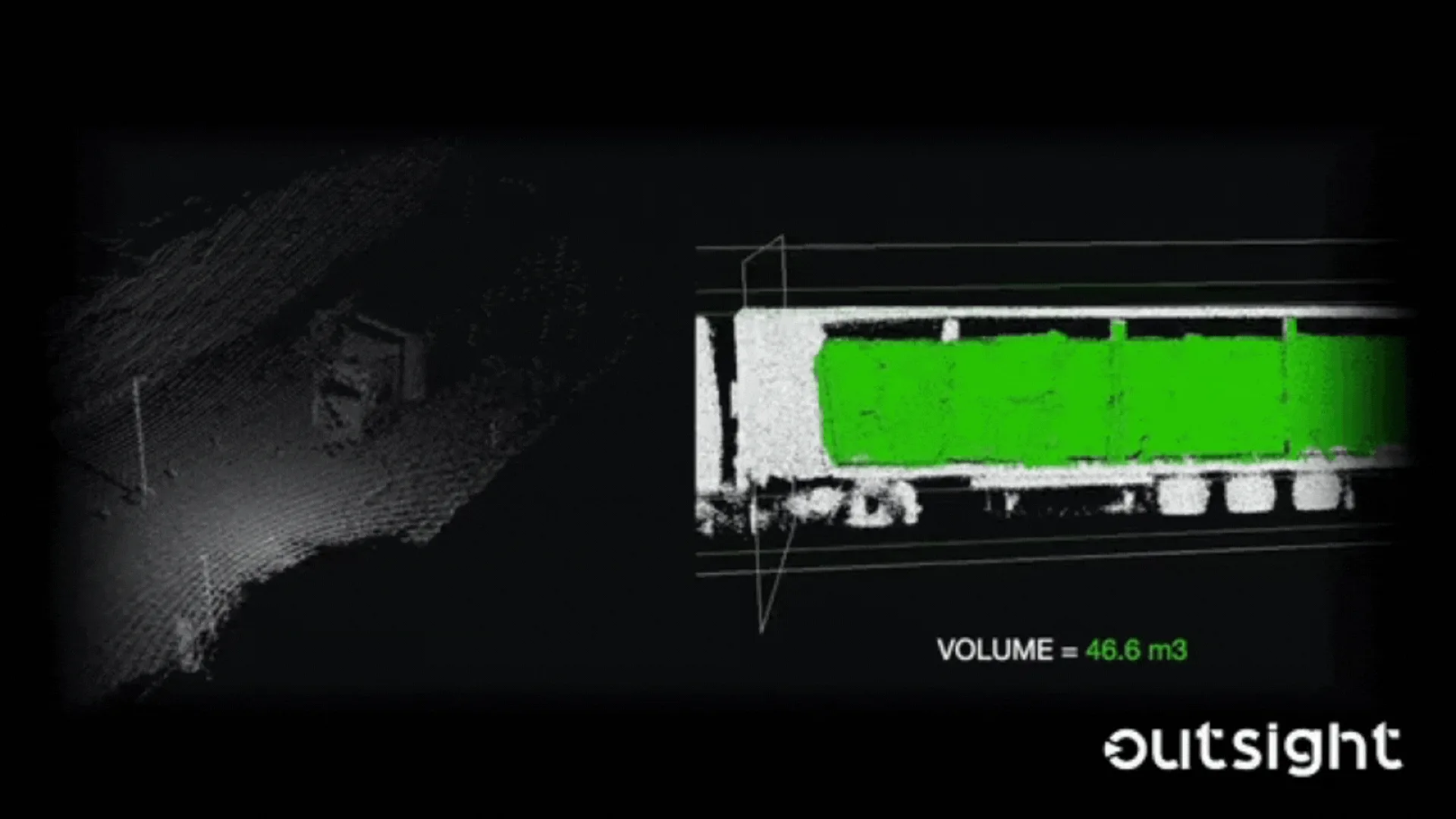
Outsight’s capability to transforms raw LiDAR data into real-time actionable insights enables Dunakontroll to measure not only the volume, but also the moisture content of an entire truck load in less than 2 minutes, even if it’s bagged, in a fully automated way.

In an era where accuracy and efficiency are more crucial than ever, Dunakontroll’s partnership with Outsight showcases the power of LiDAR technology. By eliminating manual interventions and offering rapid, precise measurements, the HPNA system is setting a new benchmark in fibrous material measurement.

After the successful implementation of LiDAR in its systems, Dunakontroll is not stopping at moisture measurement. The company aims to extend its expertise to other sectors, such as wood and agriculture.

The future looks bright, and with Outsight by its side, Dunakontroll is poised to redefine industry standards.

Related Articles

APPLICATIONS

Streamlining Warehouse Operations with LiDAR Inventory Management

Learn how 3D LiDAR solutions can impact the way warehouses manage their inventory for greater accuracy and efficiency

CORPORATE

Outsight in a nutshell

Outsight means the ability to see and understand things clearly: we transform Raw 3D data from different manufacturers into actionable information.

Let's connect

Send us a Message

Drop your email and we'll get back to you as soon as possible.

Frequently Asked Questions

  • How does LiDAR measure the volume of a loaded truck accurately?

    A LiDAR sensor mounted above or beside a truck emits laser pulses that return precise distance measurements across the entire load surface, building a dense 3D point cloud of its geometry. Processing software then separates the truck body from the cargo, reconstructs the cargo's 3D shape, and integrates the bounded volume automatically. Outsight applies this approach in industrial settings through its SHIFT platform, which handles the point-cloud segmentation and volume computation in real time, as demonstrated in its deployment for the paper industry. Because LiDAR works in any lighting condition and measures surfaces directly, it sidesteps the accuracy limits of manual tape measurement or camera-based estimation, particularly for irregular or bagged loads.

  • Why combine microwave sensing with LiDAR for moisture measurement in industrial materials?

    Microwave technology measures moisture content by detecting how much microwave energy a material absorbs, but it cannot determine the volume of the material being measured. LiDAR provides the volumetric dimension microwave sensors lack: it captures the exact 3D shape of a load, so the system can express moisture as a proportion of total material mass rather than as a surface-level reading. Outsight applies this principle in industrial settings through its LiDAR-native perception pipeline, which reconstructs the precise 3D geometry of truck loads in real time. Combining both sensor types produces a complete picture of water content across an entire truck load, without requiring manual sampling.

  • What industries beyond paper production could benefit from automated truck volume and moisture scanning?

    Any bulk-material sector where moisture directly affects weight-based pricing or transport costs is a candidate. Wood processing, where log or chip moisture influences kiln energy consumption and weight tolerances, and agriculture, where grain or silage moisture affects storage decay risk and sale price, are two documented directions. Mining and recycling also handle fibrous or granular loads where manual sampling is slow and volume estimation is imprecise. The underlying capability, real-time 3D measurement of moving vehicles and their payloads using infrastructure-mounted LiDAR, is the same approach Outsight applies across industrial sites such as BMW factories, where tracking objects in motion at sub-50ms latency is a core requirement of the SHIFT platform.

  • How long does it take to scan a full truck load with a LiDAR-based volume measurement system?

    The Dunakontroll HPNA system, powered by Outsight's LiDAR processing software, completes volume and moisture measurement of a full truck load in under two minutes, including bagged materials, in a fully automated workflow. This speed is possible because Outsight's pipeline processes 3D point cloud data in real time, eliminating the manual inspection steps that traditionally require personnel to be present at the truck. Traditional methods are substantially slower and introduce both time cost and measurement variability, making the automated approach a significant operational improvement for industrial sites such as paper mills handling continuous truck traffic.

  • Does moisture content in a truckload affect transportation and storage costs in practice?

    Water weight is deadweight: a truckload with 15% excess moisture carries proportionally more mass without adding product value, raising fuel consumption, axle-load compliance risk, and handling costs at every stage. In the paper industry, inaccurate moisture figures at point of sale can shift cost liability between buyer and seller. Accurate, rapid measurement at the loading or delivery point allows operators to catch discrepancies before goods move further down the supply chain. This is the operational context behind Outsight's industrial LiDAR application with Dunakontroll, where precise 3D volume measurement of truck payloads gives site managers the data needed to reconcile declared and actual loads at the point of transfer, reducing downstream disputes and cost exposure.

  • Can LiDAR-based volume measurement work reliably on materials inside bags rather than loose bulk?

    Yes. Bagged materials present a structured outer surface that LiDAR point clouds capture at the same accuracy as loose bulk, because the sensor measures the geometry of whatever surface is present, not the material itself. Outsight's industrial LiDAR pipeline applies this same principle in truck volume measurement deployments, where the processing step separates the truck body from the stacked bag profile and computes the occupied volume from that outer boundary. The practical limitation is that internal air gaps between bags are included in the measured volume, which system integrators account for through calibrated packing-density factors applied after the geometric measurement is complete.