Skip to content
Insights
Safran Selects Outsight to Advance Development of Autonomous Solutions

Safran chooses Outsight to accelerate Autonomous solutions development

Safran and Outsight announce their partnership on autonomous mobility technologies


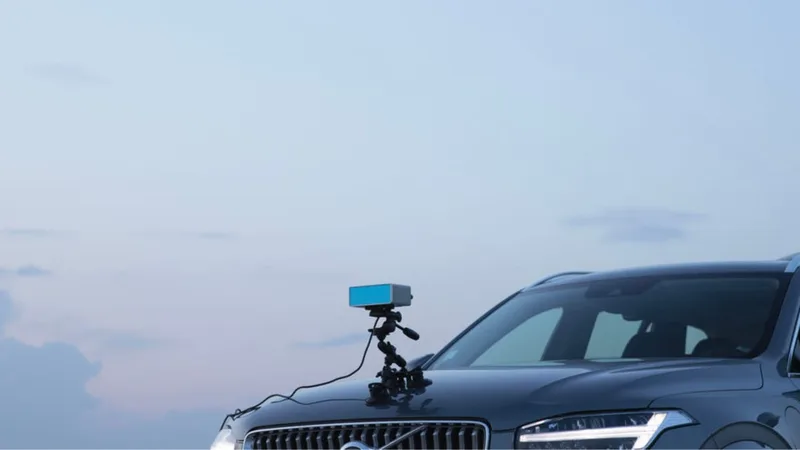
Outsight develops innovative solutions that allow autonomous vehicles to simultaneously perceive and understand their environment in 3D.

These new capabilities are part of Safran’s strategy in the automation of vehicles and smart-machines.

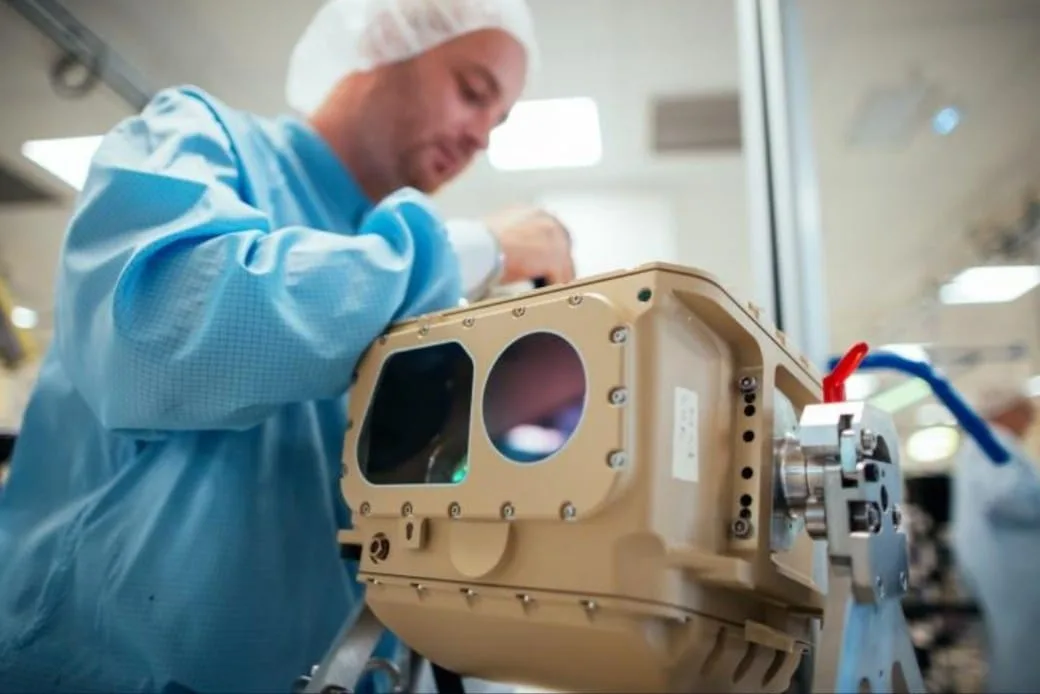
This agreement is part of Safran’s strategy to prepare for vehicle empowerment and related equipment. As a European leader in tactical UAVs and with strong ground robotics developments, like the” Furious” project for the DGA, Safran is currently at the forefront in the field of platform empowerment.

This agreement allows our two companies to pool their skills to integrate technological bricks developed by Outsight into Safran products. ” said Martin Sion, President of Safran Electronics & Defense.

The partnership signed between Safran and Outsight includes specific projects for the codevelopment of solutions combining Outsight and Safran technologies, for applications such as off-road vehicles, drones or aircraft during taxiing.

We were impressed by Safran’s technological know-how and vision in areas adjacent to ours, including 3D laser perception and automation. Their ability to integrate our technology into their solutions is an undeniable asset. We are honored by the trust shown by this multi-faceted partnership, says Raul Bravo, co-founder and President of Outsight.

About Safran Safran is an international high-technology group, operating in the aircraft propulsion and equipment, space defense markets. Safran has a global presence, with more than 95,000 employees and sales of 21 billion euros in 2018. Working alone or in partnership, Safran holds world or European leadership positions in its core markets. Safran undertakes Research & Development programs to meet fast-changing market requirements, with total R&D expenditures of around 1.5 billion euros in 2018.

Safran is listed on the Euronext Paris stock exchange, and is part of the CAC 40 and Euro Stoxx 50 indices.
Related Articles

AIRPORTS

Aeroporti di Roma to deploy Outsight's Physical AI solution at scale across Rome Fiumicino Airport

Aeroporti di Roma (ADR) is expanding its collaboration with Outsight to a large-scale deployment across almost all Schengen common-use areas at Rome Fiumicino Airport.

CORPORATE

Intel and Outsight Announce Strategic Collaboration to Bring Physical AI–Powered Spatial Intelligence to the Enterprise Edge

Outsight’s Shift platform integrated into Google Distributed Cloud Edge powered by Intel Xeon 6 SoC – Live demonstration at Google Cloud Next 2026

Let's connect

Send us a Message

Drop your email and we'll get back to you as soon as possible.

Frequently Asked Questions

  • What is Safran Electronics and Defense known for in autonomous systems?

    Safran Electronics and Defense is the division of Safran responsible for tactical UAVs and ground robotics programs. One publicly named project is "Furious," developed for the DGA (France's defense procurement agency). The division positions itself as a European leader in platform empowerment, meaning the integration of autonomous navigation and situational awareness into military and industrial vehicles, drones, and aircraft. To accelerate that work, Safran Electronics and Defense partnered with Outsight, whose Infrastructure-based Physical AI and 3D LiDAR perception software provide the real-time spatial intelligence needed to advance autonomous mobility solutions.

  • What does 3D LiDAR perception add to drone or UAV autonomy that GPS alone cannot provide?

    GPS provides global position but carries no information about the immediate physical environment: obstacles, terrain, or other vehicles. A 3D LiDAR perception layer maps the surrounding environment in real time, allowing a platform to detect and avoid objects, navigate in GPS-denied conditions (tunnels, urban canyons, indoor spaces), and understand the geometry of its surroundings at centimeter-level precision. That combination is what makes fully autonomous operation practical in complex, unstructured environments. Outsight's work with Safran on autonomous mobility technologies applies this same 3D perception capability, using infrastructure-based LiDAR processing to deliver the precise, real-time spatial awareness that drone and UAV autonomy requires beyond what satellite positioning alone can offer.

  • What is aircraft ground taxiing autonomy and why is LiDAR relevant to it?

    Autonomous taxiing refers to an aircraft navigating airport aprons and taxiways without pilot input after landing or before takeoff. The environment is geometrically complex: ground vehicles, service personnel, other aircraft, and variable weather conditions all create dynamic obstacles that must be detected and avoided. LiDAR is relevant because it provides a 3D map of the immediate surroundings regardless of lighting or fog, enabling onboard or infrastructure-side perception systems to detect obstacles and plan safe paths in real time. Outsight's partnership with Safran brings this infrastructure-based perception approach to autonomous mobility, applying the same LiDAR-native, sub-50ms pipeline that powers Outsight's Motional Digital Twin deployments at major airports to the specific challenge of aircraft ground autonomy.

  • How does off-road autonomous vehicle perception differ from highway autonomous driving?

    Highway autonomous driving operates on predictable road geometry with lane markings, structured signage, and rule-compliant vehicles. Off-road environments lack all of that: terrain is irregular, there are no lanes, obstacles are unpredictable (rocks, vegetation, trenches), and GPS coverage may be intermittent. Perception systems for off-road platforms must therefore rely more heavily on real-time 3D sensing to build situational awareness from the raw environment rather than from map priors. This is precisely the domain where LiDAR-native perception becomes critical, and it underpins the Outsight and Safran partnership on autonomous mobility technologies, where Outsight's sub-50ms 3D perception pipeline is applied to accelerate autonomous solution development for complex, unstructured environments.

  • What is co-development in the context of a deep-tech software and defense hardware partnership?

    In a co-development agreement between a software company and a hardware or systems integrator, both parties contribute proprietary technology toward a shared output, typically a working subsystem. The software provider supplies perception or analytics algorithms; the integrator contributes platform knowledge, ruggedization, and certification pathways. The Safran and Outsight partnership follows this model: Outsight brings its Infrastructure-based Physical AI software and the SHIFT platform's 3D perception capabilities, while Safran contributes deep expertise in defense-grade hardware and systems integration. The resulting product combines capabilities neither company could efficiently build alone, and intellectual property terms define how the jointly developed components are licensed or owned.

  • Why do defense and aerospace primes seek external LiDAR software partners rather than developing perception in-house?

    Real-time 3D LiDAR processing at scale requires narrow and deep specialization in point-cloud algorithms, multi-sensor fusion, and low-latency edge execution. Defense primes like Safran excel at systems integration, certification, and platform engineering, but building a competitive perception software stack from scratch would take years and divert R&D budget from core competencies. Partnering with a specialist compresses time-to-capability and gives access to a sensor-agnostic stack already validated across multiple hardware vendors. That logic is reflected in Safran's choice of Outsight, whose SHIFT platform offers LiDAR-native perception compatible with hardware from Hesai, RoboSense, Ouster, and others, and processes 3D data end-to-end in under 50 milliseconds, providing a foundation that would otherwise require years to replicate internally.