
Skip to content
Insights
Outsight Joins the Lidar Coalition as the Founding Software Member

Outsight Joins the Lidar Coalition as the Founding Software Member

Outsight, as the Founding Software Member, join forces with LiDAR manufacturers coalition' Founders accelerate and facilitate LiDAR adoption


The LiDAR Coalition was formed to advocate for policies promoting lidar’s role in enhancing safety on U.S. roadways and infrastructure, including mitigating the staggering rise in pedestrian fatalities on roadways in the United States, and for autonomous vehicle operations.

Outsight, as the Founding Software Member, join forces with LiDAR manufacturers coalition’ Founders Aye, Cepton, Continental, Innoviz, Ouster, Quanergy and Velodyne, as well as recently joined new members Aeluma, Baraja, Ibeo and Valeo.

You can find the Press Release here.

Why the LiDAR Coalition?

“Lidar-based vehicle technology has the potential to prevent pedestrian deaths and vehicle accidents, particularly in low-light and low-visibility environments,” said Ariel Wolf, Chair of the Autonomous and Connected Mobility Practice Group at Venable LLP, which serves as counsel to the Coalition.

The National Highway Traffic Safety Administration estimated that 42,915 people died on U.S. roadways in 2021, the highest number of fatalities since 2005 and the highest annual percentage increase in the recorded history of data in the Fatality Analysis Reporting System. Pedestrian fatalities also increased by 13% over 2020, which outpaced the 10.5% increase in overall fatalities.

Seventy-five percent of pedestrian deaths happen in low-light conditions, such as dusk and nightfall, that could be addressed using LiDAR technology.

Our role as Founding Software Member

“It is becoming increasingly well known how valuable lidar sensing hardware is for improving safety and lowering accidents. We are pleased to contribute to the Lidar Coalition by adding the software component that will accelerate and facilitate its mass adoption and hence broaden its beneficial effects,” said Raul Bravo, President and founder of Outsight.

Enabling software is in fact evolving into a crucial element in the effort to hasten the deployment of LiDAR technology and maximize its possibilities across all markets.

As the Founding Software Member we aim to contribute with our unique experience in applying LiDAR Software to dozens of different use cases all around the world as well as providing greater awareness on the technology and its applications.

Related Articles

AIRPORTS

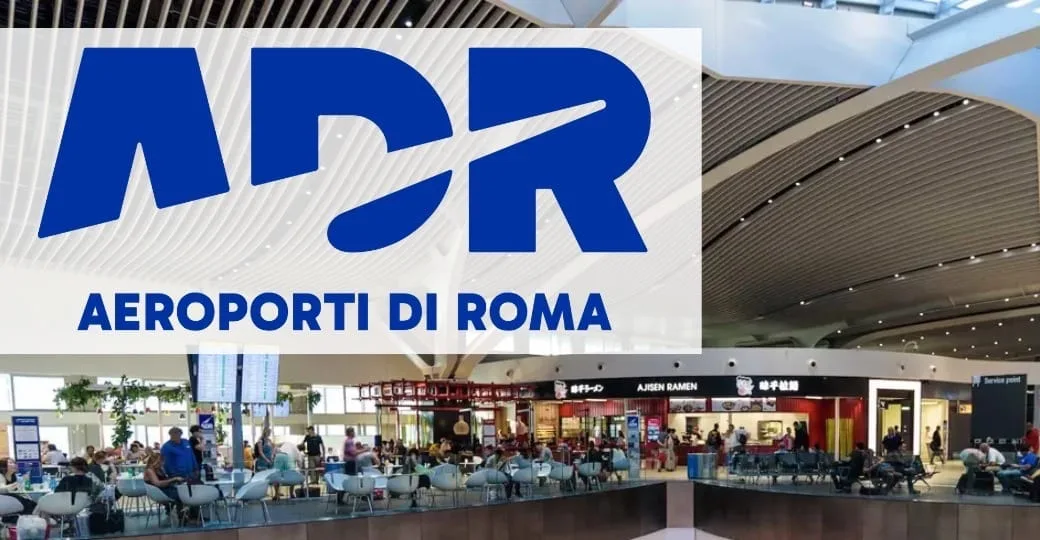
Aeroporti di Roma to deploy Outsight's Physical AI solution at scale across Rome Fiumicino Airport

Aeroporti di Roma (ADR) is expanding its collaboration with Outsight to a large-scale deployment across almost all Schengen common-use areas at Rome Fiumicino Airport.

CORPORATE

Intel and Outsight Announce Strategic Collaboration to Bring Physical AI–Powered Spatial Intelligence to the Enterprise Edge

Outsight’s Shift platform integrated into Google Distributed Cloud Edge powered by Intel Xeon 6 SoC – Live demonstration at Google Cloud Next 2026

Let's connect

Send us a Message

Drop your email and we'll get back to you as soon as possible.

Frequently Asked Questions

  • What is the LiDAR Coalition and what does it do?

    The LiDAR Coalition is a group of LiDAR hardware manufacturers and technology companies that advocates for U.S. policies promoting LiDAR use in roadway safety and autonomous vehicle operations. Its founding hardware members include companies such as Innoviz, Ouster, Velodyne, Continental, and Valeo. Outsight joined the coalition as its Founding Software Member, reflecting the organization's intent to unite both hardware and software expertise in accelerating LiDAR adoption. The coalition's policy focus is partly shaped by U.S. traffic fatality data: the National Highway Traffic Safety Administration recorded 42,915 roadway deaths in 2021, the highest annual percentage increase in the history of the Fatality Analysis Reporting System.

  • How much of pedestrian road fatalities happen in low-light conditions?

    Seventy-five percent of pedestrian deaths on U.S. roadways occur in low-light conditions such as dusk and nightfall. This figure is central to the policy case for LiDAR in road safety: unlike cameras, LiDAR is an active sensor that emits its own laser pulses and measures how they return, so lighting conditions have no effect on detection accuracy. That property makes it directly applicable to the dominant scenario in which pedestrians are struck. Outsight applies this capability at infrastructure scale through the SHIFT platform, which uses infrastructure-based LiDAR to track pedestrian movement in real time, including in low-light environments, as demonstrated in smart-city deployments such as the City of Bellevue's Vision Zero intersections.

  • What is the difference between a LiDAR hardware coalition member and a software member?

    Hardware members of the LiDAR Coalition manufacture the physical sensors: the spinning or solid-state units that emit laser pulses and capture point clouds. A software member contributes the processing layer that converts those raw point clouds into actionable data, producing tracked entities, behavioral classifications, occupancy counts, and alerts. Without that software layer, raw sensor output is a stream of millions of unstructured 3D points per second, not something an operator or a traffic system can act on directly. Outsight joined as the founding software member to represent that processing layer within the coalition, bringing its SHIFT platform, which is already deployed across airports, train stations, factories, and smart-city intersections on five continents to translate LiDAR point clouds into real-time Motional Digital Twins.

  • Why does LiDAR software matter as much as the sensor hardware for mass adoption?

    A LiDAR sensor produces a raw 3D point cloud at high frame rates. Turning that data into usable output, tracking every pedestrian, classifying behavior, and surfacing alerts in under 50 milliseconds, requires significant software engineering. Hardware commoditization tends to accelerate when processing software becomes available across multiple sensor models. Outsight addresses this directly through the SHIFT platform, which operates across a wide range of LiDAR hardware vendors including Hesai, RoboSense, Ouster, and Velodyne, lowering integration costs for system integrators and end operators. Sensor-agnostic software of this kind removes one of the practical barriers that slows deployment beyond the automotive sector, which is why Outsight's role as the Founding Software Member of the Lidar Coalition reflects a broader industry recognition that the software layer is as critical as the sensor itself.

  • Did U.S. pedestrian fatalities increase more or less than overall road fatalities in 2021?

    Pedestrian fatalities increased by 13% in 2021 compared to 2020, outpacing the 10.5% increase in overall road fatalities for the same period, according to the National Highway Traffic Safety Administration. That gap matters for technology policy: pedestrians are disproportionately vulnerable in scenarios where LiDAR performs best, such as low-light and low-visibility environments. This is precisely why the LiDAR Coalition frames its advocacy around pedestrian safety alongside broader autonomous vehicle goals. Outsight, the coalition's Founding Software Member, addresses this vulnerability through infrastructure-based LiDAR deployments, including smart-city intersections like those in the City of Bellevue's Vision Zero program, where 3D perception tracks pedestrian movement anonymously in real time to reduce collision risk.

  • Is LiDAR for road safety only relevant to autonomous vehicles, or does it apply to fixed infrastructure too?

    Most early LiDAR road-safety discussions centered on onboard autonomous vehicle perception, but fixed infrastructure deployment is a distinct and complementary application. Sensors mounted on poles, gantries, or traffic signals produce a shared, site-wide view of an intersection or corridor that benefits every vehicle passing through, not just those equipped with their own sensors. This infrastructure-based model is exactly how Outsight applies LiDAR through its SHIFT platform: sensors are fixed in the environment rather than on the moving vehicles themselves, enabling a real-time spatial picture that is anonymous by definition. Outsight's deployment with the City of Bellevue for its Vision Zero initiative demonstrates how this approach translates directly to road-safety outcomes, tracking pedestrian and vehicle movement at intersections without capturing faces or license plates.