LAS VEGAS and PARIS, April 21, 2026,
Intel Corporation and Outsight, the global leader in 3D Spatial Intelligence, whose platform equips some of the world’s largest international airports, train stations, hospitals, and venues, today announced a strategic collaboration to accelerate the deployment of physical AI solutions for real-time people and objects flow monitoring at enterprise scale.
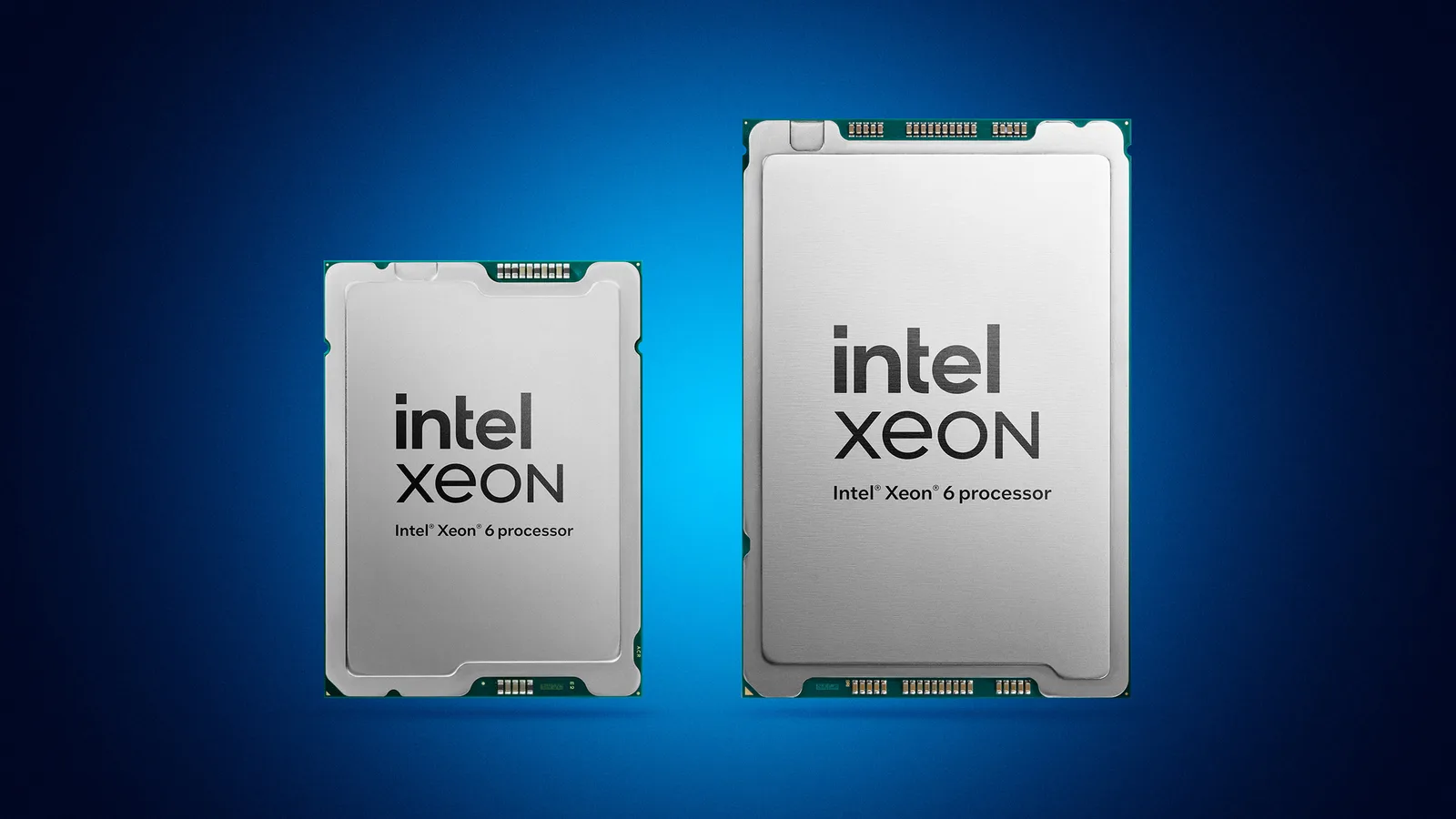
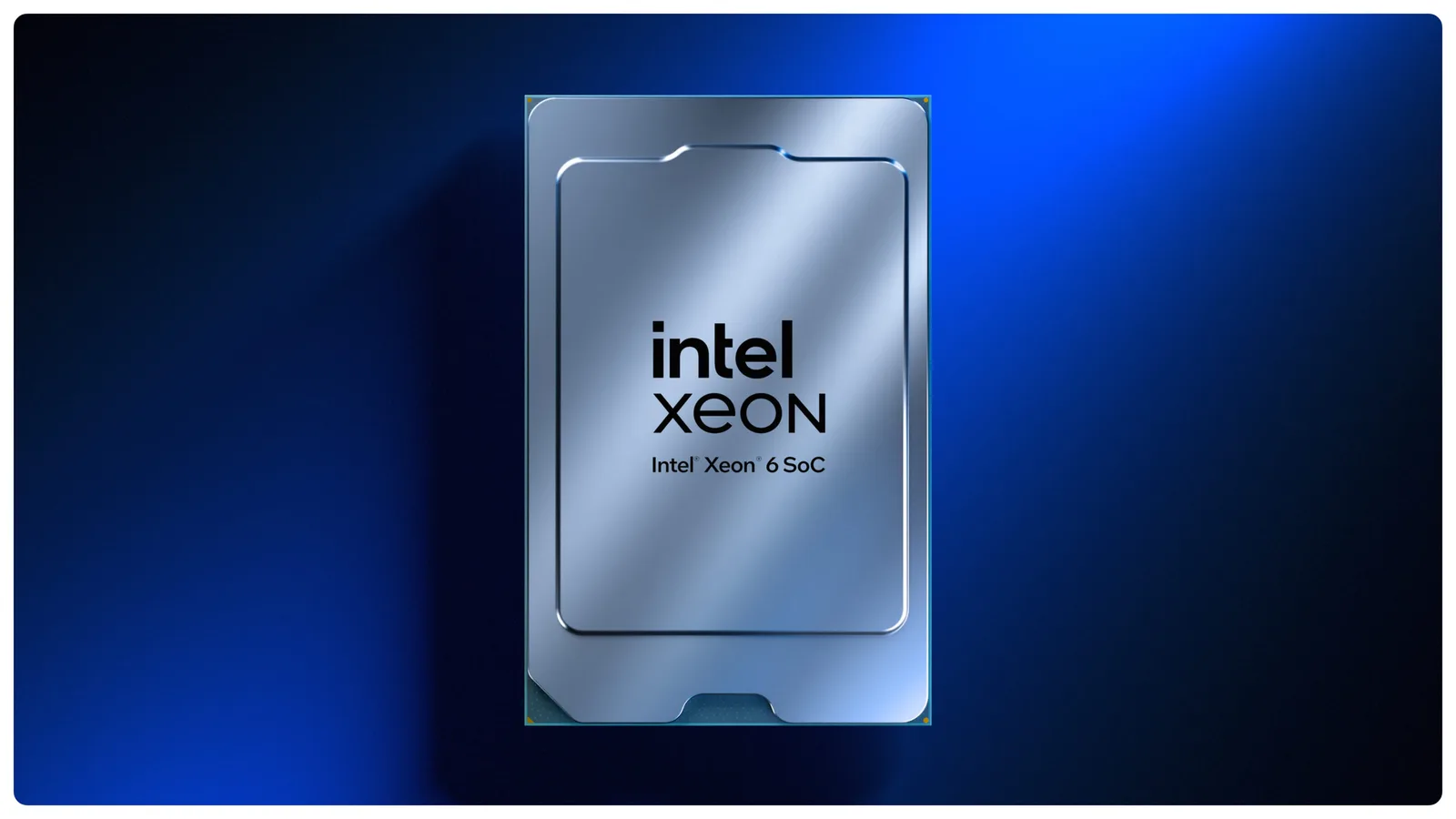
As part of this collaboration, Outsight’s Shift platform has been integrated into the latest version of Google Distributed Cloud (GDC) Edge, combining Intel Xeon 6 SoC with AMX (Advanced Matrix Extensions) for accelerated CPU-based inferencing and Outsight’s advanced 3D real-time processing platform to deliver turnkey physical AI capabilities directly at the edge of enterprise networks.
Intel Unveils Leadership AI and Networking Solutions with Xeon 6 Processors
Intel completes Xeon 6 portfolio of processors, delivering a CPU for the broadest set of workloads in the industry.
Learn more →
A live demonstration of the integrated solution will be showcased at the Intel booth (#6901) during Google Cloud Next 2026, taking place April 22–24 at the Mandalay Bay Convention Center in Las Vegas.
Bringing Physical AI to Enterprise Infrastructure
The collaboration addresses the growing demand from operators of airports, train stations, industrial facilities, smart cities, and large venues for real-time, privacy-preserving intelligence about how people, robots and vehicles move through their physical environments.
Outsight’s physical AI software processes data from 3D LiDAR sensors, combined with multiple data sources including camera and business data systems (e.g. AODB, PoS), to continuously track the movement of people and objects.
What is Physical AI?
Physical AI is an advanced technology approach that processes real-world sensory data to understand and analyze physical environments in real-time.
Read article →
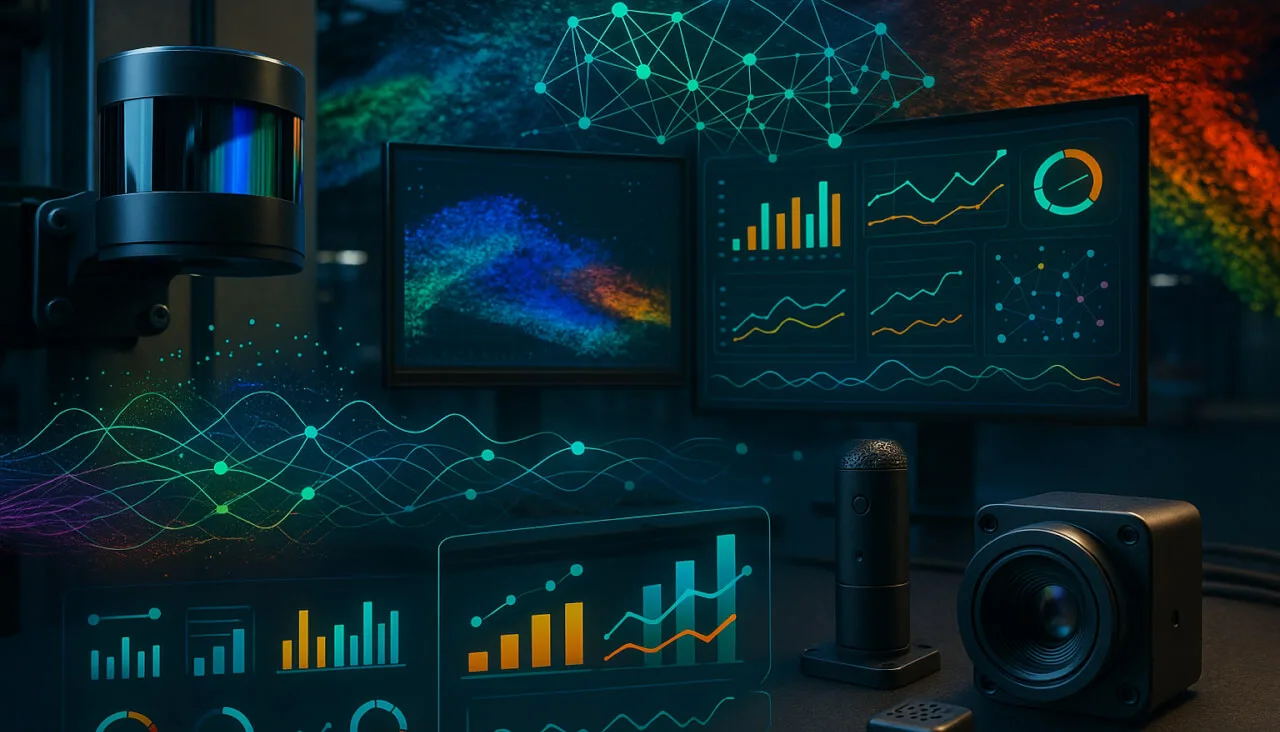
These insights are delivered through Motional Digital Twins, real-time 3D digital replicas of physical flows that serve as the operational interface through which end users monitor, analyze, predict, and optimize their environments.
By running natively on Xeon 6 SoC processors without requiring power-intensive GPUs, the solution delivers cost-effective, scalable 3D AI inference at the edge.
The integration into Google Distributed Cloud Edge enables enterprise customers to deploy the Shift platform as a managed, cloud-connected edge workload, benefiting from streamlined operations, centralized management, and Google Cloud’s security and scalability framework.
Raising the Bar: Global Situation Awareness for Robots
The integrated solution goes beyond people and vehicle flow monitoring by enabling global situation awareness, a shared, real-time representation of reality with temporal and spatial continuity, available to all operators and mobile robots on site.
In complex environments such as factories, warehouses, and airports, mobile robots are inherently limited by their onboard sensors and available processing: blind spots, occlusions, and instantaneous perception prevent them from understanding what lies beyond their immediate field of view.
What’s a Motional Digital Twin?
How the third generation of Digital Twin technology is transforming the way infrastructure operators understand and optimize the movement of people and vehicles.
Read article →
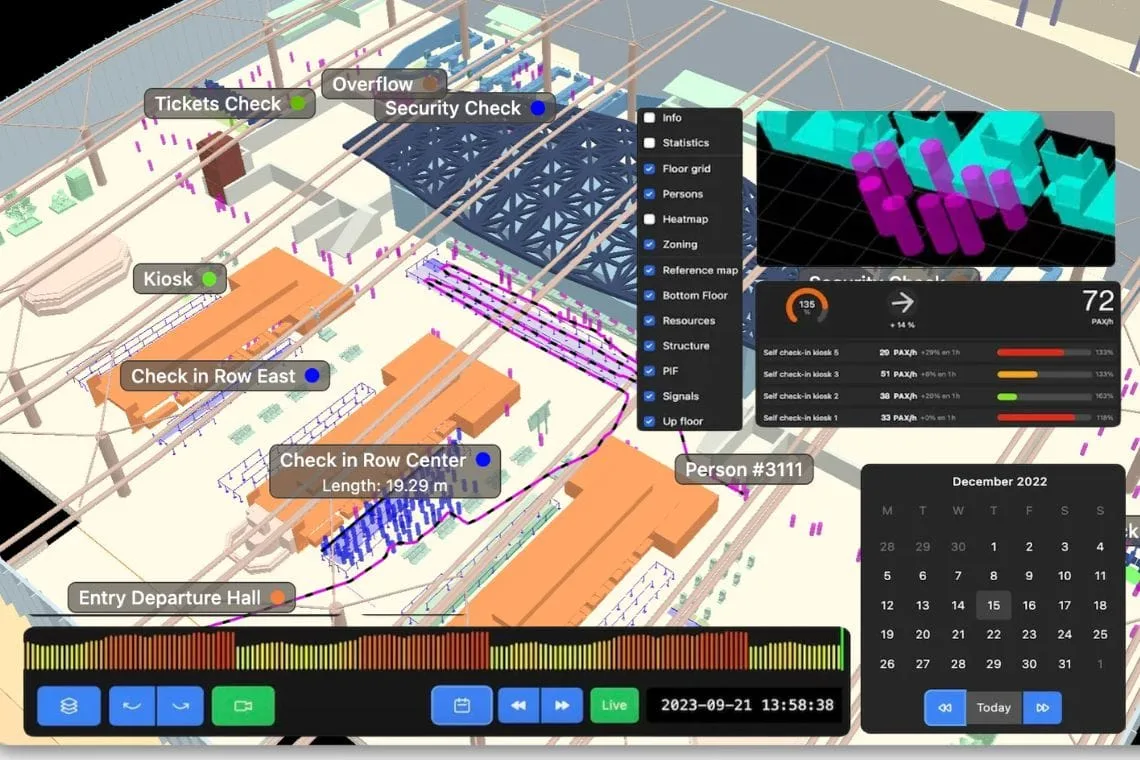
Motional Digital Twins solve this by providing an infrastructure-level intelligence layer that continuously tracks every person, vehicle, and object across the entire premises, assigning a unique anonymous ID maintained over time.
In effect, the infrastructure becomes a global sensor and intelligence layer, giving each robot the capability to see and understand everything happening across the site, in real time.
This enables three foundational capabilities for robotics and operations:
Continuous Individual Tracking, precisely positions each person or object across large distances without interruption, overcoming the limitation of visual line-of-sight, and making every position immediately available to all robots and operators on site.
Situational Awareness, perceiving the environment globally, beyond the line of sight of each individual robot, and associating external data, event history, and attributes with each tracked entity.
Actionable Insights and Prediction, interpreting situations at scale, deriving decision-ready intelligence, and anticipating future states across the entire premises.
Live Demonstration at Google Cloud Next 2026
At Google Cloud Next 2026, Intel and Outsight will present a live, full-scale demonstration of the integrated physical AI solution at Intel’s booth.
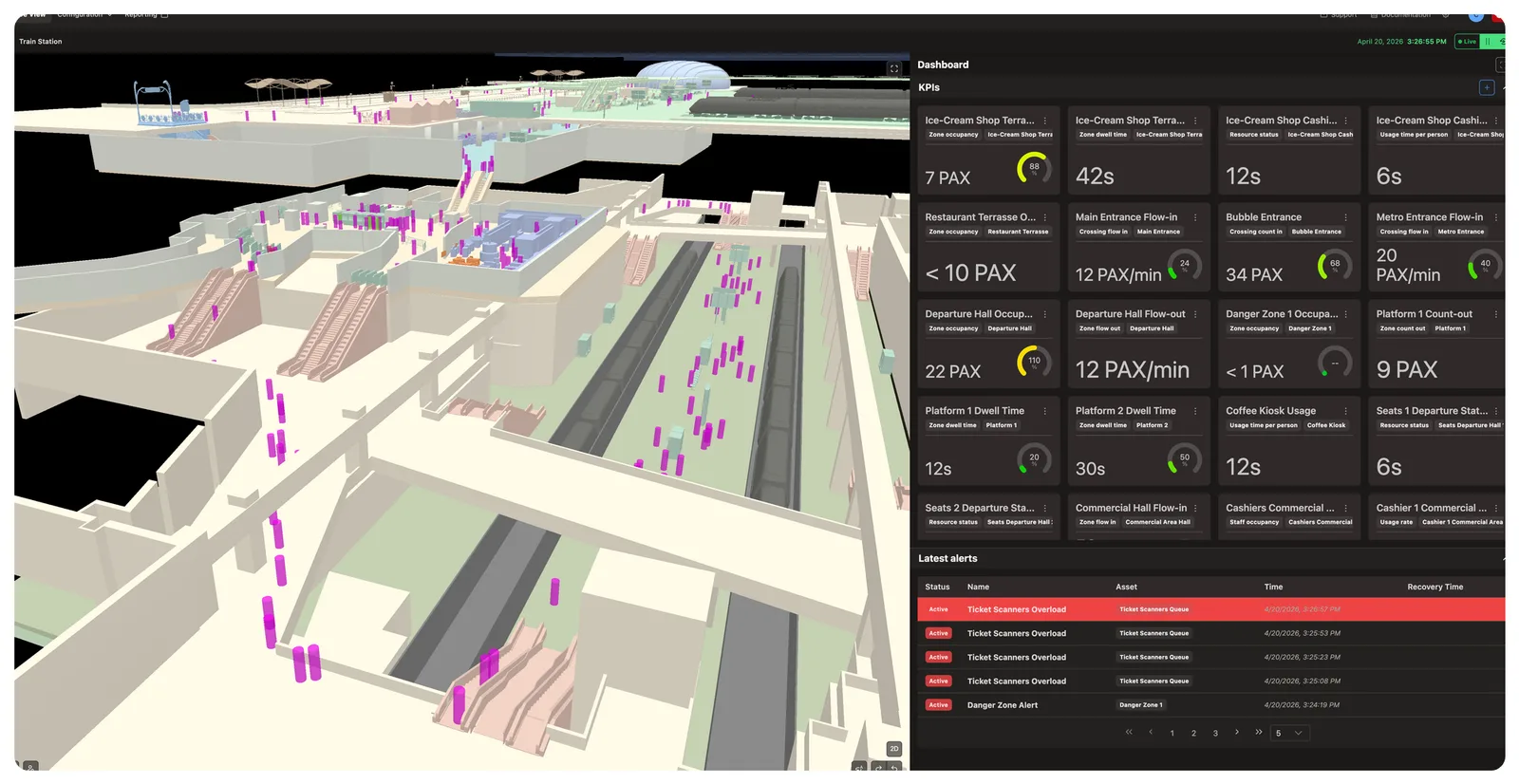
Attendees will experience firsthand how the platform processes millions of 3D data points per second to detect, classify, and track individuals and objects in real time, all while preserving privacy through anonymous, non-image-based sensing.
The demonstration will showcase key capabilities including real-time crowd density monitoring, queue management analytics, flow visualization through a live Motional Digital Twin, and predictive operational insights, all running on Intel-powered edge infrastructure within the Google Distributed Cloud framework.
Industry Perspectives
“This strategic collaboration with Intel represents a major milestone in making physical AI accessible at scale across critical infrastructure worldwide. Said Raul Bravo, President and Co-founder of Outsight. By integrating our Shift platform into Google Distributed Cloud Edge, powered by Intel’s processors, we are enabling operators of airports, stations, factories, and smart cities to deploy a real-time 3D replica of everything moving across their premises, while providing global situation awareness to mobile robots, as a standard component of their edge infrastructure. Together, we are setting a new standard for how organizations understand and optimize the physical world.”
“Enterprise AI is about bringing intelligence closer to where decisions are made, at the edge. Our collaboration with Outsight demonstrates how Intel’s edge computing platform, combined with best-in-class physical AI software and the Google Distributed Cloud, enables organizations to transform their physical operations with real-time, CPU-based 3D AI inference. Emphasized Bhupesh Agrawal, General Manager, Private 5G and Enterprise AI, Intel. This is exactly the kind of scalable, cost-effective solution that enterprises need to unlock the full potential of physical AI.”
Key Benefits of the Integrated Solution
Real-time Physical AI at the Edge: Outsight’s Shift platform processes massive 3D LiDAR data streams in real time on Intel Xeon 6 SoC processors, delivering sub-100-millisecond insights without cloud round trips.
Privacy by Design: The solution uses anonymous 3D point cloud data, with no facial recognition and no personal data captured, ensuring compliance with GDPR and other privacy regulations.
Global Situation Awareness for Robots: Motional Digital Twins provide mobile robots with premises-wide, context-aware intelligence that extends beyond their onboard sensors, enabling safer navigation, smarter path planning, and coordinated fleet operations.
Scalable and Cost-Effective: CPU-based AI inference eliminates the need for expensive GPU infrastructure, lowering total cost of ownership while enabling deployment across thousands of locations.
Hardware-Agnostic 3D Sensing: The Shift platform is compatible with LiDAR sensors from all leading manufacturers, giving operators the freedom to choose the best hardware for their specific environment.
Multi-Modal Data Fusion: Contextual information from LiDAR, cameras, business data systems, and other sources is fused into a unified spatial reference, enriching situational awareness beyond what any single sensor can provide.
Cloud-Managed Edge Deployment: Integration with Google Distributed Cloud Edge provides centralized management, automated updates, and enterprise-grade security for distributed edge deployments.
Proven at Scale Across Five Continents
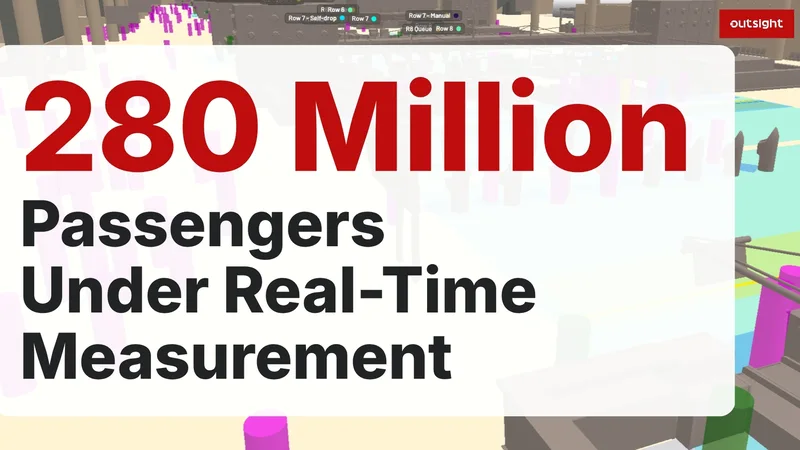
Outsight’s Spatial Intelligence solutions are already deployed at scale in major airports, train stations, stadiums, industrial sites, and smart cities across five continents, monitoring the journeys of over 280 million people per year.
Dallas Fort Worth Airport Selects Outsight for the World’s Largest 3D LiDAR Deployment
Dallas Fort Worth, a major US Airport, selects Outsight for the largest 3D LiDAR deployment to enhance safety, operations, and passenger flow with Spatial Intelligence.
Read article →
The company has received seven citations as emerging leader from Gartner in the digital twin and spatial computing markets, and has been recognized with numerous industry awards including the CES Best of Innovation Award, the Frost & Sullivan Global Technology Innovation Leadership Award, the Edge AI and Vision Product of the Year, the LiDAR Leader Award, and the Airport Technology Excellence Award.