Skip to content
Insights
Outsight partners with Robotics Manufacturer Enchanted Tools

Outsight and Enchanted Tools bring Beyond Line-of-Sight awareness to Service Robots

Outsight and Enchanted Tools partner to give Mirokaï service robots real-time, premises-wide situational awareness, starting with hospitals and airports.


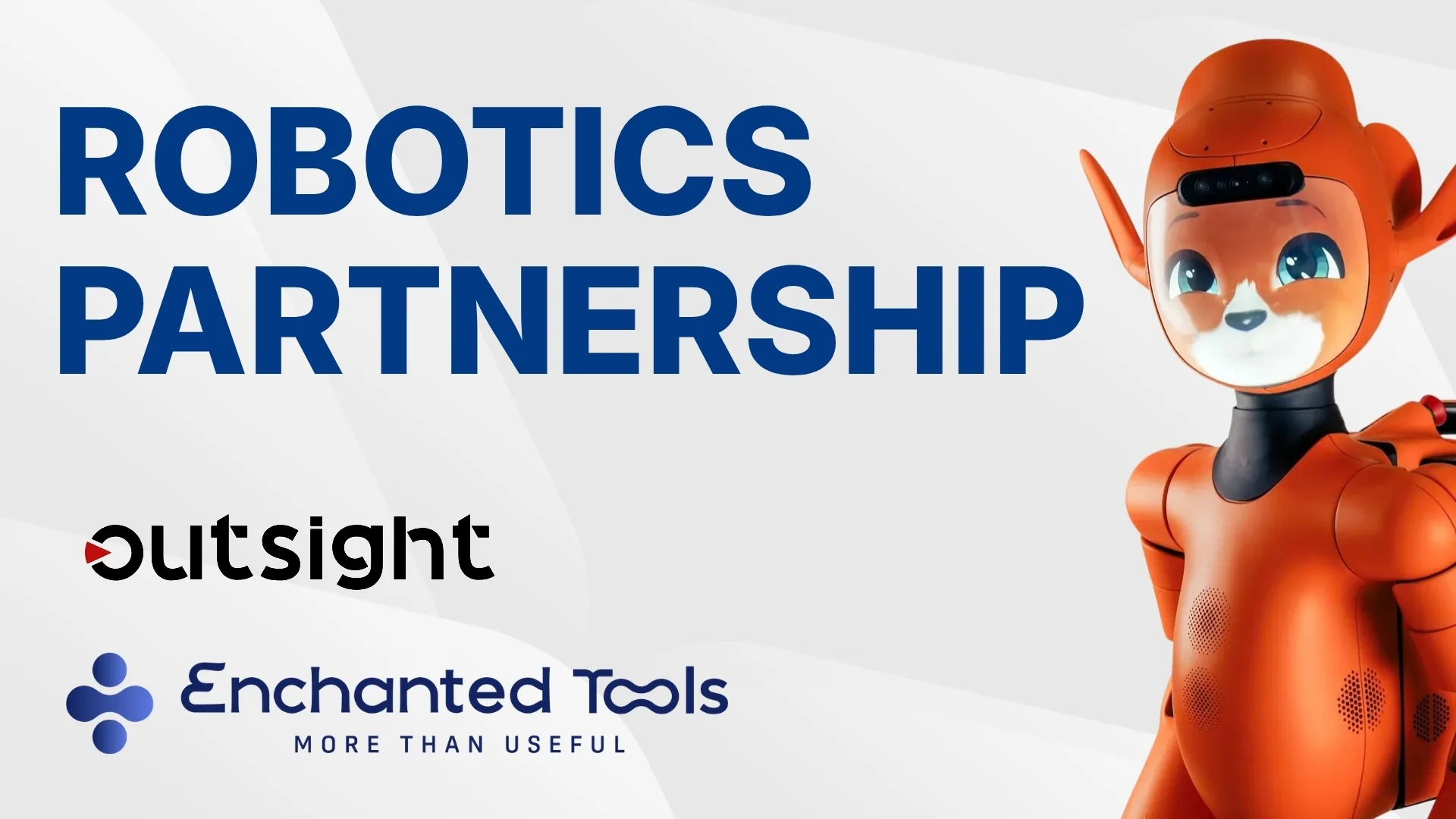
Paris, September 29, 2026. Outsight, the global leader in infrastructure-based Physical AI, and Enchanted Tools, the Paris-based creator of the Mirokaï autonomous robotic characters, today announced a strategic partnership to give service robots real-time, premises-wide situational awareness, starting with hospitals and airports.

The partnership puts into operation the principles laid out in Outsight’s whitepaper, Beyond Line-of-Sight Physical AI for Robots: intelligence embedded in the infrastructure acts as a shared awareness layer, available to every robot on site, whatever its manufacturer or onboard capabilities.

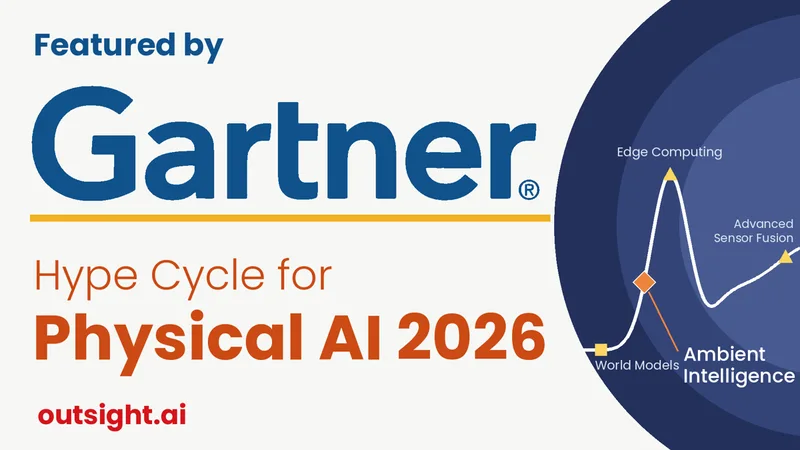
This is the approach Gartner describes as Ambient Intelligence, the category where Outsight was named a leading vendor in the Gartner Hype Cycle for Physical AI, 2026, alongside the world’s largest technology companies.

Outsight named in the Gartner Hype Cycle for Physical AI, 2026

Gartner names Outsight a leading vendor in Ambient Intelligence, alongside AWS, Google, Microsoft and Siemens, confirming its lead in infrastructure-based Physical AI.

Read article →
Enchanted Tools brings a complementary approach to Physical AI, building robots specifically designed to operate in shared human environments.

Mirokai Robot

Its Mirokaï combine autonomous mobility, object manipulation and natural interaction in a distinctive robot-character design that makes their presence immediately understandable and approachable.

Robots that understand the whole building

World models are emerging as the next frontier of AI: internal representations that let machines anticipate how a scene will evolve before they act.

Every robot builds its own from onboard sensors, covering the space immediately around it. The partnership extends each Mirokaï’s understanding to the entire premises by connecting it to the site’s Dynamic World Model, delivered by Outsight’s Motional Digital Twin: a new generation of living, semantic and fully anonymous 3D representation that continuously tracks every person, vehicle and robot present, understands their behaviors and interactions, and anticipates the situations they announce.
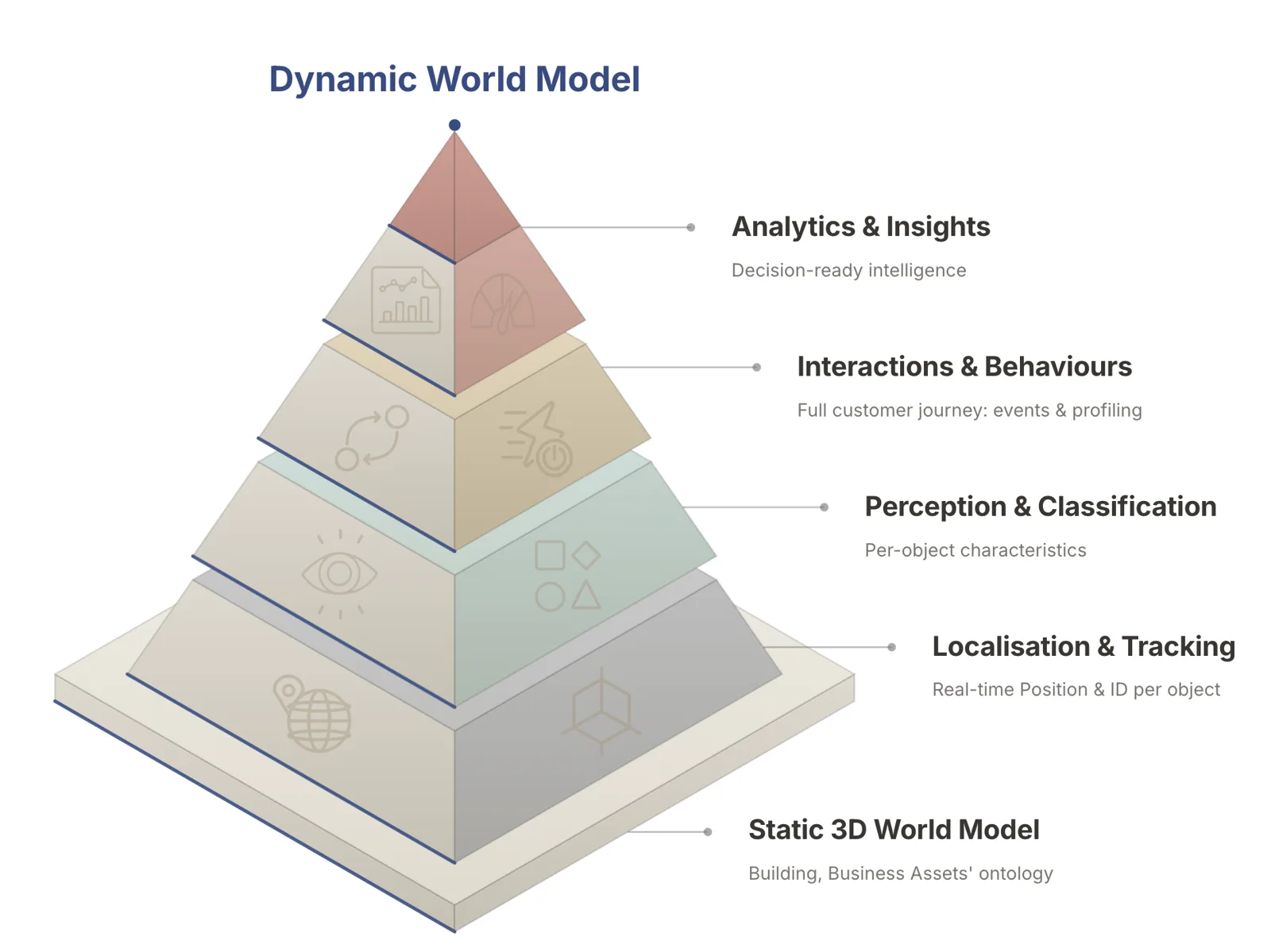
Dynamic World Model

This Spatial Intelligence is built on 3D LiDAR data, processed at the edge with under 50 ms latency and fused with any other available data source, like cameras or wireless systems. It gives each connected Mirokaï:

  • Occlusions-free perception, with infrastructure sensors acting as an omniscient layer that sees around corners, through crowds and beyond doorways
  • Continuous individual tracking, where every person, vehicle and robot carries a unique anonymous ID maintained across the entire environment
  • A shared 3D map and navigation layer, enabling route selection based on real-time and predicted conditions across the whole site
  • Persistent shared memory, a historical record of movements, interactions and events that every robot can leverage
  • Alerts, reports and timeline replay, giving operators full visibility and intervention capabilities at all times

Outsight’s 3D perception is natively anonymous: it captures the geometry of movement with zero facial or biometric data, a founding requirement for deployments in healthcare environments.

Starting in hospitals and airports

In a hospital, a Mirokaï guiding a patient keeps the connection through a crowded waiting area thanks to continuous anonymous tracking.

Both partners bring proven ground to build on. Outsight’s platform already digitizes movement at scale in airports on four continents, monitoring over 50,000 passengers simultaneously, as well as in rail stations, hospitals, sport venues, iconic tourism sites and automotive factories, where the same Beyond Line-of-Sight technology guides autonomous vehicles through production sites.

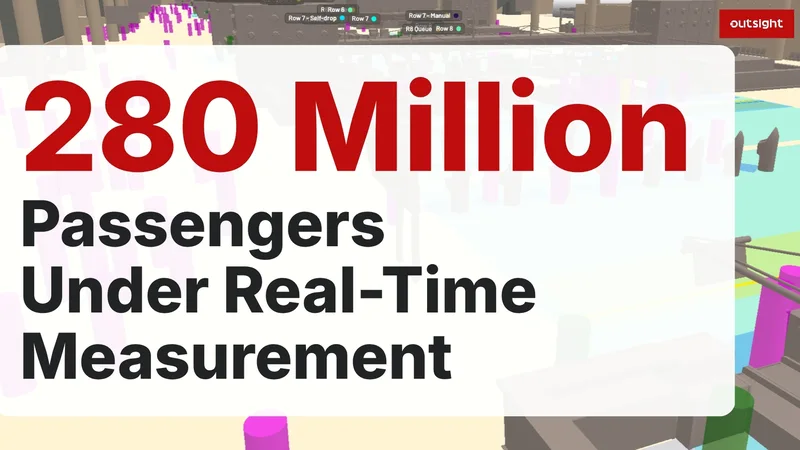
More than 280 million annual passengers travel under the real-time measurement of its Spatial Intelligence Platform. Enchanted Tools’ Mirokaï already welcome, guide and assist patients, residents and visitors in healthcare facilities, senior living residences and public venues.

Outsight crosses 280 million passengers under real-time measurement, from the busiest US hubs to Singapore Changi

More than 280 million annual passengers now travel under real-time measurement by Outsight’s Spatial Intelligence Platform, from the busiest US hubs to Singapore Changi.

Read article →
“We built the Dynamic World Model of physical spaces: a live, fully anonymous representation of how every person, vehicle and robot moves and interacts across a hospital or an airport. Enchanted Tools built the robot people love to interact with. Connecting the two gives every Mirokaï global situational awareness from its first minute on site, and gives operators one shared, real-time view of people and robots working together,” said Raul Bravo, President Founder, Outsight.

“Mirokaï are designed to live and work among people, in the busiest and most sensitive environments there are. With Outsight’s Spatial Intelligence, each Mirokaï knows what is happening across the whole building: where the crowds are, which corridor is clear, and where the person it is guiding is headed. This shared awareness makes the Mirokaï see further, anticipate more and operate with an even richer understanding of their surroundings,” said Jérôme Monceaux, Founder and CEO, Enchanted Tools.

One awareness layer for every robot

The companies will deploy the joint solution in hospitals first, where Mirokaï already supports patients and caregivers daily, and will extend it to airports, where both companies already operate.

About Enchanted Tools

Enchanted Tools is a French robotics company designing and deploying Mirokaï, people-facing humanoid robots built to operate safely and intuitively in human environments. Combining advanced robotics engineering, embedded AI, perception, navigation, and human-robot interaction, the company develops integrated robotic platforms designed for real-world, long-term use.

Designed for shared living and social spaces, Mirokaï robots deliver natural, context-aware interactions that respect social norms and individual needs. Mirokaï robots are currently deployed worldwide, primarily within research labs and partner institutions exploring applications in healthcare and senior living communities, where they support care teams, assist users, and help create calmer, more welcoming environments. In healthcare-focused collaborations, including work with institutions such as ICM (Institut du Cancer de Montpellier), Mirokaï robots accompany children through demanding medical journeys, while parallel research in senior living contexts explores how they can augment staff capacity, support light logistics, and enrich daily life through presence and social interaction.

Press Contacts

Outsight: Julie Bourdinot, julie.bourdinot@outsight.tech, www.outsight.ai

Enchanted Tools: Richard Malterre, richard@enchanted.tools


Related Articles

AIRPORTS

Outsight crosses 280 million passengers under real-time measurement, from the busiest US hubs to Singapore Changi

More than 280 million annual passengers now travel under real-time measurement by Outsight's Spatial Intelligence Platform, from the busiest US hubs to Singapore Changi.

CORPORATE

Outsight named in the Gartner Hype Cycle for Physical AI, 2026

Gartner names Outsight a leading vendor in Ambient Intelligence, alongside AWS, Google, Microsoft and Siemens, confirming its lead in infrastructure-based Physical AI.

Let's connect

Send us a Message

Drop your email and we'll get back to you as soon as possible.

Frequently Asked Questions

  • What is Ambient Intelligence in robotics and how does it differ from onboard robot perception?

    Ambient Intelligence refers to intelligence embedded in the physical environment rather than aboard individual machines. A robot relying solely on onboard sensors perceives only what its cameras and LiDAR cover from its current position. An ambient layer, delivered by infrastructure-mounted sensors fused into a site-wide 3D model, gives every connected robot a view of corridors, crowds, and doorways the robot itself cannot see. Gartner tracks this as a distinct category in its Hype Cycle for Physical AI, separate from onboard autonomous perception.

  • Can a service robot share situational awareness with other robots from different manufacturers on the same site?

    Infrastructure-based Physical AI is designed to be manufacturer-agnostic. The Dynamic World Model sits in the infrastructure, not aboard any single robot, so any robot with a network connection can query the same real-time 3D representation, regardless of its make, onboard sensor suite, or navigation stack. This allows heterogeneous fleets to coordinate through one shared understanding of space without requiring inter-robot communication protocols or a common hardware platform.

  • Why is anonymous tracking specifically important for robots deployed in hospitals?

    Healthcare environments are governed by strict patient data regulations that restrict the capture and processing of identifiable personal information. LiDAR-based spatial tracking captures the geometry and motion of people without recording faces, body features, or biometric identifiers, so no personal data is generated or stored. This means the awareness layer can operate continuously in patient areas, waiting rooms, and corridors without triggering the consent and data-processing obligations that camera-based systems would require.

  • How does infrastructure-based perception help a delivery robot choose a route before it starts moving?

    A robot relying on onboard sensors can only evaluate the path in front of it as it moves. When connected to a premises-wide Dynamic World Model, the robot queries predicted occupancy for every corridor in the building at the estimated time of arrival, not just current conditions. If a corridor will be congested when the robot reaches it, an alternative route is selected at departure. This predictive routing reduces delivery time and avoids the stop-and-wait cycles that slow onboard-only systems in dense environments.

  • What does 'persistent shared memory' mean in the context of a multi-robot deployment?

    Persistent shared memory, as used in infrastructure-based Physical AI, refers to a historical record of movements, interactions, and events stored at the site level rather than on any individual robot. Every robot in the fleet can query this record: a robot beginning a shift can access patterns from earlier in the day, and a robot entering an area for the first time can retrieve how crowds typically behave there. This is structurally different from onboard memory, which is lost when a robot powers down or is replaced.

  • How does a site-wide Dynamic World Model handle a robot losing its own sensor feed temporarily?

    Because the infrastructure sensors track every entity in the scene independently of the robot's onboard perception, the site-wide model continues to locate and classify the robot and the people around it even if the robot's own sensors fail or are occluded. The robot can re-query its own position and the state of its surroundings from the shared 3D model, reducing the risk of a full navigation failure. This redundancy is one structural advantage of separating perception from the moving platform.

  • What does Beyond Line-of-Sight awareness mean for a service robot?

    Beyond Line-of-Sight awareness gives a robot knowledge of what is happening across an entire building, far past the reach of its own onboard sensors. In the Outsight and Enchanted Tools partnership, intelligence embedded in the infrastructure acts as a shared awareness layer: 3D LiDAR sensors on site see around corners, through crowds and beyond doorways, and every connected Mirokaï robot can query that view in real time. Each robot gains occlusion-free perception, continuous anonymous tracking of people, vehicles and robots, a shared 3D map for route selection, and a persistent memory of past movements and events.

  • How does an infrastructure-based Dynamic World Model differ from a robot's own onboard perception?

    Every robot builds its own world model from onboard sensors, which covers the space immediately around it. A Dynamic World Model, delivered by Outsight's Motional Digital Twin, covers the whole premises: it continuously tracks every person, vehicle and robot present, understands their behaviours and interactions, and anticipates the situations they announce. Robots, human operators and AI agents all query this same live, semantic and fully anonymous 3D representation in real time. It is built on 3D LiDAR data processed at the edge with under 50 ms latency and fused with other sources such as cameras or wireless systems.

  • Can robots from different manufacturers share one infrastructure-based awareness layer?

    Yes. The awareness layer Outsight provides lives in the site's infrastructure, so it is available to every robot on site, whatever its manufacturer or onboard capabilities. The partnership with Enchanted Tools starts with Mirokaï robots, and the same Dynamic World Model is designed to serve any mobile robot and any AI agent in complex, human-dense environments. This opens the path to sites where heterogeneous fleets from multiple manufacturers coordinate through a single, real-time understanding of space. Gartner describes this infrastructure-based approach as Ambient Intelligence.

  • How would a service robot use premises-wide Spatial Intelligence in a hospital or airport?

    In a hospital, a Mirokaï robot guiding a patient keeps the connection through a crowded waiting area thanks to continuous anonymous tracking, and a robot delivering supplies selects the corridor that will be clear when it arrives, using premises-wide flow predictions. In an airport, a Mirokaï assisting passengers anticipates crowd build-ups, adapts its route in real time and meets travellers exactly where they are. Outsight and Enchanted Tools will deploy the joint solution in hospitals first, where Mirokaï already supports patients and caregivers, then extend it to airports, where both companies already operate.

  • Is infrastructure-based robot perception compatible with privacy requirements in hospitals?

    Outsight's 3D perception is natively anonymous: it captures the geometry of movement with zero facial or biometric data. Every person, vehicle and robot carries a unique anonymous ID maintained across the entire environment, which lets a robot follow the person it is guiding without ever identifying them. This property is a founding requirement for deployments in healthcare environments, where Outsight and Enchanted Tools are starting their joint rollout. The same Spatial Intelligence already runs in airports, rail stations, hospitals, sport venues and iconic tourism sites.

  • What is the Mirokaï robot from Enchanted Tools and what can it do?

    Mirokaï are autonomous robotic characters created by Enchanted Tools, a Paris-based French robotics company. They combine autonomous mobility, object manipulation and natural interaction in a distinctive robot-character design that makes their presence immediately understandable and approachable. Enchanted Tools designed Mirokaï from the ground up for shared human environments, where robots must handle social complexity as well as physical complexity. They welcome, guide and assist patients, residents and visitors in healthcare facilities, senior living residences and public venues.

  • What is a Motional Digital Twin and how do Mirokai robots connect to it?

    The Motional Digital Twin is Outsight's new generation of living, semantic and fully anonymous 3D representation of a site. It continuously tracks every person, vehicle and robot present, understands their behaviors and interactions, and anticipates the situations they announce. In the partnership, it delivers the site's Dynamic World Model, and each Mirokaï connects to it to extend its understanding to the entire premises. Robots, human operators and AI agents all query this same representation in real time.

  • What did Gartner's Hype Cycle for Physical AI 2026 say about Ambient Intelligence vendors?

    Outsight was named a leading vendor in the Gartner Hype Cycle for Physical AI, 2026, in the Ambient Intelligence category, alongside the world's largest technology companies. Ambient Intelligence is Gartner's term for the approach behind the Enchanted Tools partnership: intelligence embedded in the infrastructure acting as a shared awareness layer. That layer is available to every robot on site, whatever its manufacturer or onboard capabilities. The partnership puts these principles, set out in Outsight's whitepaper Beyond Line-of-Sight Physical AI for Robots, into operation.

  • What are world models in AI and why do they matter for service robots in buildings?

    World models are internal representations that let machines anticipate how a scene will evolve before they act, and they are emerging as the next frontier of AI. Every robot builds its own world model from onboard sensors, which only covers the space immediately around it. The Outsight and Enchanted Tools partnership extends this by connecting each Mirokaï to the site's Dynamic World Model. The robot can then anticipate situations across the whole building, well beyond what its own sensors see.

  • How fast is the Spatial Intelligence feed delivered to Mirokaï robots, and what data does it fuse?

    The Spatial Intelligence delivered to Mirokaï robots is built on 3D LiDAR data processed at the edge, with latency under 50 ms end-to-end at the edge. This data is fused with any other available data source, such as cameras or wireless systems. Infrastructure sensors act as an omniscient layer that sees around corners, through crowds and beyond doorways. Each person, vehicle and robot carries a unique anonymous ID maintained across the entire environment.

  • What is persistent shared memory in the infrastructure layer for service robots?

    Persistent shared memory is a historical record of movements, interactions and events on site that every connected robot can leverage. It is one of the capabilities each Mirokaï gains by connecting to Outsight's Dynamic World Model. Alongside it, operators get alerts, reports and timeline replay, giving them full visibility and intervention capabilities at all times. A shared 3D map and navigation layer also lets robots select routes based on real-time and predicted conditions across the whole site.

  • How do alerts, reports and timeline replay help operators supervise connected Mirokai robots?

    Among the capabilities Outsight's Spatial Intelligence brings to each connected Mirokaï are alerts, reports and timeline replay, which give operators full visibility and intervention capabilities at all times. These tools draw on the site's Dynamic World Model, delivered by Outsight's Motional Digital Twin, which continuously tracks every person, vehicle and robot with a unique anonymous ID. A persistent shared memory keeps a historical record of movements, interactions and events. Robots, human operators and AI agents all query the same representation in real time, giving operators one shared view of people and robots working together.

  • Where are Enchanted Tools' Mirokaï robots already deployed in healthcare today?

    Mirokaï robots are deployed worldwide, primarily within research labs and partner institutions exploring healthcare and senior living applications. In healthcare collaborations, including work with ICM (Institut du Cancer de Montpellier), Mirokaï accompany children through demanding medical journeys. Parallel research in senior living explores how they can augment staff capacity, support light logistics and enrich daily life through presence and social interaction. They help care teams and create calmer, more welcoming environments.

  • Is Beyond Line-of-Sight technology already used to guide vehicles in factories?

    Yes. Outsight's platform already operates in automotive factories, where the same Beyond Line-of-Sight technology guides autonomous vehicles through production sites. The principle is that intelligence embedded in the infrastructure acts as a shared awareness layer, available to every robot on site whatever its manufacturer or onboard capabilities. The Enchanted Tools partnership brings this approach to Mirokaï service robots in hospitals and airports. The Dynamic World Model is designed to serve any mobile robot and any AI agent in complex, human-dense environments.

  • How can service robots navigate safely in crowded hospitals or airports?

    Service robots perceive only what their onboard sensors can see, so corners, doorways and crowds create blind spots. Infrastructure-based Physical AI solves this by giving robots a shared, premises-wide view: fixed 3D LiDAR sensors track every person, vehicle and robot across the site, and robots query this live model to plan routes and anticipate crowds. Outsight and Enchanted Tools apply this to Mirokaï service robots, starting with hospitals and airports.