Skip to content
Insights
Outsight Innovusion Partnership

New Partnership Agreement Between Outsight and Innovusion

The goal of this new partnership is focused on accelerating LiDAR technology in the ITS market.


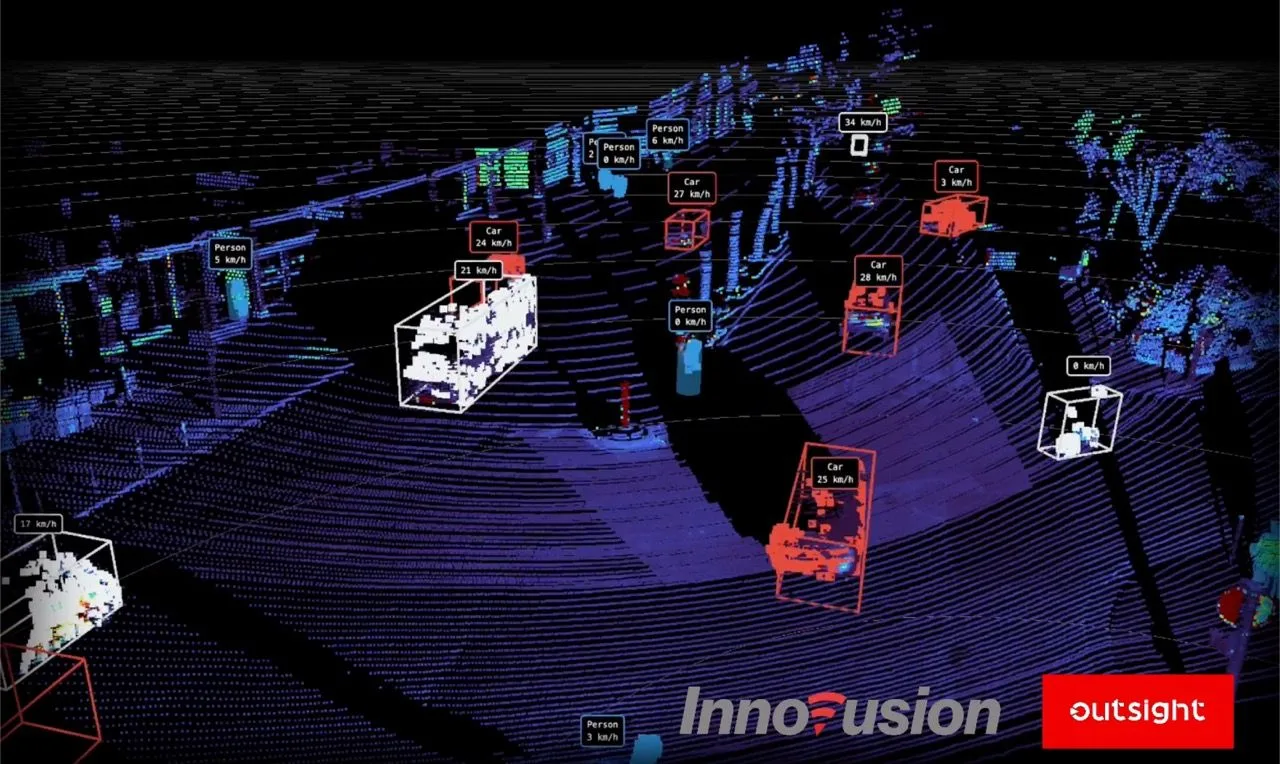
Outsight, a specialist in 3D Spatial Intelligence Software Solutions, and Innovusion, a leading provider of advanced, high-performance LiDAR systems, today announced a new partnership aiming to combine Outsight’s software platform with Innovusion’s products. Thanks to this partnership, 3D perception technologies can be deployed at a large scale for ITS, giving operators access to a whole new dimension of spatial information.
Innovusion x1 speed 2

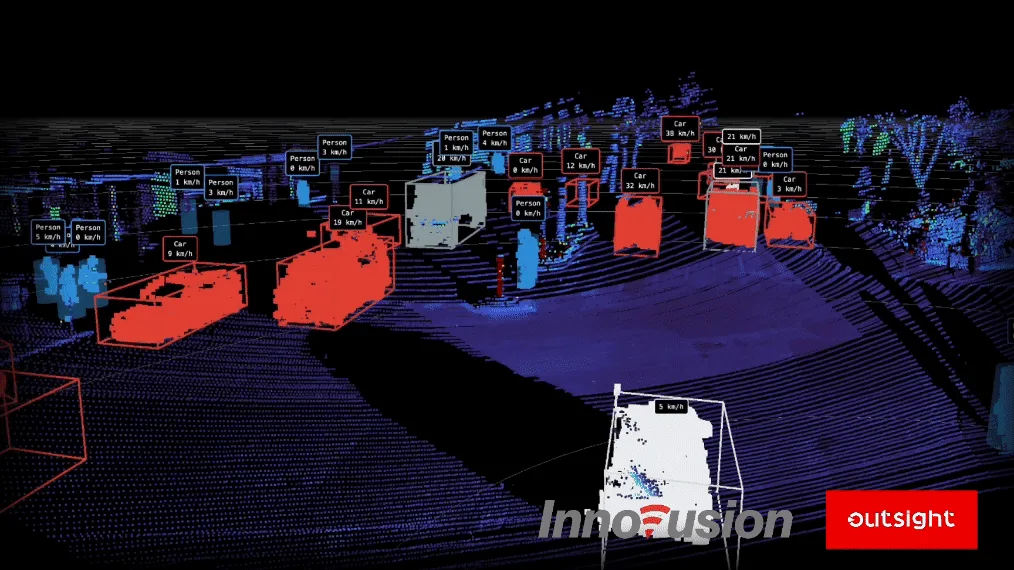
Innovusion, a leading provider of high-performance LiDAR systems for autonomous vehicles and smart transportation, will be a key partner in Outsight’s mission to expand the adoption of 3D LiDAR technology. This collaboration aims to integrate Outsight’s software platform with Innovusion’s product suite, marking a significant stride towards deploying 3D perception technologies on a large scale for Intelligent Transportation Systems (ITS).

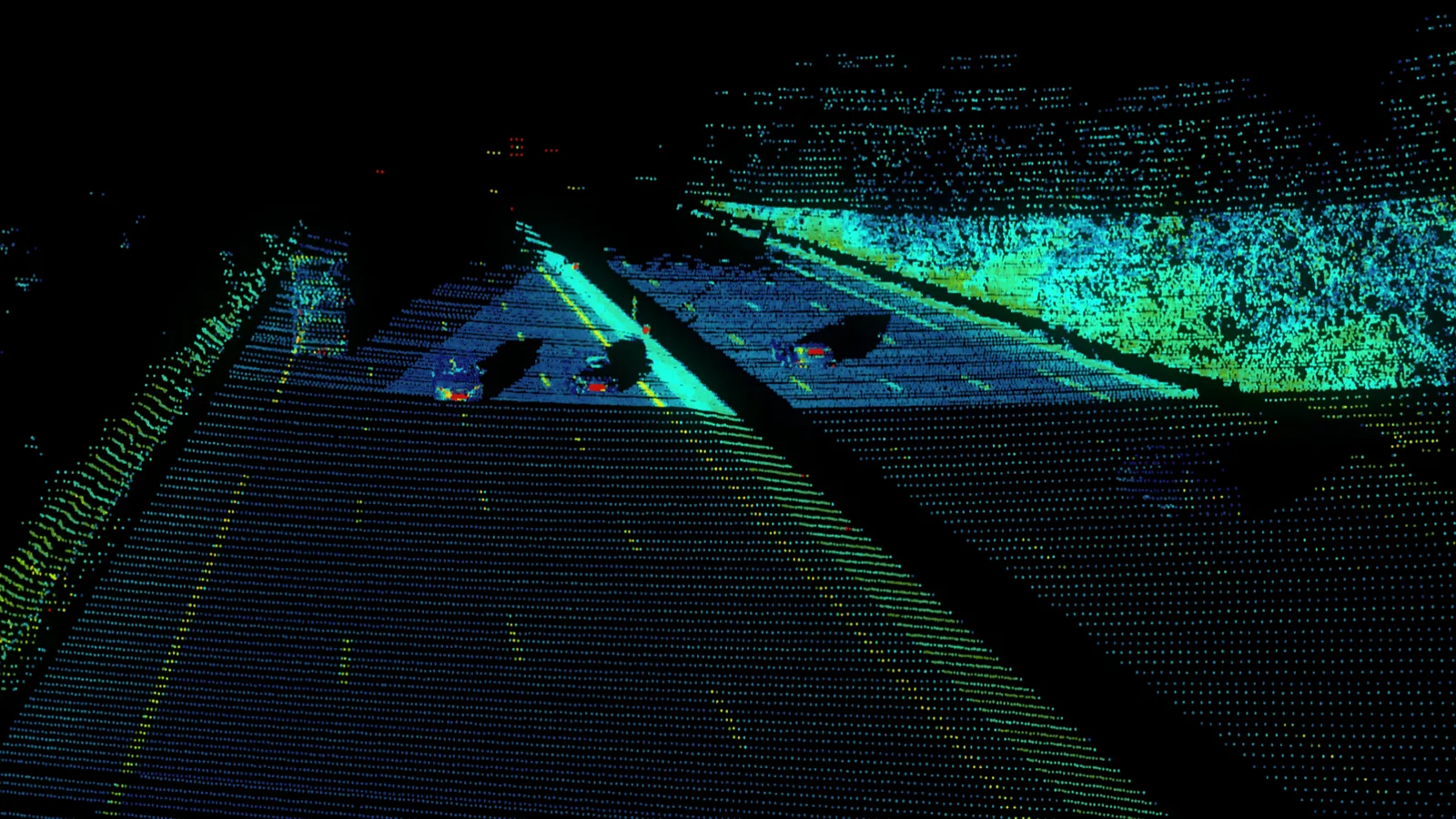
Innovusion is shaping the future of safe autonomous driving and system solutions aimed at enhancing mobility safety through its image-grade LiDAR solutions. Featuring top-of-the-line LiDAR sensors that stretch from mid-range to ultra-long range, Innovusion has not only found resonance within the automotive sector but has also forged global partnerships with vehicle manufacturers, technology multinationals, and leaders in smart transportation and industrial automation sectors.
Outsight innovusion partnership

Outsight’s software solutions transform raw data from 3D LiDAR into actionable insights, analyzing in real time the individual position, movement, and speed of people, objects, and vehicles in a fully anonymous way throughout complex environments, including densely populated areas. Outsight’s software is engineered to make LiDAR technology more accessible and swiftly usable across a multitude of sectors, paving the way for enhanced situational awareness in dynamic and challenging environments.

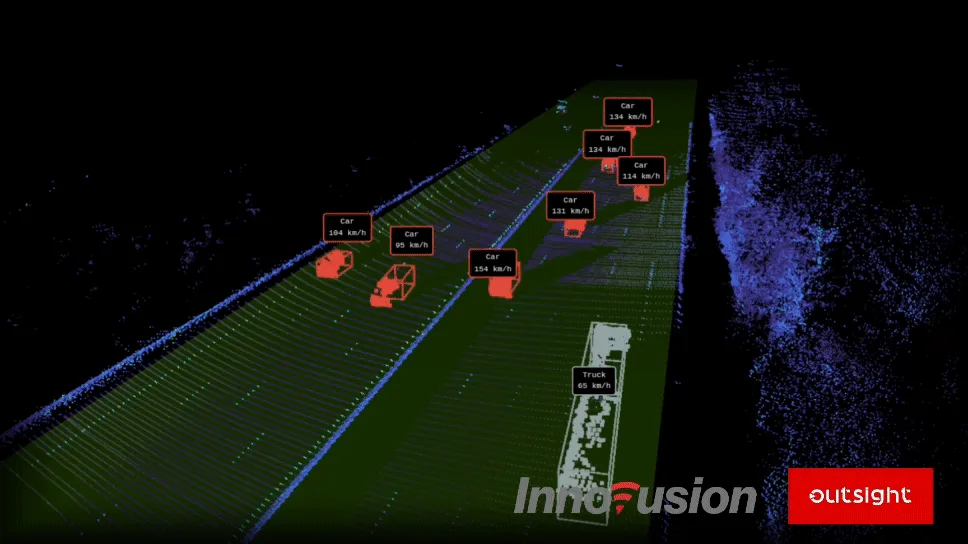
This partnership between Innovusion and Outsight is driven by a shared vision of accelerating the adoption of LiDAR technology in the Infrastructure ITS market. The synergy between Innovusion’s advanced LiDAR solutions and Outsight’s robust software sets the stage for a transformative journey towards harnessing 3D perception technologies to bring new design intelligence and modern detection methods to intersections and highways, increasing the safety of vehicles, pedestrians and vulnerable road users across the globe.
Innovusion Seyond Highway

A unique collaboration between software and hardware specialists

Innovusion’s hardware capability and Outsight’s software know-how are combined in this partnership, creating a symbiotic tech-ecosystem favorable for ground-breaking ITS solutions. The companies are taking a significant step toward developing smarter, safer, and more effective transportation systems with the combination of Innovusion’s high-precision LiDAR technology and Outsight’s skill at transforming 3D LiDAR data into practical insights.

Following this partnership, Innovusion and Outsight will collaborate to ensure the best integration between the latest innovations and products of each company.

According to Raul Bravo, President and Founder of Outsight, “We’re excited by the potential of our collaboration with Innovusion. Long-range 1550nm LiDAR certainly has a bright future, and now our customers and partners can leverage this high-resolution data as actionable information.”

“We’re thrilled to be collaborating with Outsight,” said Junwei Bao, CEO and co-founder of Innovusion. “Our partnership displays the commitment of both parties to furthering the adoption of innovative perception technologies like LiDAR in the ITS industry. Together with Outsight, we’re enabling the development of smarter and more efficient transportation systems across the globe.”
Related Articles

AIRPORTS

Aeroporti di Roma to deploy Outsight's Physical AI solution at scale across Rome Fiumicino Airport

Aeroporti di Roma (ADR) is expanding its collaboration with Outsight to a large-scale deployment across almost all Schengen common-use areas at Rome Fiumicino Airport.

CORPORATE

Intel and Outsight Announce Strategic Collaboration to Bring Physical AI–Powered Spatial Intelligence to the Enterprise Edge

Outsight’s Shift platform integrated into Google Distributed Cloud Edge powered by Intel Xeon 6 SoC – Live demonstration at Google Cloud Next 2026

Let's connect

Send us a Message

Drop your email and we'll get back to you as soon as possible.

Frequently Asked Questions

  • What is Innovusion's LiDAR range and why does it matter for ITS deployments?

    Innovusion produces LiDAR sensors spanning mid-range to ultra-long range, which is a meaningful distinction for ITS. Short-range sensors suited to indoor pedestrian tracking cannot reliably detect vehicles at highway approach speeds before a decision point. Ultra-long-range coverage allows a single sensor to observe a vehicle far enough in advance to classify it, measure its speed, and flag any interaction with vulnerable road users before the vehicle reaches the monitored zone. This range capability aligns with the infrastructure-based approach that Outsight applies through its SHIFT platform, where sensors deployed at fixed positions in the environment need sufficient reach to feed a real-time Motional Digital Twin of every vehicle and pedestrian moving through a corridor or intersection.

  • How does 1550nm LiDAR differ from 905nm LiDAR for traffic applications?

    The 1550nm wavelength sits in a region where the human eye is far less sensitive, allowing sensors to emit more optical power within eye-safety limits than 905nm designs. More power at a safe level translates directly into longer detection range and better performance in adverse conditions such as rain, direct sunlight glare, or headlight interference from oncoming vehicles. For highway-speed traffic monitoring, where detection range determines reaction time, this wavelength advantage is operationally significant. Outsight's infrastructure-based approach, which processes LiDAR point clouds through the SHIFT platform with a sub-50ms end-to-end pipeline, is designed to take full advantage of higher-range sensors like 1550nm units in demanding ITS environments.

  • What does 'image-grade' LiDAR mean in practice for road safety applications?

    Image-grade LiDAR refers to sensors with point-cloud density high enough that the spatial resolution approaches photographic detail. At that density, a system can resolve fine-grained object shapes at long range, distinguishing, for example, a cyclist from a scooter or a pedestrian pushing a pram from one walking alone. Standard-density LiDAR resolves blobs reliably at short range but loses classification fidelity at distance, which matters for vulnerable-road-user detection on high-speed roads. Outsight's infrastructure-based approach processes these dense point clouds through a sub-50ms pipeline, enabling real-time classification without relying on camera-based biometric data, a combination that makes image-grade resolution practically useful in ITS deployments where both speed and privacy compliance are required.

  • Which road users are hardest to detect reliably with LiDAR at highway intersections?

    Vulnerable road users, including cyclists, pedestrians, and motorcyclists, are the most challenging class to detect reliably. Their LiDAR return size is small relative to vehicles, they move unpredictably, and they most often appear at the margins of the detection zone where sensor coverage is thinnest. Infrastructure-based LiDAR addresses this partly by placing sensors overhead or at angles that maximize the return area from smaller objects, rather than relying on a ground-level perspective. Outsight's infrastructure-based Physical AI approach, deployed at smart-city intersections such as those in the City of Bellevue's Vision Zero program, applies this principle at scale, using the Motional Digital Twin to track and classify all road users in real time, including the most vulnerable ones.

  • Can a LiDAR-based ITS system feed variable message signs or signal controllers in real time?

    Yes. ITS deployments typically expose tracked-entity data and aggregated traffic metrics through standard protocols such as NTCIP, REST APIs, and MQTT, which signal controllers and variable message sign systems already accept. The sub-50ms end-to-end latency of a real-time LiDAR pipeline is well inside the decision cycle of adaptive signal control systems, which typically operate on multi-second intervals. Outsight's SHIFT platform is built around this kind of open integration approach, publishing live perception output to downstream traffic management systems without requiring changes to the signal or signage infrastructure. The integration burden falls on the middleware layer, not on the sensor or perception stack.

  • Does combining LiDAR with cameras at a traffic intersection improve detection accuracy?

    LiDAR and cameras address different weaknesses in each other. LiDAR delivers precise 3D position, speed, and trajectory without depending on lighting conditions, but provides no color or texture information. Cameras supply color (useful for license-plate reading and signal-state verification) but lack native depth. In a fused setup, the LiDAR track provides a persistent anonymous ID and spatial reference, while camera attributes are optionally attached to that ID. This is the architecture Outsight applies at smart-city intersections: infrastructure-mounted LiDAR builds the core spatial track through the SHIFT platform, and camera feeds can be integrated as supplementary attribute layers. Neither sensor alone matches the combined classification confidence of both working together.