
Skip to content
Insights
The difference between anonymous and anonymised data

Anonymous vs. Anonymized: learn the difference

Understanding Anonymity in Sensor Data: discover the inherent privacy characteristics of each type of Sensor data and the potential risks associated with anonymizing sensitive information


In the realm of computer vision, terms like ‘anonymized data’ frequently float around, often used interchangeably with ‘anonymous’ by journalists, analysts, and industry observers.However, these terms have distinct meanings and implications. In this article, we break down the differences and shed light on why understanding this distinction is crucial for anyone engaging with or monitoring the advancements in computer vision.

Anonymous: This term denotes something that originates without a known or discernible identity, either from the start or intentionally kept hidden.

Anonymized: This term describes the characteristic of an object that, while once containing identifiable information, has undergone a process to remove or alter that information, rendering it non-traceable to an individual.

So, if you were to refer to computer perception data:

  • Anonymous data: Data that never had identifiable markers to begin with.
  • Anonymized data: Data that once contained identifiable markers but has since been processed to remove or alter them for privacy reasons.

Data Capture: Cameras vs. LiDAR and Radar

Curious about how these sensors compare? Check out our related article:

A detailed comparison of LiDAR, Radar and Camera Technology

This article explores the capabilities and limitations of each type of sensor, to provide a clear understanding of why LiDAR has emerged as a strong contender in computer vision tech race.

Read article →
Cameras, whether traditional monocular types or stereo-vision (often referred to as 3D cameras), capture a wealth of detail from their field of view. This can include the minute facial features, clothing patterns, and sometimes even unique postures or gestures of individuals. Thus, the data from cameras inherently contains identifiable information about people present in their line of sight.
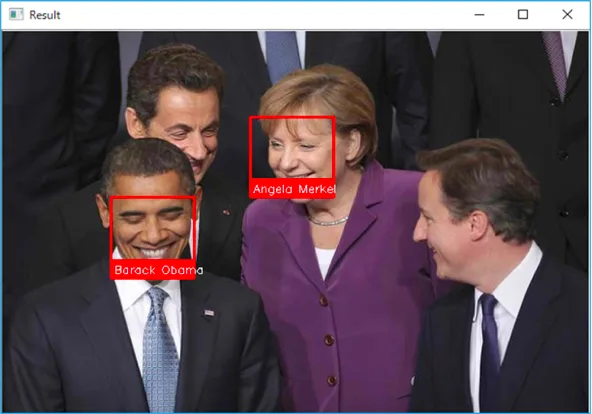
Camera using computer vision for facial recognition

On the other hand, sensors like LiDAR and Radar work differently. They gauge distances by emitting laser pulses or radio waves and calculating the time they take to bounce back after hitting an object.
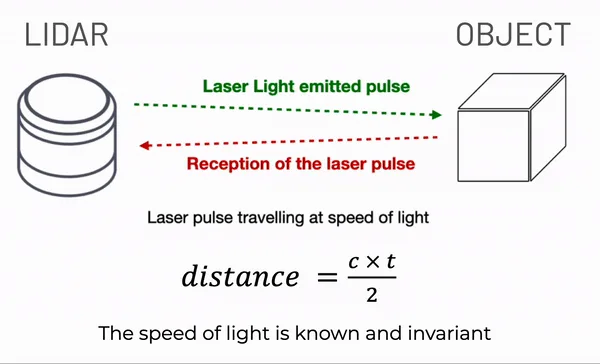
How does lidar work? by emitting laser light pulses and measuring the distance between the object and the lidar sensor

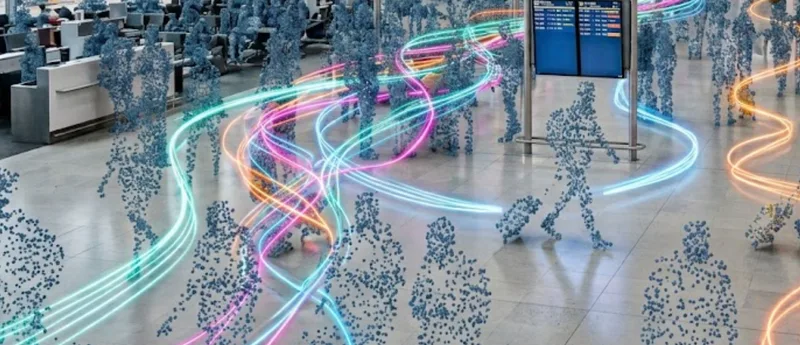
Consequently, these sensors capture general outlines and shapes without the intricate details that can be used to identify an individual.
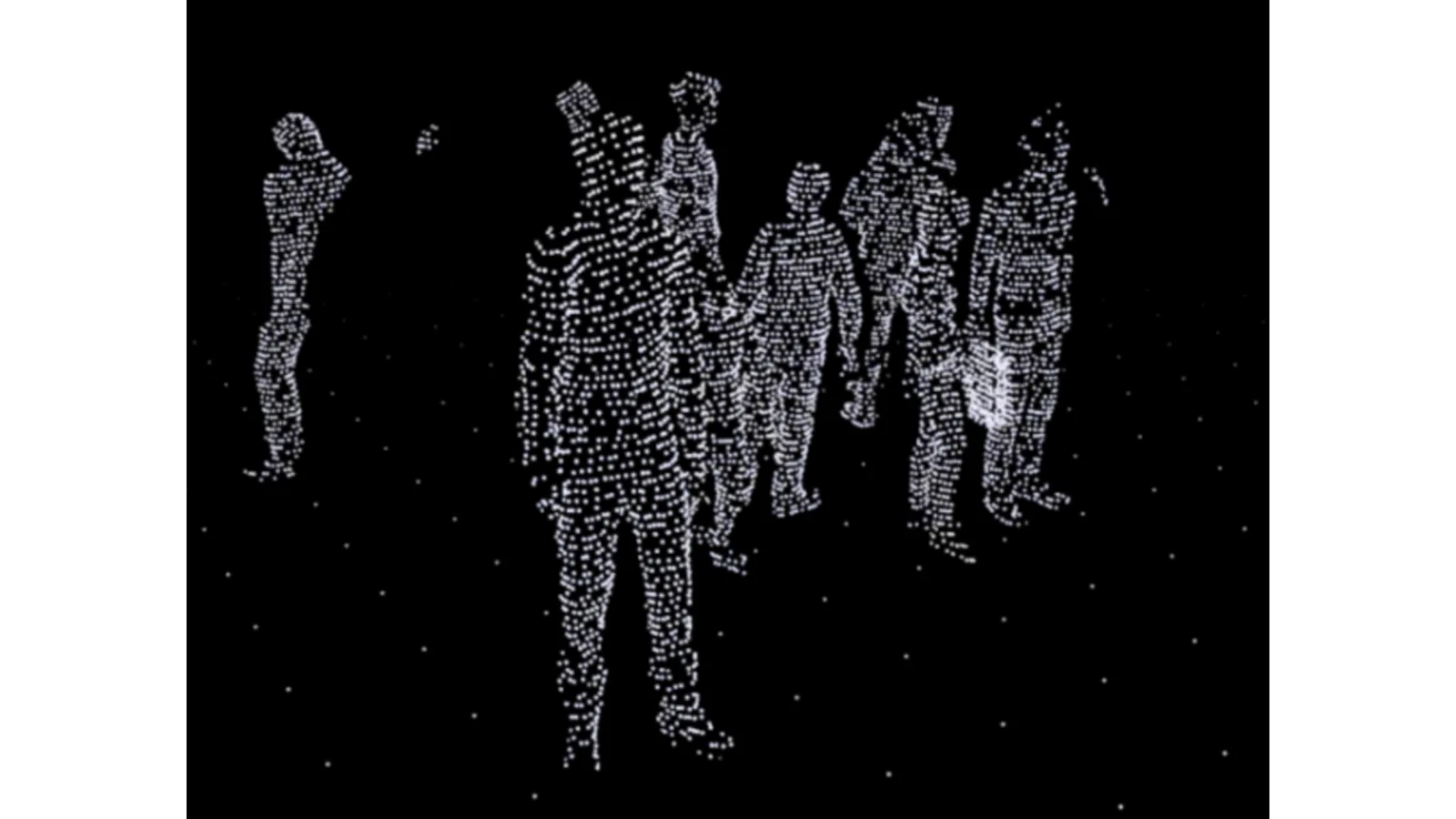
3D point cloud lidar scan showing the innate anonymity of lidar technology

This leads us to conclude:

  • LiDAR or Radar data is anonymous by nature.
  • Camera-based images are not anonymous. However, they can attain an ‘anonymized’ status if they undergo a meticulous process designed to strip away identifiable data.

The Risks of Anonymizing Data

While it’s commendable to convert inherently identifiable data into an anonymized form, this process isn’t without its risks. The fundamental problem lies in the transition period – from the moment data is captured to its eventual anonymization.

For instance, if a system captures a person’s image, and the goal is to anonymize it, even if processing is done in real-time, there’s a time frame, however brief, when the raw, identifiable image exists. During this period, software programs reading the data (even if it’s temporarily stored in volatile memory) have access to the original, non-anonymized information.

There’s also the potential human factor – engineers or data handlers might access this information, knowingly or unknowingly, during development, maintenance or analysis.

One might argue that these risks can be minimized using Edge AI processing, where data is processed directly on the capturing device or sensor.

While this approach does limit the exposure of raw data, it doesn’t eliminate the risk entirely. There’s still a brief moment when the original data exists before being processed, representing a potential vulnerability.

In Conclusion

As technology continues to advance, the conversation around data privacy becomes even more critical. Understanding the inherent nature of the data our devices collect is paramount.

When leveraging camera-based images is the only option, anonymizing the captured data certainly moves us closer to safeguarding user privacy. However, it’s vital to be cognizant of the intrinsic risks that come with it.

As we navigate this space, our aim should always be to adopt robust solutions that place user privacy at the forefront. This includes exploring 3D Perception solutions like those based on LiDAR technology, which, beyond ensuring privacy, offer a plethora of other benefits:
Related Articles

AIRPORTS

Aeroporti di Roma to deploy Outsight's Physical AI solution at scale across Rome Fiumicino Airport

Aeroporti di Roma (ADR) is expanding its collaboration with Outsight to a large-scale deployment across almost all Schengen common-use areas at Rome Fiumicino Airport.

CORPORATE

Intel and Outsight Announce Strategic Collaboration to Bring Physical AI–Powered Spatial Intelligence to the Enterprise Edge

Outsight’s Shift platform integrated into Google Distributed Cloud Edge powered by Intel Xeon 6 SoC – Live demonstration at Google Cloud Next 2026

Let's connect

Send us a Message

Drop your email and we'll get back to you as soon as possible.

Frequently Asked Questions

  • Is LiDAR data actually anonymous or just harder to identify than camera data?

    LiDAR data is structurally anonymous, not just harder to identify. Laser pulses measure the distance to surfaces and return a point cloud of x, y, z coordinates. There is no pixel, no color channel, no texture, and no frequency band capable of resolving a face or a license plate. The absence of identifiable information is a physical constraint of the sensor, not a downstream processing choice. This means no post-capture anonymization step is needed, and no transition window exists during which raw identifiable data could be accessed. Outsight builds its Motional Digital Twin on exactly this principle: because LiDAR captures shape and motion rather than appearance, the resulting 3D replica of how people and vehicles move through a space is anonymous by definition, not by policy.

  • Under GDPR, truly anonymous data falls entirely outside the regulation's scope because it was never personal data to begin with. Anonymized data, by contrast, was personal data at the point of capture and remains subject to GDPR obligations during the period before anonymization is complete. Controllers processing anonymized data must document the anonymization process, demonstrate it is irreversible, and manage the residual risk window. This legal distinction is one reason why infrastructure-based LiDAR systems like Outsight's Motional Digital Twin are designed to be anonymous by definition: LiDAR captures shape and motion rather than faces, license plates, or biometric identifiers, meaning no personal data ever enters the pipeline and no anonymization obligations arise.

  • Can edge AI processing fully eliminate the privacy risk in camera-based systems?

    Edge AI processing significantly reduces exposure by keeping raw frames on the capturing device rather than transmitting them to a server. However, it does not eliminate risk entirely. A brief interval exists between image capture and in-device processing during which identifiable pixel data resides in volatile memory. Firmware vulnerabilities, maintenance access, or debugging sessions during that window represent residual exposure. Truly anonymous capture, such as LiDAR, removes the risk at source rather than compressing the risk window. Outsight's infrastructure-based approach illustrates this distinction: the SHIFT platform processes LiDAR point clouds that capture shape and motion but never record faces, license plates, or biometric data, making anonymity a property of the sensor modality itself rather than a post-capture mitigation.

  • Do radar sensors share the same inherent anonymity as LiDAR?

    Radar and LiDAR share the same fundamental privacy property: both emit energy, measure how long it takes to return, and produce a spatial representation of surfaces rather than a visual image. Neither captures faces, clothing detail, or biometric markers. The practical difference is resolution. LiDAR uses near-infrared laser pulses with millimeter-level precision, producing dense point clouds that reliably classify body shape and motion. Radar operates at longer wavelengths with lower spatial resolution, which limits classification fidelity but preserves the same structural anonymity. Outsight builds on this inherent LiDAR property by design: the Motional Digital Twin captures shape and motion across infrastructure deployments at sites such as Dallas Fort Worth and BMW factories, with anonymity guaranteed at the sensor level rather than enforced through post-processing.

  • Is anonymized camera data good enough for GDPR compliance in public spaces?

    Anonymized camera data can satisfy GDPR requirements if the anonymization is demonstrably irreversible and the transition window is managed, but regulators scrutinize the process heavily. Supervisory authorities in several EU member states have issued guidance noting that re-identification risk must be assessed against the realistic capability of a determined adversary, not just a casual observer. Anonymous-by-origin sensors sidestep this assessment entirely, which is why data protection officers increasingly favor them for high-footfall public environments where the volume of captured individuals amplifies residual risk. LiDAR-based systems like Outsight's SHIFT platform take this approach by design: the sensor captures shape and motion rather than faces or biometric data, meaning no personal data is ever collected in the first place, removing the need to defend an anonymization process after the fact.

  • What does a LiDAR point cloud actually look like for a person, and could it ever identify someone?

    A person in a LiDAR point cloud appears as a cluster of a few hundred to a few thousand 3D points outlining head, torso, and limbs at a resolution determined by the sensor's beam spacing. Height, approximate build, and gait are discernible, but facial geometry is not: the beam spacing is orders of magnitude too coarse to capture the sub-millimeter surface variation that facial recognition requires. This is why infrastructure-based systems like Outsight's Motional Digital Twin treat anonymity as a structural property rather than a post-processing step, since the underlying data never contains faces, license plates, or biometric detail to begin with. Gait analysis at scale is theoretically possible but requires a cooperative, sustained recording scenario well outside the operational envelope of infrastructure-mounted people-flow tracking.