Skip to content
Insights
APS Trophy

Outsight wins the Special Mention Award at the APS Trophies 2023

We are excited to announce that our 3D LiDAR software, Shift, has collected an award at the Salon de la Sûreté & de la Sécurité 2023!


This award, identifying the most impactful solutions in the security industry, has been delivered by the APS - the exhibition for protecting employees, sites and data against malicious acts.

This award acknowledges the impact of Outsight’s robust software with LiDAR technology, recognizing 3D spatial recognition as a crucial member in the security and safety industry.
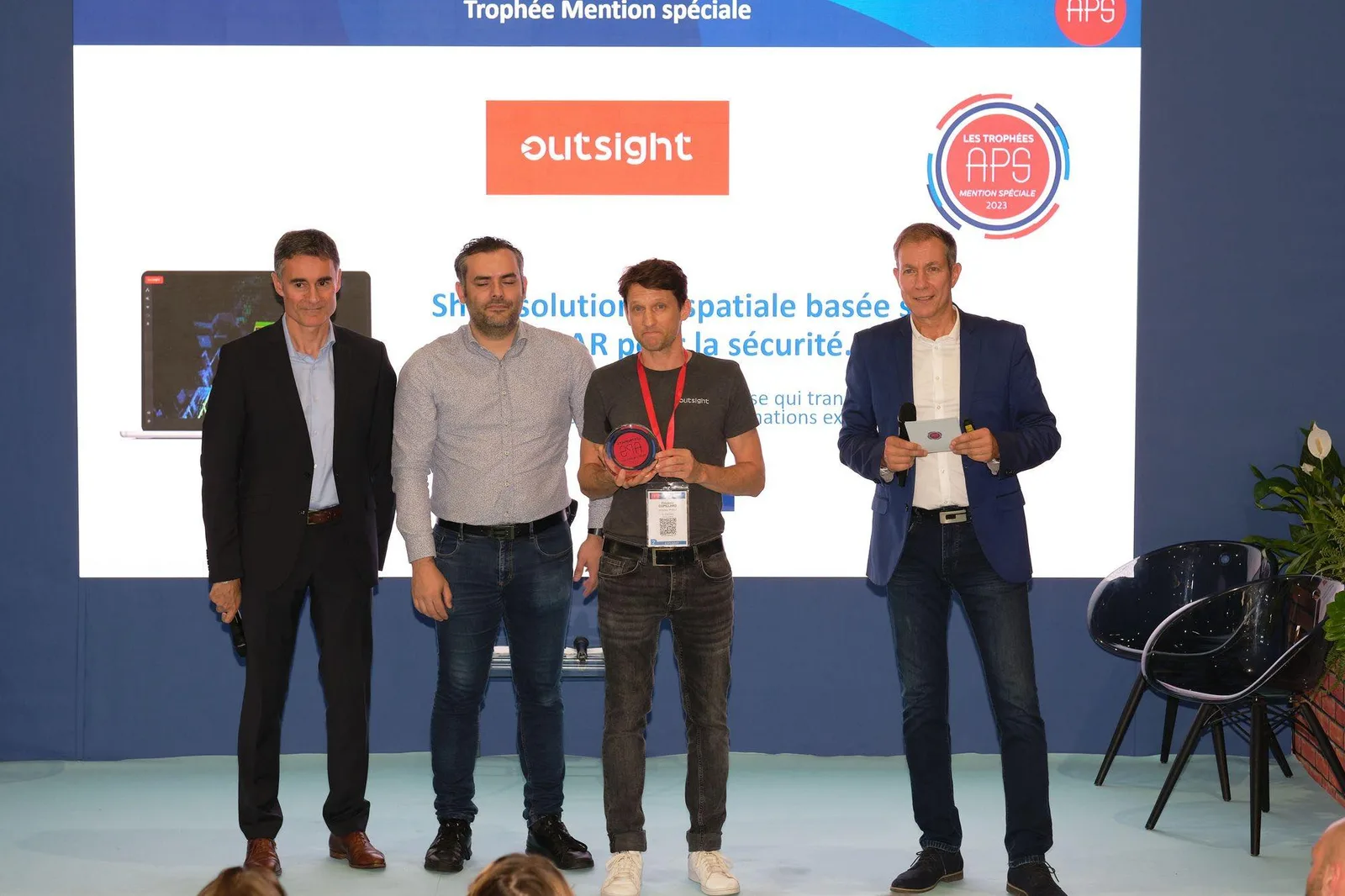
Outsight receiving an award at APS

LiDAR, originally developed for the automotive industry, uses light as lasers to measure distances, creating 3D images known as “point clouds”.

Our 3D LiDAR-based software SHIFT transforms this raw data into actionable insights, analyzing positions and movements of people, objects, and vehicles with precision.

LiDAR vs Camera: Superior People Flow Monitoring Solutions

LiDAR solutions’ accuracy and versatility make them a superior solution and will undoubtedly lead to improved safety and efficiency in high-traffic areas.

Read article →
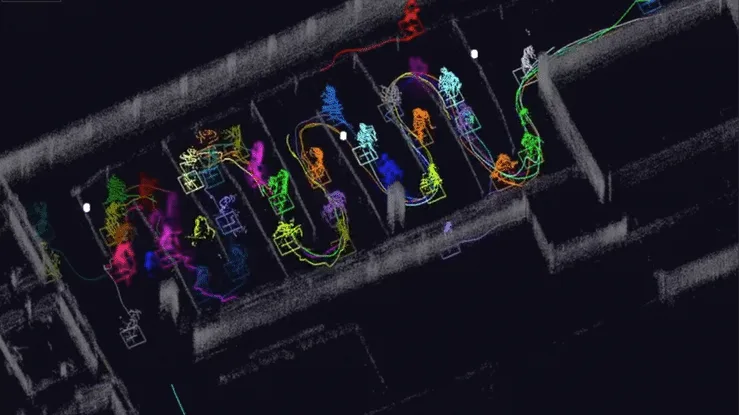
  • Accurate localization and continuous monitoring of intruders within premises.
  • Significant reduction in false alarms.
  • Employment of anonymous data.

Our cutting-edge software adeptly transforms raw LiDAR data into real-time actionable spatial information, elevating security levels to new heights.

LiDAR Enhances Security Solutions

LiDAR-based security systems, with the right perception software, provide smart, efficient, and automated means of preventing threats and avoiding false positive detections.

Read article →

By harnessing the unparalleled potential of 3D LiDAR data, we are not only enhancing security but also minimizing false alarms, enabling operators to concentrate on critical security aspects such as intruder detection and real-time tracking in sensitive areas.

Our software is sensor-agnostic, allowing customers to choose the most appropriate hardware manufacturer based on their needs.

After years of development, 73 patent filings, and feedback from hundreds of customers globally, we’re proud to be recognized again as a leader in the burgeoning field of Real Time Monitoring!
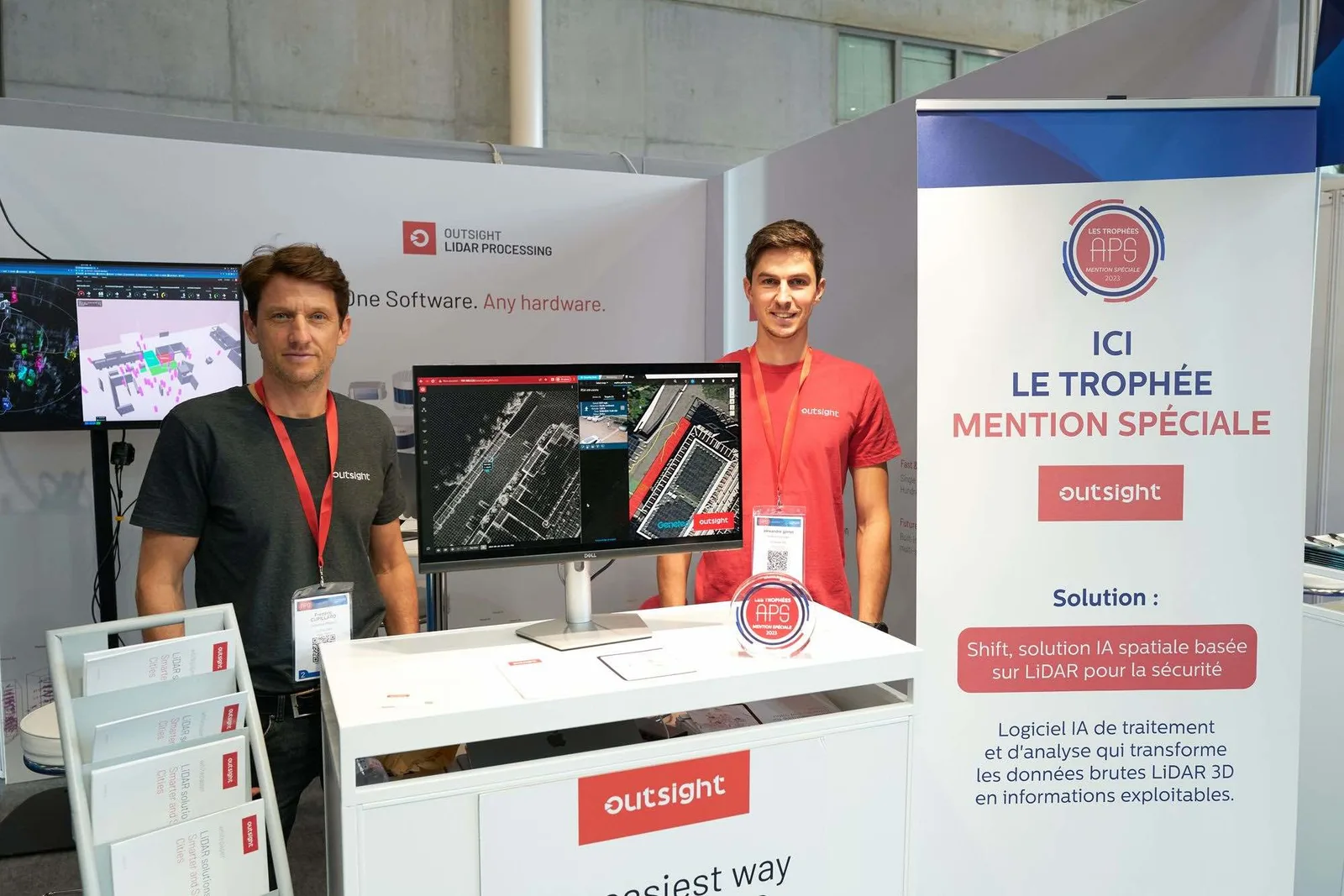
Outsight booth at APS

This award follows many other recognitions!
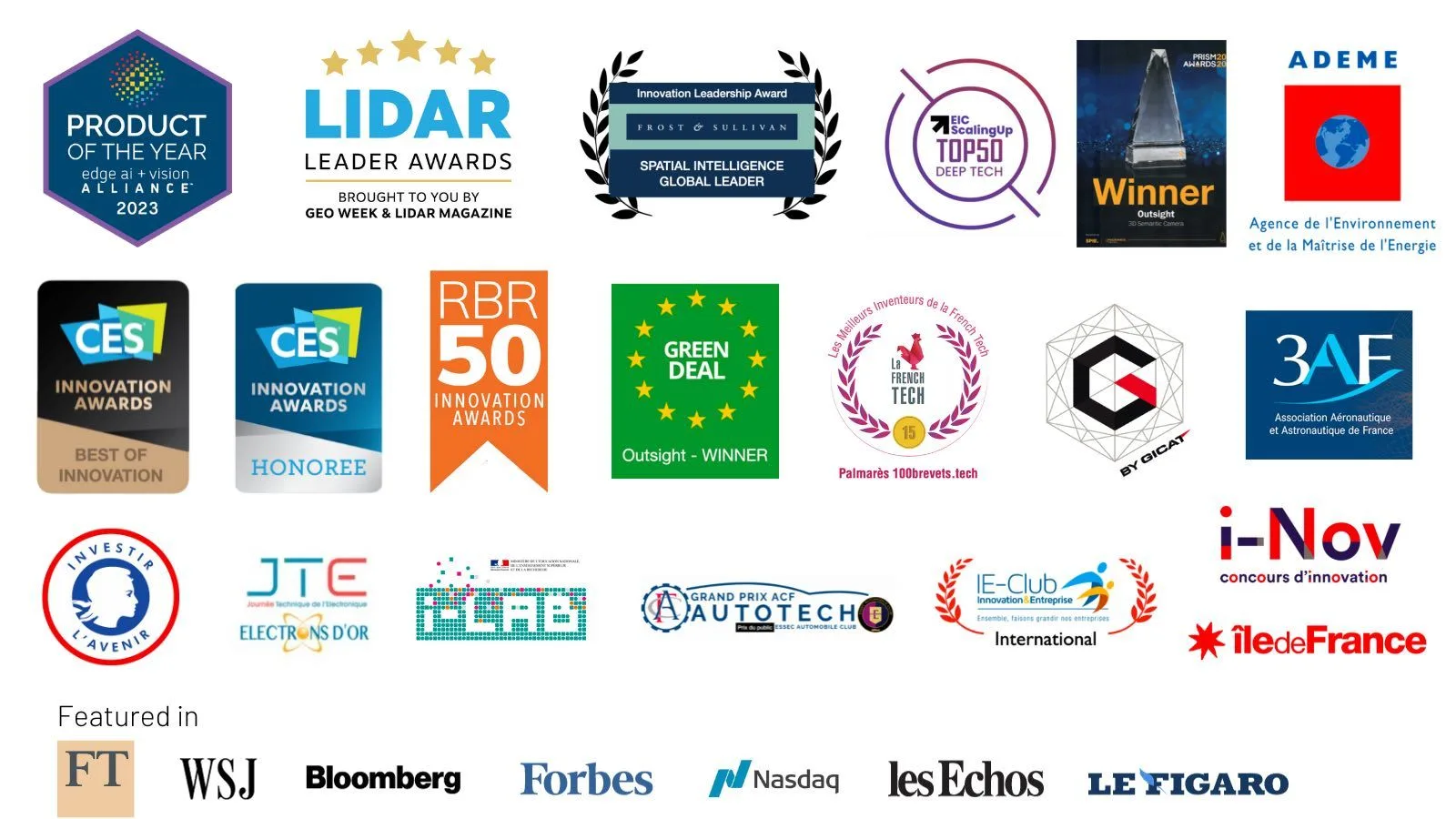
Outsight's awards and other recognitions

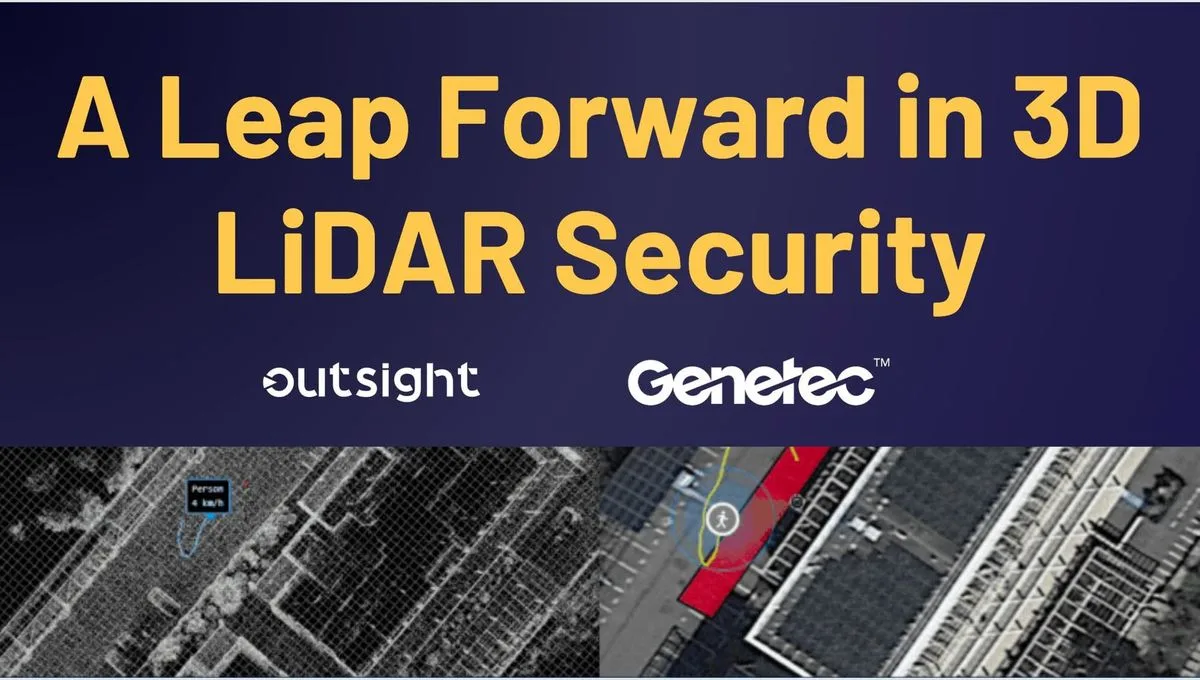
Keeping with the saying that _good news come in pairs, we also took the opportunity during the APS Salon de la Sûreté & de la Sécurité to announce the integration of Outsight and Genetec solutions.

This collaboration aims to accelerate LiDAR deployment in the security sector, a testament to our commitment towards enhancing security and safety solutions.

Outsight and Genetec Integrate Their Solutions

The collaboration between two industry leaders marks a significant advancement for enhanced security solutions across many industries.

Read article →

Related Articles

AIRPORTS

Aeroporti di Roma to deploy Outsight's Physical AI solution at scale across Rome Fiumicino Airport

Aeroporti di Roma (ADR) is expanding its collaboration with Outsight to a large-scale deployment across almost all Schengen common-use areas at Rome Fiumicino Airport.

CORPORATE

Intel and Outsight Announce Strategic Collaboration to Bring Physical AI–Powered Spatial Intelligence to the Enterprise Edge

Outsight’s Shift platform integrated into Google Distributed Cloud Edge powered by Intel Xeon 6 SoC – Live demonstration at Google Cloud Next 2026

Let's connect

Send us a Message

Drop your email and we'll get back to you as soon as possible.

Frequently Asked Questions

  • What is the APS Trophies award and who judges it?

    The APS Trophies are delivered at the Salon de la Sûreté et de la Sécurité, a French trade exhibition focused on protecting employees, sites, and data against malicious acts. The award identifies solutions judged to have the most measurable impact in the security industry across that year's entrants. In 2023, Outsight received a Special Mention at this event for its SHIFT platform, which uses infrastructure-based 3D LiDAR to deliver real-time, anonymous spatial awareness across airports, train stations, and security-sensitive facilities. Winning at this event signals peer recognition within the physical security and professional safety sector, distinct from technology-industry honors such as CES or Gartner recognitions.

  • How does sensor-agnostic LiDAR software affect total deployment cost in security installations?

    When intrusion-detection software is locked to one LiDAR manufacturer, operators pay that manufacturer's list price with no competitive leverage. Sensor-agnostic software lets a security integrator source sensors from whichever compatible model best fits the site budget and coverage geometry. The SHIFT platform, for example, supports hardware from Hesai, RoboSense, Ouster, Velodyne, and Seyond within a single processing pipeline, so procurement teams can negotiate across vendors rather than accepting a sole-source price. In practice, a large perimeter can mix long-range sensors at corners with shorter-range units along walls, optimizing spend without changing the analytics stack above it. That flexibility is especially relevant in security-sensitive facilities such as datacenters, where coverage requirements are complex and hardware budgets are tightly scrutinized.

  • What separates 3D LiDAR intruder tracking from traditional perimeter detection like microwave barriers?

    Microwave barriers and passive infrared detectors trigger a binary alert: something crossed a line. They cannot report where in the zone the intruder is, how fast they are moving, or whether they stopped. A 3D LiDAR pipeline assigns each detected entity a continuous trajectory from the moment of entry, so a security operator sees position, heading, and behavioral classification (stopped, crouching, running) updated multiple times per second. That trajectory also persists across the whole monitored area rather than resetting at each barrier segment. The SHIFT platform applies this approach in security-sensitive facilities such as datacenters, processing detections through a sub-50ms end-to-end pipeline while remaining anonymous by definition, since LiDAR captures shape and motion rather than faces or biometric data.

  • Why does LiDAR-based security work in environments where cameras fail?

    Cameras depend on ambient or artificial light to form a usable image, making them unreliable in complete darkness, direct backlight, fog, or smoke. LiDAR emits its own laser pulses and measures their return, so it operates identically at 3am in an unlit yard as it does at noon. This matters for critical infrastructure sites, energy facilities, and datacenters where perimeter breaches are most likely to happen outside business hours or in conditions (smoke, steam) that would blind a camera before an operator could respond. Outsight's SHIFT platform builds on this principle by processing LiDAR point clouds in real time, tracking the shape and motion of every person or vehicle without capturing faces or biometric data, making it well suited to security-sensitive deployments such as datacenters where both reliability and privacy compliance are requirements.

  • Can a LiDAR security deployment distinguish between a person and an animal or a blowing object to cut nuisance alerts?

    3D point-cloud classification models trained on shape and motion can separate human gait from quadruped movement and from the irregular scatter pattern of a plastic bag or branch. A person produces an upright bounding box with rhythmic lateral sway; an animal produces a lower, four-point silhouette with a different cadence; wind-blown debris produces a cluster with no coherent trajectory. The SHIFT platform applies exactly this multi-class logic in security-sensitive deployments, using LiDAR data that captures shape and motion without recording faces or biometric identifiers. Tuning confidence thresholds per site conditions is a standard commissioning step, and the result is a measurable reduction in nuisance-alarm rate compared to passive infrared or video-motion-detection systems.

  • How does the Outsight and Genetec integration change the workflow for a security operator?

    Before the integration, LiDAR spatial data and video management lived in separate consoles, requiring an operator to correlate a LiDAR alert with a camera view manually. The Outsight-Genetec integration surfaces LiDAR-derived events (intruder position, zone breach, trajectory) directly inside Genetec Security Center, so the operator sees the spatial alert and the associated camera feed in one interface without switching applications. This is possible because the SHIFT platform exposes open integrations designed to connect 3D perception data into existing security ecosystems. The result compresses the time between detection and response, which is the primary operational goal of any physical security deployment.