
Skip to content
Insights
Wireless based tracking is about to disappear

Wireless based tracking is about to disappear

Wireless Tracking is Outdated. The mobile industry, driven by GDPR, started a journey to prevent its use.


In the fast-paced environment of modern airports, staying current with technological advancements is key to optimizing passenger flow, ensuring security, and enhancing the overall travel experience.

Yet, some airport operators are still considering deploying first-generation wireless tracking technology to monitor passenger movements.

If you’re contemplating this move, it’s time to reconsider. Here’s why wireless tracking is about to dissapear.

Wi-Fi Tracking: A Technology on the Decline

Wi-Fi-based tracking is rapidly losing its relevance in airport operations due to several factors.

Notably, the mobile industry, driven by privacy regulations such as GDPR, has initiated efforts to prevent wireless tracking.

Apple and Android devices have introduced features like MAC address randomization to protect user privacy, significantly diminishing the effectiveness of Wi-Fi tracking technologies.

As of 2024, iOS holds a 58.81% market share in the US. In California, estimates suggest iOS has a market share of 60-65%.

Airplane travellers, often more affluent, favor high-end smartphones like iPhones, which likely account for 65-70% of the market share in California airports.

The Erosion of Wi-Fi Tracking Capabilities

Wi-Fi tracking technology, which relies on identifying devices through their MAC addresses, is becoming increasingly unreliable.

Apple, which dominates the high-end smartphone market, introduced “Private Wi-Fi Address” in 2020. This feature randomizes MAC addresses to prevent tracking, thereby undermining the traditional methods of Wi-Fi tracking.
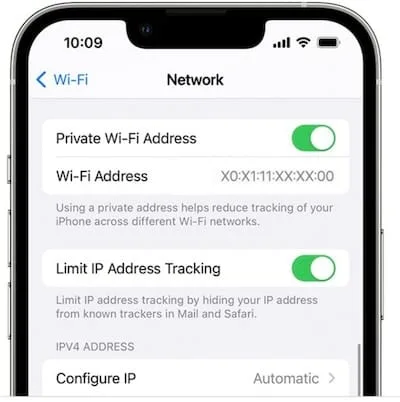
Apple iphone privacy

Instead of using the address assigned to the network interface of the smartphone or tablet, the device creates a random virtual MAC for each new network (SSID) it connects to. A functionality applied by default.

However, in late 2023, a bug was discovered that allowed real MAC addresses to be used for tracking until Apple released a fix.

This revelation highlighted a critical gap between perceived and actual security, underscoring the diminishing reliability of Wi-Fi-based solutions.

Wi-Fi tracking solutions that previously relied on these vulnerabilities now are facing a significant drop in performance. As Apple and Android devices adopt stronger privacy protections, such as MAC address randomization, the ability to track devices through Wi-Fi becomes increasingly ineffective, rendering these solutions far less useful than before, especially in crowded environments like airports.

Inherent Limitations in Precision and Reliability

One of the primary drawbacks of wireless tracking is its lack of precision, even before the Apple bug was uncovered.

This technology tracks devices, not people. Passengers may carry multiple devices, share devices, or have their devices turned off, resulting in inconsistent and unreliable data.

Additionally, wireless signals can be obstructed by physical structures, further decreasing accuracy.

Unlike 3D LiDAR, which captures the exact location and movement of every individual, wireless tracking simply can’t provide the level of detail required for efficient and effective airport management today.
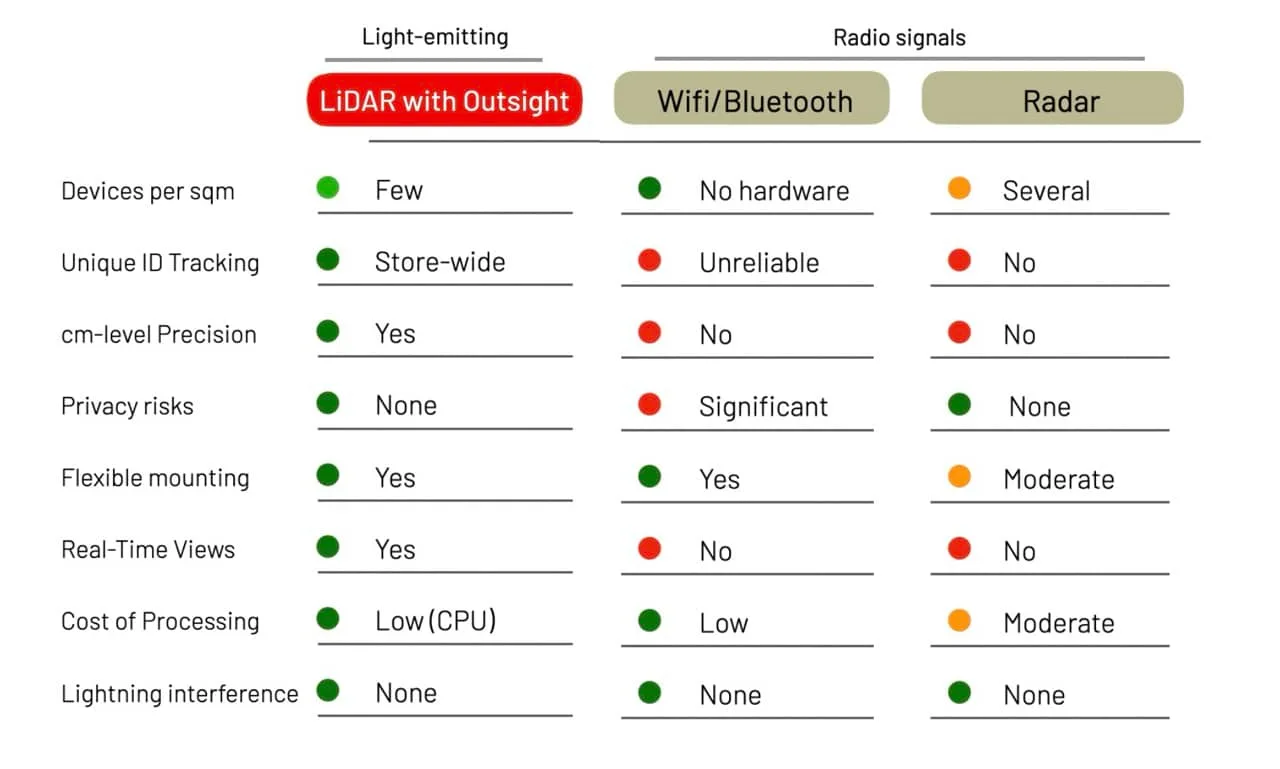
Using Radio signals is much less precise than perceiving the reality in 3D

Using Radio signals is much less precise than perceiving the reality in 3D

Growing Privacy Concerns

Privacy concerns around wireless tracking are increasing, and rightly so.

These systems rely on tracking personal devices, raising significant concerns about data security and potential privacy breaches.

The focus on privacy is intensifying. With both Apple and Android enforcing MAC address randomization, the effectiveness of Wi-Fi tracking solutions is expected to decline further. As users update to newer software versions like iOS 17.1, the ability to track devices through Wi-Fi will become increasingly limited, posing a challenge for airports relying on this older technology.

Regarding the Private Wi-Fi Bug:

For the vast majority of users the impact of this bug is minimal, but for those whose privacy is important, or even vital, this is very bad news.

These groups may have been tracked without their knowledge for more than three years, even more so when they thought they were protected by a feature that Apple itself described as helping to protect specifically against this threat.- Source.

As privacy regulations become more stringent globally, the performance of wireless tracking will continue to diminish, making it an even less viable option.
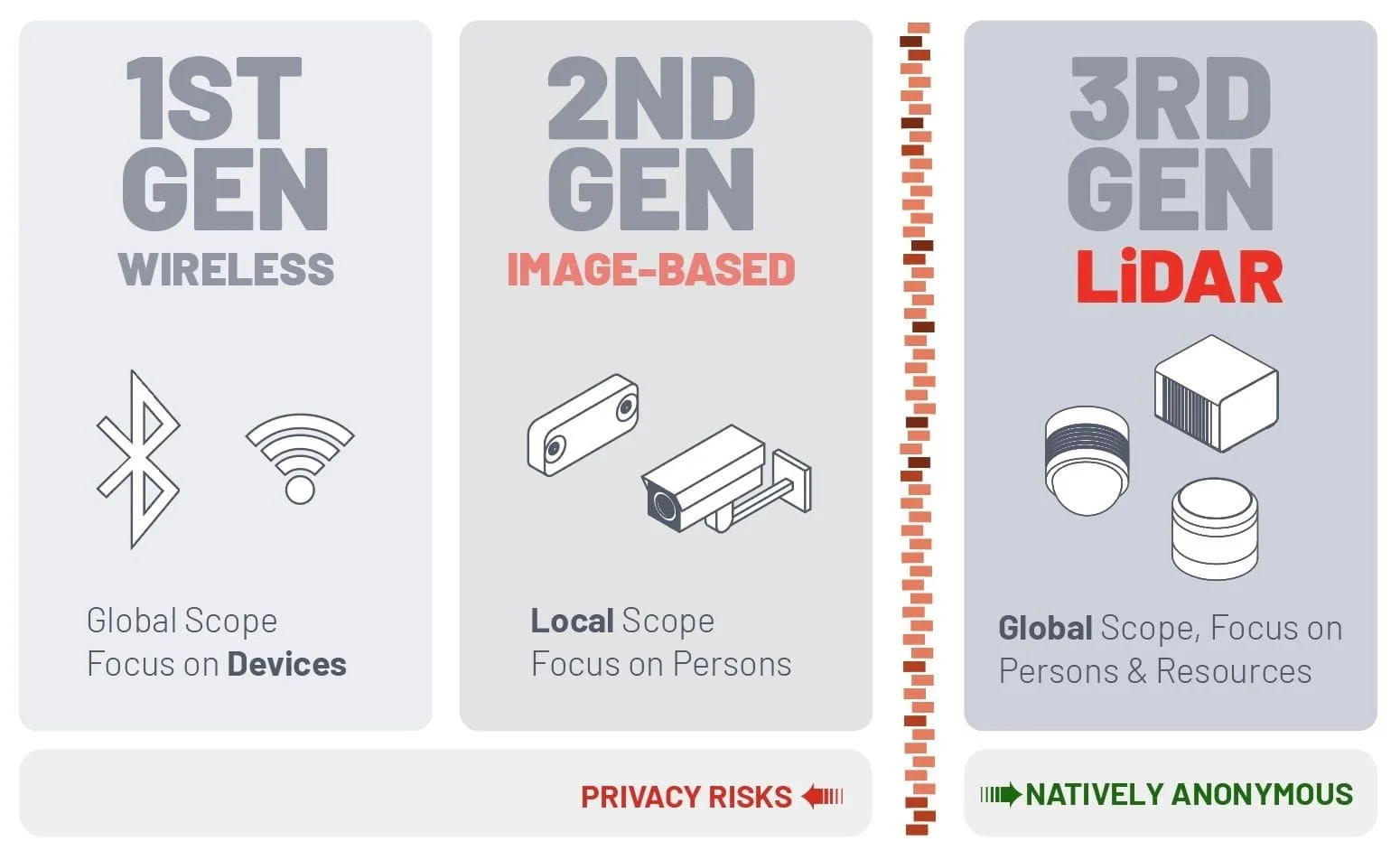
Previous generations of technology pose privacy risks.

Previous generations of technology pose privacy risks.

Limited Insights Compared to Third-Generation Solutions

Understanding passenger behavior goes beyond merely knowing their location.

Wireless tracking can only provide information about the location of a device, not the person carrying it.

This approach fails to capture essential details, such as passenger interactions, passenger types (children, adults, or those requiring special assistance), and how passengers interact with airport resources.

Try to do this with wireless tracking:

LiDAR adds a Perception capability in 3D that is lacking in Location-only Wireless solutions

Third-generation technologies like 3D LiDAR provide a deeper level of understanding, offering comprehensive perception capabilities that include detailed insights into passenger behavior, movement patterns, and interactions.

This data is crucial for enhancing service quality and operational efficiency in today’s airports.

The Bottom Line: Keep Up with the Industry, Don’t Fall Behind

To stay competitive and compliant with privacy standards, airports must move beyond outdated technologies.

Third-generation technologies like 3D LiDAR offer precise tracking without infringing on privacy, providing a comprehensive understanding of passenger behavior and airport resource utilization.

Airports worldwide are already using 3D LiDAR technology, recognizing its superior accuracy, advanced data capabilities, and alignment with current privacy standards.

The shift away from Wi-Fi-based tracking is inevitable as privacy concerns grow and technology evolves.

To stay competitive and meet the needs of today’s travelers, now is the time to invest in 3D LiDAR, a solution that’s proven and effective in today’s airport environments.



Related Articles

AIRPORTS

Achieving Complete Synchronization in Airports with Spatial AI Technology

LiDAR technology helps achieve synchronized operations across all areas of an airport. Outsight’s Spatial Intelligence platform provides real-time tracking, efficient resource allocation, and ensures privacy.

AIRPORTS

Balancing Safety with Efficiency: How LiDAR Transforms Airport Passenger Flow

Airports, as critical transportation hubs, play a dual role in ensuring passenger safety and maintaining a smooth flow of travelers.

Let's connect

Send us a Message

Drop your email and we'll get back to you as soon as possible.

Frequently Asked Questions

  • What is MAC address randomization and why does it break Wi-Fi passenger tracking?

    MAC address randomization generates a new virtual hardware identifier each time a device connects to a different network. Because Wi-Fi tracking relies on recognizing a consistent MAC address to follow the same device across an airport, randomization makes each connection look like a new, unknown device. Apple introduced the feature by default in 2020, and Android followed a similar path. The result is that a tracking system sees a stream of unrelated identifiers rather than a persistent ID it can link to a journey. This structural unreliability is part of why infrastructure-based approaches have gained traction: Outsight's Motional Digital Twin, deployed at airports including Dallas Fort Worth and Paris-Charles de Gaulle, tracks movement through 3D LiDAR geometry rather than device signals, making it unaffected by MAC randomization or any future changes to wireless protocols.

  • How accurate is Wi-Fi positioning compared to LiDAR for locating someone inside a terminal?

    Wi-Fi positioning is inherently coarse: it estimates location by measuring signal strength from access points, which typically yields positional accuracy in the range of several meters to tens of meters depending on access-point density and multipath interference from walls and metal structures. LiDAR resolves object positions at centimeter-level precision because it uses direct time-of-flight measurements rather than signal inference. In a congested terminal where two queues stand only a few meters apart, Wi-Fi cannot distinguish them; LiDAR tracks each person in each queue as a distinct entity. Outsight's infrastructure-based deployments at airports such as Dallas Fort Worth and Paris-Charles de Gaulle demonstrate this in practice, using 3D LiDAR to generate a real-time Motional Digital Twin that separates adjacent flows with the kind of spatial fidelity that signal-strength methods cannot approach.

  • Do all passengers carry a smartphone that a Wi-Fi tracking system could detect?

    No. Children, some elderly travelers, and international visitors who switch off data roaming are routinely invisible to Wi-Fi and Bluetooth tracking systems. Additionally, a passenger carrying two devices registers as two apparent people, and a family sharing one device registers as one. Wealthier travelers on premium routes, who tend to use Apple devices with privacy features enabled by default, are among the hardest demographic to track with wireless methods. LiDAR-based systems detect every physical entity in the scene regardless of what devices, if any, they carry. This is the principle behind Outsight's infrastructure-based approach: the Motional Digital Twin tracks shape and motion directly from 3D LiDAR sensors, making device ownership, roaming status, or privacy settings irrelevant to occupancy counts and flow analysis at sites such as Dallas Fort Worth and Paris-Charles de Gaulle.

  • Can Wi-Fi tracking tell the difference between a slow-moving passenger and a stationary one?

    Practically, no. Wi-Fi positioning updates are too infrequent and too imprecise to reliably classify behavioral states like queuing, loitering, or walking. A system polling device locations every few seconds cannot resolve whether a person is standing still voluntarily, waiting in a queue, or has simply stopped to read a departures board. 3D LiDAR samples at high frame rates and classifies motion state continuously, which is why it can distinguish a queue from general crowd density or flag a person who has fallen. This is the core principle behind Outsight's Motional Digital Twin: infrastructure-mounted LiDAR tracks shape and motion in real time, enabling airports like Dallas Fort Worth and Paris-Charles de Gaulle to detect precisely these behavioral differences without relying on device signals or storing any biometric data.

  • Is GDPR the only regulation pushing airports away from Wi-Fi tracking?

    GDPR is the most cited, but it is not alone. Brazil's LGPD, California's CCPA, Singapore's PDPA, and a growing set of sector-specific aviation security directives all impose restrictions on collecting or retaining data that can be linked to an individual. Because Wi-Fi and Bluetooth tracking logs device identifiers that courts and regulators have consistently classified as personal data under these frameworks, compliance requires either explicit consent collection or technical measures that often eliminate the operational value of the data. LiDAR-based approaches sidestep this problem entirely: infrastructure-mounted sensors capture shape and motion rather than device identifiers or biometric data, producing no information classifiable as personal under any of these frameworks. Outsight's deployments at airports such as Dallas Fort Worth and Paris-Charles de Gaulle are built on exactly this principle, using the Motional Digital Twin to deliver real-time operational intelligence without touching personally identifiable data.

  • What happens to a Wi-Fi tracking deployment already in place as more users update to newer iOS versions?

    Performance degrades progressively with each new software update cycle. As the installed base of devices running older iOS versions shrinks, the share of detectable MAC addresses narrows. Airports that purchased Wi-Fi analytics platforms on historical accuracy benchmarks find those benchmarks become invalid within a few years without any hardware change on their end. The investment in infrastructure, access points, licensing, and data integrations cannot be offset by recalibration because the underlying measurement signal is disappearing at the device level. This erosion is part of why infrastructure-based LiDAR approaches have gained traction in airport operations: deployments such as Dallas Fort Worth and Paris-Charles de Gaulle use Outsight's SHIFT platform to track movement in real time without relying on any signal emitted by the traveler's device.