Whitepaper
Ambient Intelligence for Robots
How Infrastructure-based Physical AI brings Ambient Intelligence to robotics, giving every mobile robot on site a shared, real-time view far beyond what onboard sensors can see.
Abstract
Ambient Intelligence is the application of Dynamic World Models to robotics, giving every mobile robot on site Beyond Line-of-Sight (BLOS) Awareness.
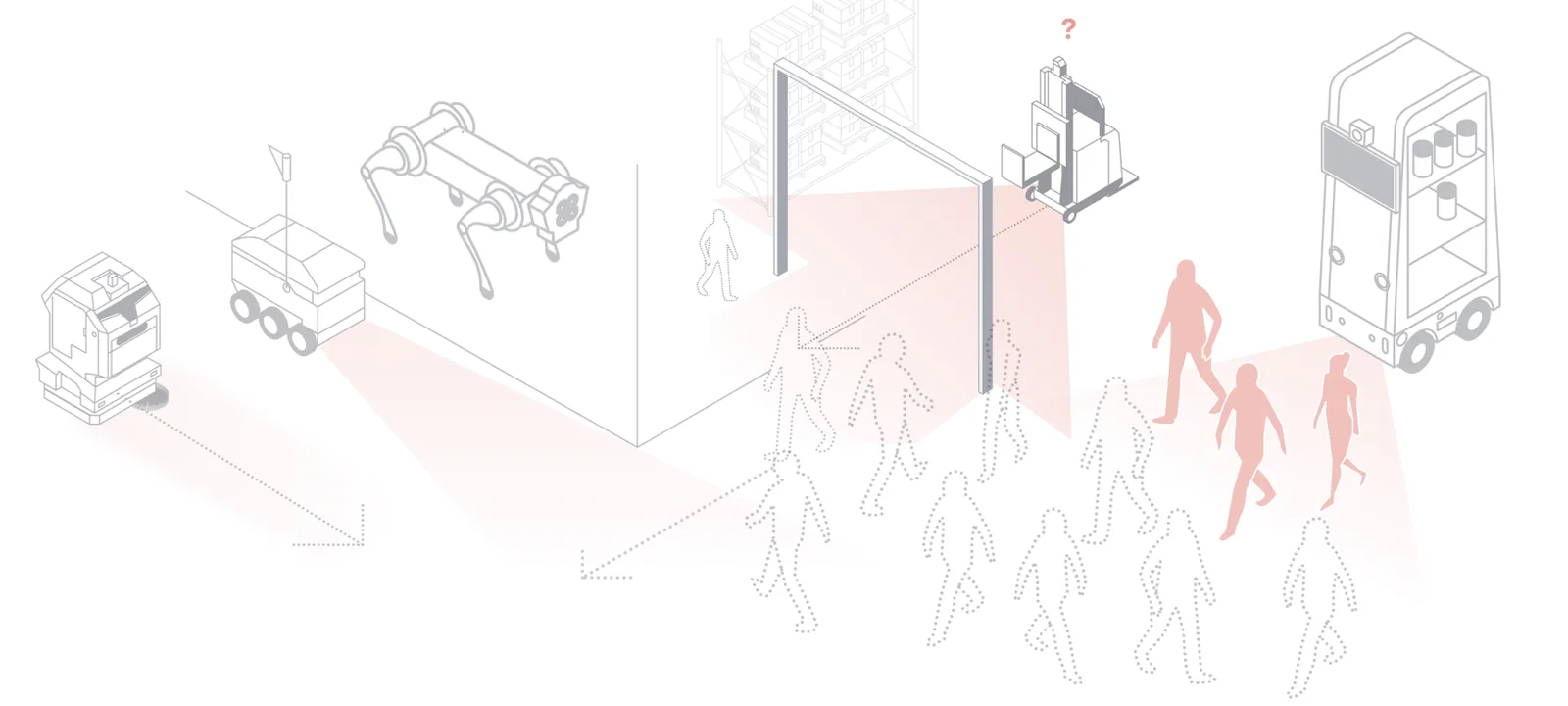
Embodied Physical AI is bounded by what each robot can see and remember on its own, however advanced its onboard sensors and processing. Blind spots, occlusions, scene complexity and stateless perception cap what a mobile robot can achieve in human-dense, real-world environments, and solving them robot by robot is often cost-prohibitive or operationally infeasible.
Infrastructure-based Physical AI, leveraging 3D-native sensors such as LiDAR mounted on the premises and fused with cameras, wireless and business systems, builds the Dynamic World Model of the site: a continuously measured representation of the motion, behavior and interactions of people, vehicles and robots across hundreds of thousands of square meters, turning raw physical movement into semantic meaning. Over time, this continuous measurement builds the Pattern of Life of each site.
Through a Motional Digital Twin (MDT), the model becomes a persistent, context-aware Global Situation Awareness that robots, operators and AI agents share in real time.
Each robot extends its local perception with a site-wide, time-aware view that anticipates flows, crowds and congestion ahead of its path. Individual autonomous units become coordinated systems, powered by the collective intelligence of infrastructure sensors and other robots, whatever their onboard capabilities.
The result is safer, faster and more cost-effective robot operations in the most complex environments.
In its Hype Cycle for Physical AI, 2026, Gartner cites Outsight as a leading Vendor for Ambient Intelligence.
The Limitations of Line-of-Sight Physical AI
Bound by Space: Spatial Limits
Blind spots, occlusions, and environmental complexity restrict what robots can perceive and understand in real-world, human-dense environments.
Overcoming these limits at the robot level is often cost-prohibitive or operationally infeasible, leading most systems to address them only to the extent required to ensure safety.
| Limit | |
|---|---|
| Blind Spots | 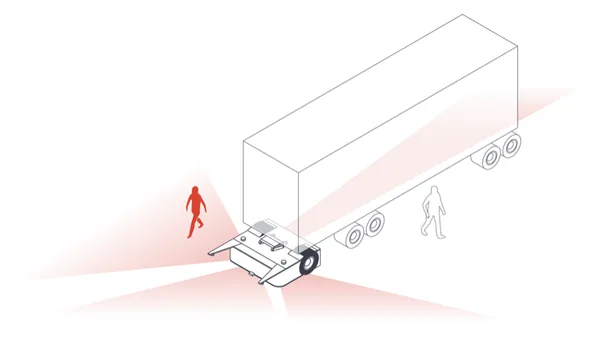 |
| The field of view of a robot only covers a limited portion of the surrounding space, leaving areas outside its perception. | |
| Occlusions | 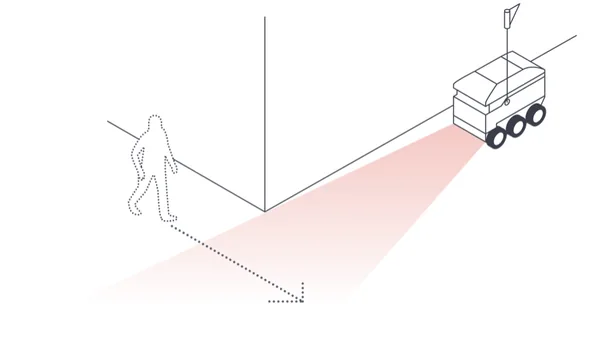 |
| Elements of the environment physically obstruct perception, causing people or objects to disappear from view even when they are nearby. | |
| Scene Complexity | 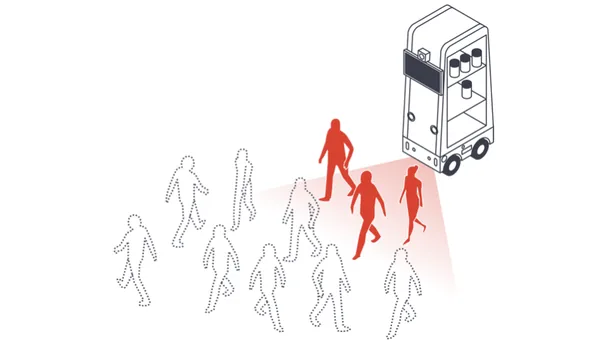 |
| High-density environments, including crowds, with continuous motion and intersecting paths reduce the reliability of local perception and increase uncertainty. |
The Limitations of Stateless Perception
Line-of-sight Physical AI is limited not only in space, but also in time.
Instantaneous perception makes it difficult to connect current observations with past events without using privacy-sensitive identification.
Embodied Physical AI typically relies on stateless perception, where each observation is processed as an isolated moment without a persistent representation of the world over time.
This has three direct consequences:
| Consequence | What it means |
|---|---|
| Lack of Continuity Over Time | As robots and surrounding entities move, observations that fall out of the field of view cannot be reliably associated with later ones, causing the same object or person to be perceived as new upon reappearance, unless explicit identification mechanisms are used. |
| Lack of Relationship Building | Events, interactions, or co-occurrences detected at different moments cannot be easily linked together, making it difficult for robots to understand sequences, dependencies, or evolving situations. |
| No Context Reuse | Information and attributes captured at a different time or location by external systems and sensors cannot be readily applied to the current situation, limiting anticipation and informed decision-making. |
Operational Consequences
The examples below show how these limitations manifest in practice and directly constrain what robots can achieve in operational environments.
| Scenario | |
|---|---|
| Follow-Me Robot Losing Its Leader in a Crowd | 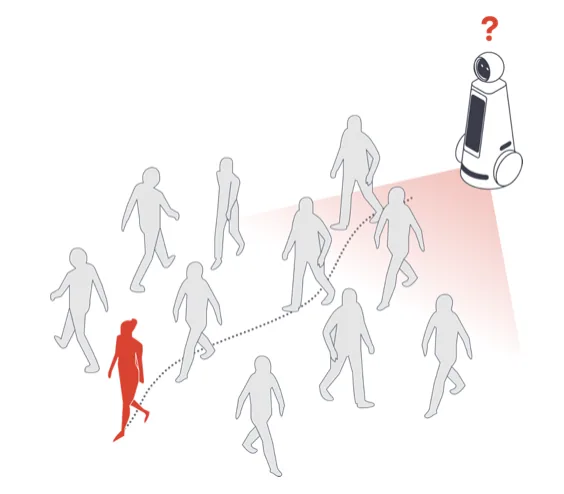 |
| When a person temporarily disappears in a crowd, a follow-me robot cannot reliably recognize them upon reappearance without ID, losing all prior interaction context, degrading the user experience and limiting adoption.
In practical terms, this may just make the solution unusable in crowded situations. |
|
| Doorway Crossing Uncertainty in a Warehouse | 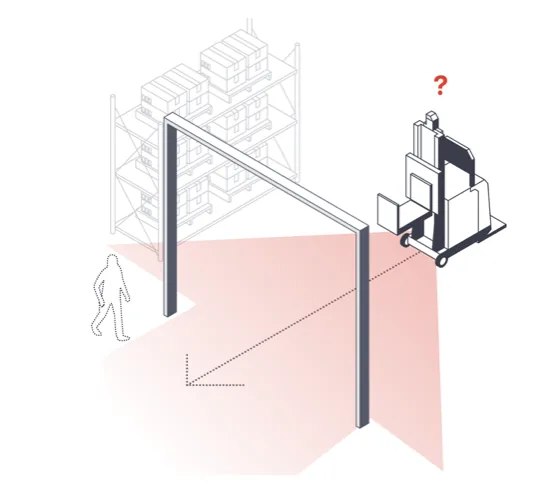 |
| An AGV/AMR approaching a doorway cannot see what lies beyond it, forcing conservative behavior when entering a new zone where people or vehicles may be present, slowing operations and reducing overall throughput.
This often limits deployments to areas segregated from people, shrinking the accessible market. |
|
| Cleaning Without Awareness of Recent Crowd Activity | 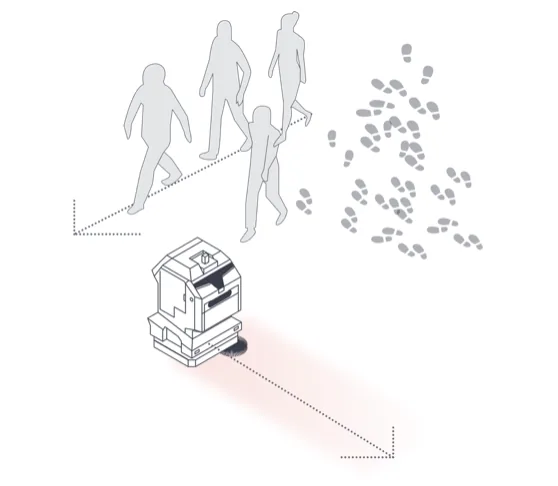 |
| A cleaning robot treats all areas equally, unaware that a space heavily used moments ago is likely dirtier than low-traffic areas, reducing cleaning effectiveness and increasing unnecessary operating costs.
Automated cleaning pays off at scale, which also requires knowing where and when to clean. |
|
| Context-Unaware Path Selection in Dynamic Crowds | 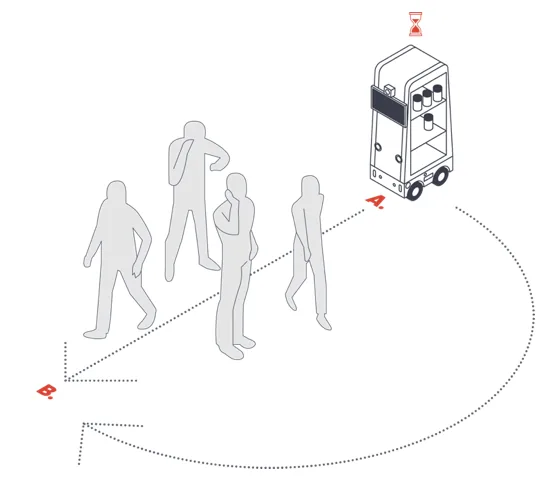 |
| A robot selects the shortest path from A to B, unaware that a temporary crowd ahead will make this route slower than a longer but clearer alternative, reducing throughput and the return on investment of the solution.
Repeated poor route choices erode trust in autonomy and slow fleet expansion where it would deliver the most value. |
The Ambient Intelligence Layer
Digitizing Individual Movement: What’s a Motional Digital Twin?
A Motional Digital Twin (MDT) is a real-time digital replica of a real-world space that delivers Spatial Intelligence by continuously tracking how every person and object moves and interacts within that environment.
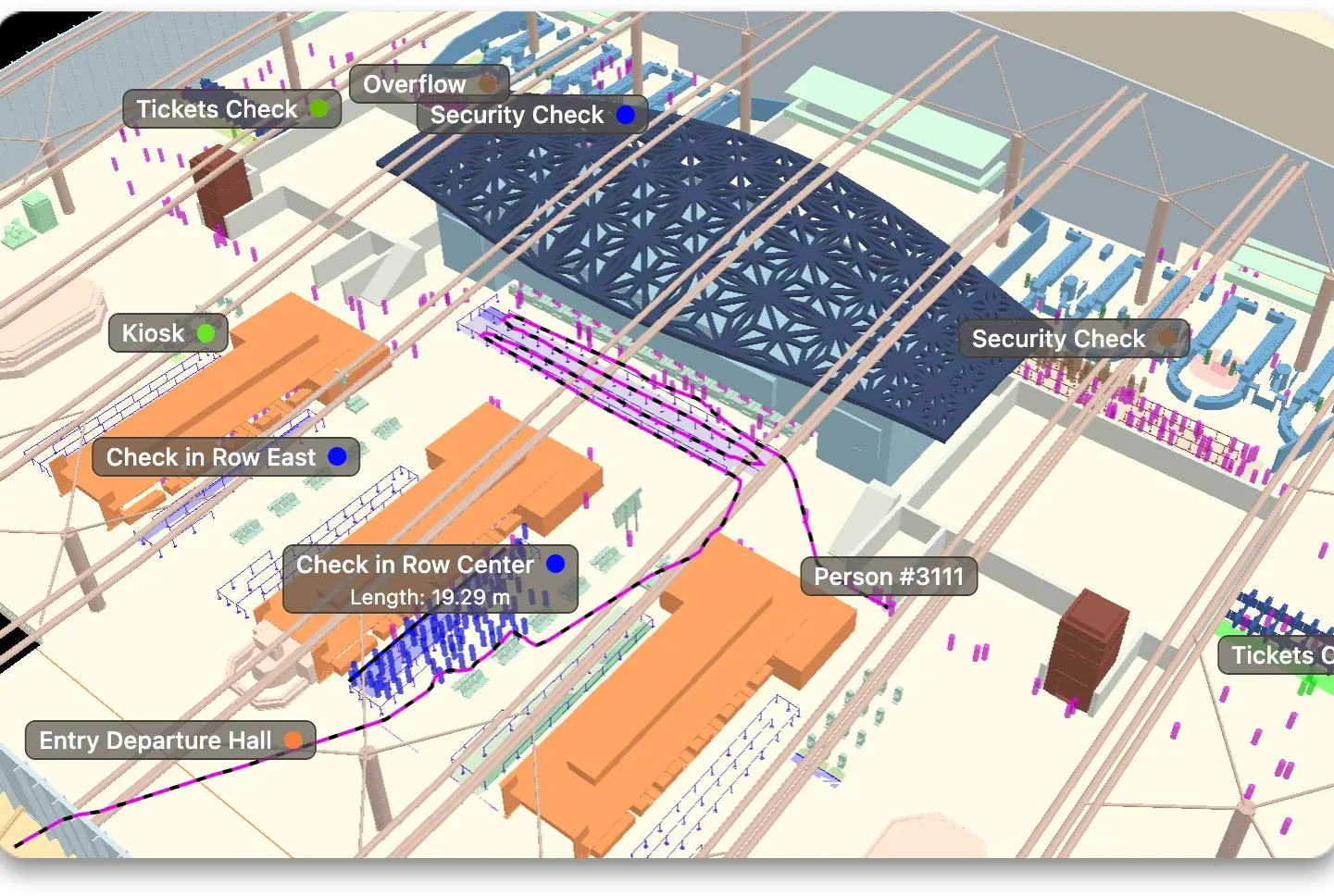
It collects and processes real-time data from infrastructure-mounted native 3D sensors, such as LiDAR, combined with supplementary sources from external sensors and systems.
This technology extends traditional Digital Twins beyond static buildings and assets by adding the critical dimension of real-time movement digitisation, revealing unique insights about physical world interactions.
By capturing movement and spatial interactions in real time from the infrastructure, Motional Digital Twins enable continuous operational insight for Smart Places and provide mobile robots with global, context-aware situational understanding.
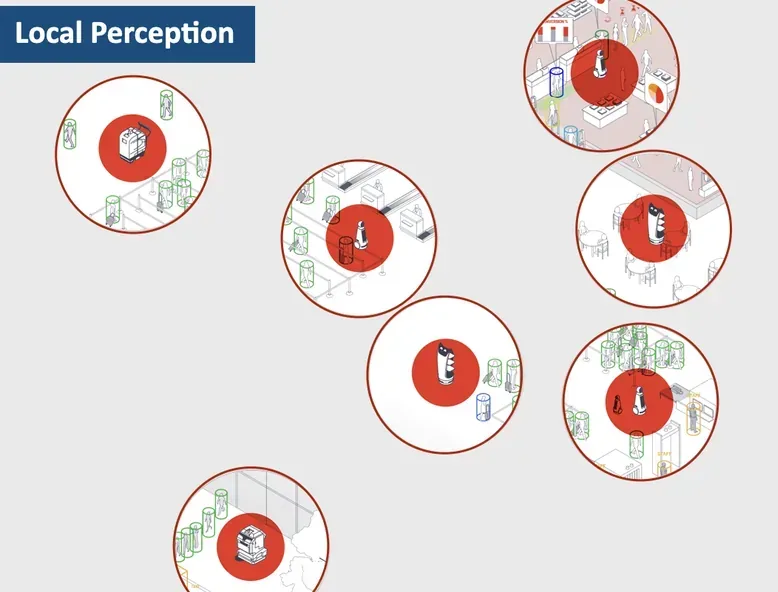
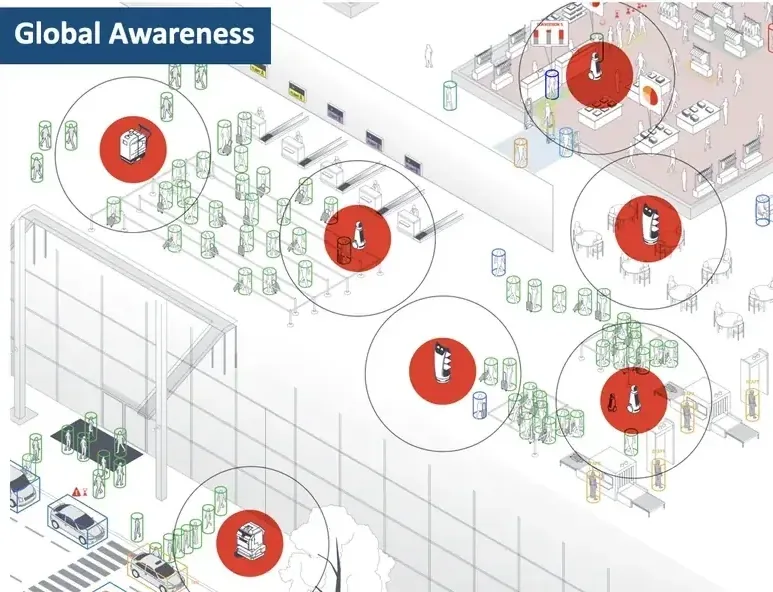
Each Motional Digital Twin is the operational instance of a site’s Dynamic World Model: Physical AI builds the model, and the MDT brings it to life for operators, AI agents and robots.
Premises-wide Situation Awareness
Through the Motional Digital Twin, the Dynamic World Model continuously informs every robot about each individual’s profile, position, behavior, relationships, time and predicted next move:
| Dimension | What it means for a robot |
|---|---|
| Profile (who) | Each person, vehicle and robot is represented by a unique anonymous ID, so a robot always knows which entity it is dealing with, including after that entity leaves and re-enters its field of view. |
| Position (where) | Positions are updated continuously with the precision each application requires, including for entities hidden behind walls, doors or crowds. |
| Behavior and Interactions (what) | How each entity moves and interacts with others and with infrastructure assets reveals the patterns a robot needs to anticipate. |
| Relationships and Causes (why) | Observed relationships and inferred causes, each with a confidence level, explain why a situation is unfolding, such as a crowd forming at an entrance. |
| Time (when) | Every data point is time-stamped, linking what a robot perceives now with what happened minutes or hours earlier anywhere on site. |
| Prediction (what if) | Real-time alerts and predictions let robots plan for the conditions ahead, and the same data trains and validates their behaviors in simulation. |
Behind the Motional Digital Twin, a Physical AI layer models the movement, attributes and interactions of every entity from infrastructure perception, all held in one spatial and temporal reference covering the entire premises.
Reality is structured at the level of individual entities and events, so the model keeps a coherent and constantly updated understanding of how people, vehicles, robots and assets behave across the site.
For robots, this becomes a global, shared and time-aware context to draw on whenever their own line-of-sight perception reaches its limits.
Physical AI: The Technological Foundation
Ambient Intelligence rests on the same technological foundation as every Dynamic World Model: Physical AI processing 3D-native sensor data at the scale of entire sites.
From Digital Traces to the Moving Physical World
AI first learned from what people write, say and photograph. Its next step takes it into the physical world, where people, vehicles and robots are always in motion.
| Wave | What is digitized | AI | |
|---|---|---|---|
| Knowledge and processes | Documents, records, transactions | LLMs, text and time-series models | |
| Human digital interaction | Images, video, voice, conversations | VLMs, multi-modal models | |
| Static physical world | Buildings, assets, maps, generated 3D worlds | First world models, using Physical AI | |
| Dynamic physical world | People, vehicles, robots and goods in motion | Dynamic World Models, Infrastructure-based Physical AI | |
Any Physical AI needs to perceive and understand the world in 3D.
Ambient Intelligence Meets World Models
World models are AI systems that learn an internal representation of an environment, allowing them to predict how it will evolve and to anticipate the consequences of actions before they are taken.
They serve three functions. They render views of a world for people to see. They simulate its state, with faithful geometry, physics and dynamics. They plan actions for agents and robots operating within it. These three functions are converging into unified foundation models that can perceive, predict and act in 3D.
As world models evolve from synthetic data generation toward real-world grounding, each of these functions increasingly depends on an accurate description of what is actually happening in the world at any given moment.
In its Hype Cycle for Physical AI, 2026, Gartner describes Ambient Intelligence as the evolution of smart spaces into environments that sense, respond and adapt to the people and things within them, in a proactive, context-aware and interface-free way. To behave this way, an environment needs a live understanding of everything happening within it, and this is precisely what a Dynamic World Model provides.
Outsight named in the Gartner Hype Cycle for Physical AI, 2026
Gartner names Outsight a leading vendor in Ambient Intelligence, alongside AWS, Google, Microsoft and Siemens, confirming its lead in infrastructure-based Physical AI.
Read article →
Capabilities for Robot Fleets
Infrastructure-level intelligence
What every robot, agent and operator gains from a Dynamic World Model.

Premises-wide
Understanding
Infrastructure sensors capture the position and movement of every person, vehicle, and robot in 3D and in real time, delivering spatial insights at scale.
This acts as an omniscient layer of understanding available to any robot or agent, regardless of its onboard sensing and processing capabilities.

Reasoning
and Planning
Delivering premises-wide actionable insights enables demand forecasting, route optimization, resource allocation and proactive decision-making.
Robots and agents can plan based on predicted conditions and multi-step reasoning rather than reacting only to immediate observations and local awareness.

Control
and Safety
Premises-wide situational awareness makes any robotics solution inherently safer by detecting risks beyond individual robot perception.
Operators retain full visibility through dashboards, alerts, and timeline replay, with intervention capabilities to ensure compliance.

Persistent Shared
Memory
Continuous tracking assigns a unique ID to every entity and maintains context over time, building a historical record of movements, interactions, and events.
This persistent memory allows leveraging past data collected across the entire environment, not just from their own sensors or synthetic generation.
Key Features
Real-time Premises-wide Awareness: six ready-to-use features that extend every robot’s awareness to the entire site.
| Feature | What it delivers |
|---|---|
| Shared 3D Map and Navigation | A single 3D map serves robot navigation, localisation and flow monitoring, reducing onboard computation while enabling route selection based on real-time conditions within 50 ms latency. |
| Continuous Individual Tracking | Every person, vehicle, and robot receives a unique ID maintained across the entire environment, enabling persistent Situation Awareness. |
| Occlusions-free Perception | Infrastructure sensors act as an omniscient perception layer, providing robots with complete spatial awareness beyond the limitations of their onboard sensors. |
| Multi-Modal Sensing | Contextual information from different sensor modalities is fused into a unified spatial reference, enriching robot perception beyond what onboard sensors can capture alone. |
| Assets Interactions and Events | Real-time operational context from the infrastructure enables robots to optimize workflows based on resource availability, occupancy, and activity patterns. |
| Alerts, Reports and Timeline | A shared layer of notifications, alerts, and historical playback enables coordinated responses to events triggered by robots, infrastructure sensors, or a combination of both. |
Core Properties for Robot-Grade Awareness
The transformative impact of Dynamic World Models is built upon a foundation of unique properties.
| Property | What it means |
|---|---|
| Movement-driven | Examines reality from the perspective of motion and behavioral data, rather than static structural information or simple sensor readings. |
| Real-world | Focuses on physical reality and tangible environments, not merely virtual representations or synthetic scenarios. |
| Individual data | The capability to attach information and insights to each individual moving entity, rather than relying solely on aggregated or statistical data such as general flow dynamics. |
| Continuous Tracking | The capability to track the position of each individual object or person through space and time, maintaining a consistent unique identifier throughout their complete presence within the site. |
| Spatial Interactions | Capturing not only positions, but also how individuals behave and interact in real-world environments, with each other, available assets, and their surroundings. |
| High Frequency | Data capture rates must be consistent with individual movement dynamics specific to the context (e.g., capturing a person’s running speed in indoor environments or maximum driving speeds in roadway infrastructure). |
| Precision | Spatial accuracy must be consistent with the behaviors and interactions that must be captured (e.g., sub-20cm precision for person-to-person interactions in crowded environments, or sub-1-meter accuracy in parking monitoring applications). |
Why Now?
Six main drivers have converged
The need to precisely monitor, understand and predict the physical flow of people, vehicles and robots as they move is not new.
However, the comprehensive capabilities of a Dynamic World Model cannot be realised using legacy technologies.
Today, a combination of technological advancements, market dynamics, and evolving societal expectations have converged to reshape what is possible, with two main pillars forming the foundation.
-
Native 3D Sensors
LiDAR sensors, the only technology capable of accurately perceiving in 3D over long distances, are now both mature and affordable.
-
Physical AI
Comprehensive Spatial Intelligence software platforms, leveraging 3D AI, such as Outsight's, are ready and proven at scale.
Additional drivers
-
Edge Computing
Processing massive 3D data in real time is now possible with next-generation edge hardware combined with cloud computing.
-
Web-based 3D
A 3D-native interface that perfectly complements Spatial insights can currently run seamlessly in web applications with a simple browser.
-
Privacy Concerns
Rising privacy concerns are fuelling public resistance to image-based and wireless surveillance, requiring respectful alternatives.
-
Global Adoption
Leading operators across the USA, Europe, the Middle East, and Asia are deploying Outsight solutions at scale, with many more exploring adoption.
Reference Architecture
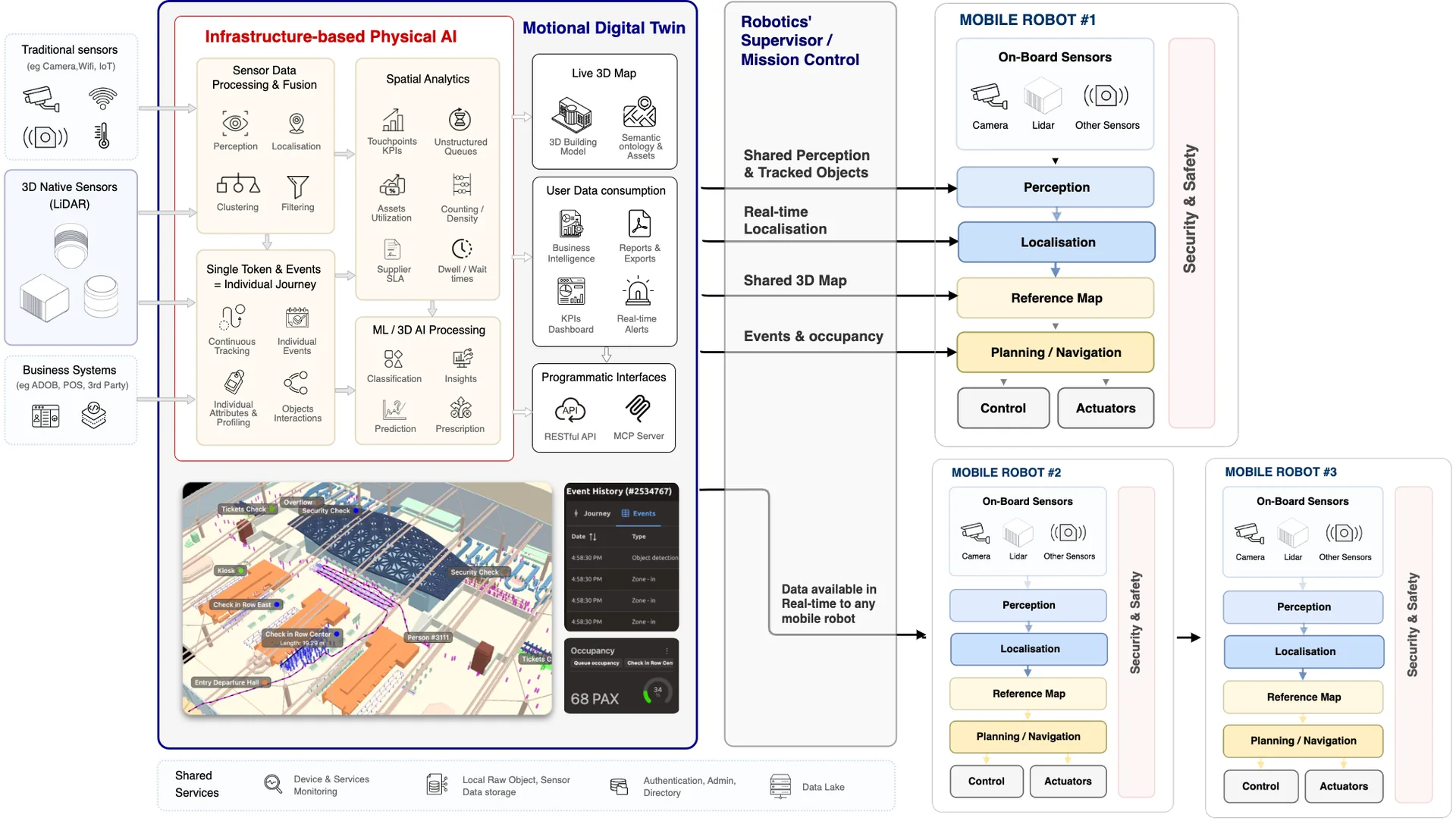
Learn More
Dynamic World Models whitepaper
The general approach behind Ambient Intelligence, applied to site operations and the management of physical flows of people and vehicles.
Read the whitepaper →

Motional Digital Twins whitepaper
The live, interactive 3D replica through which operators, AI agents and robots see, query and act on the Dynamic World Model of a site.
Read the whitepaper →

Get free access at https://www.outsight.ai/resources/whitepapers-and-guides/