Skip to content
Insights
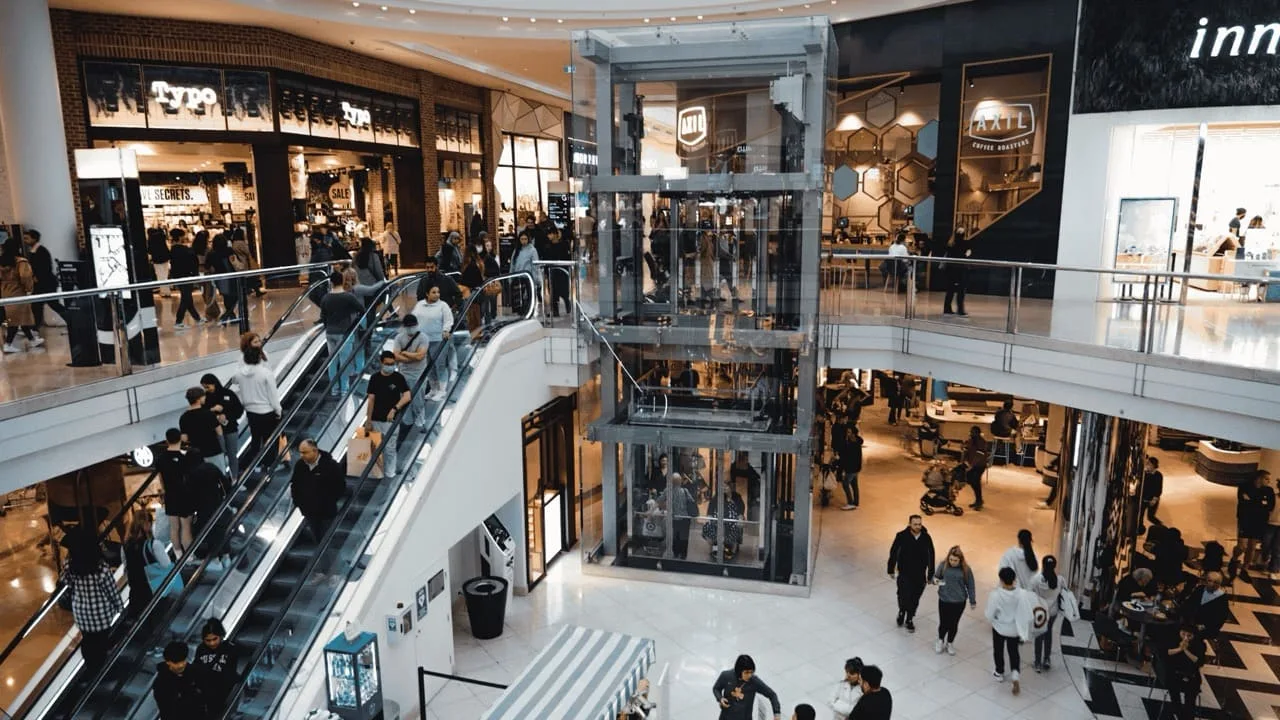
Busy retail store filled with shoppers.

Transforming the Retail Experience with 3D Spatial Intelligence

Outsight’s 3D LiDAR-based Spatial Intelligence helps retailers analyze shopper movement in real time, optimize store layouts, and enable data-driven decisions.


Most physical stores struggle with one major gap: not knowing exactly how customers move, pause, and engage. Without this visibility, it’s hard to fix layout flaws, ineffective promotions, or poorly placed staff, each of which hurts sales and the shopping experience.

According to McKinsey, stores that adopt agile, customer-focused redesigns of layouts and operations can see sales increase by up to 15% and customer satisfaction improve by 20% within a year.

Still, many retailers lack accurate data about where visitors go, how long they stay, or how they respond to changes in-store. This leaves them with limited ability to improve how their spaces work in real time.

Elevate Retail Experiences in Airports with 3D Spatial Intelligence

Outsight and E23, a premier provider of retail technology solutions, today announced a strategic partnership aimed at transforming airport retail operations using LiDAR-based Spatial Intelligence.

Read article →
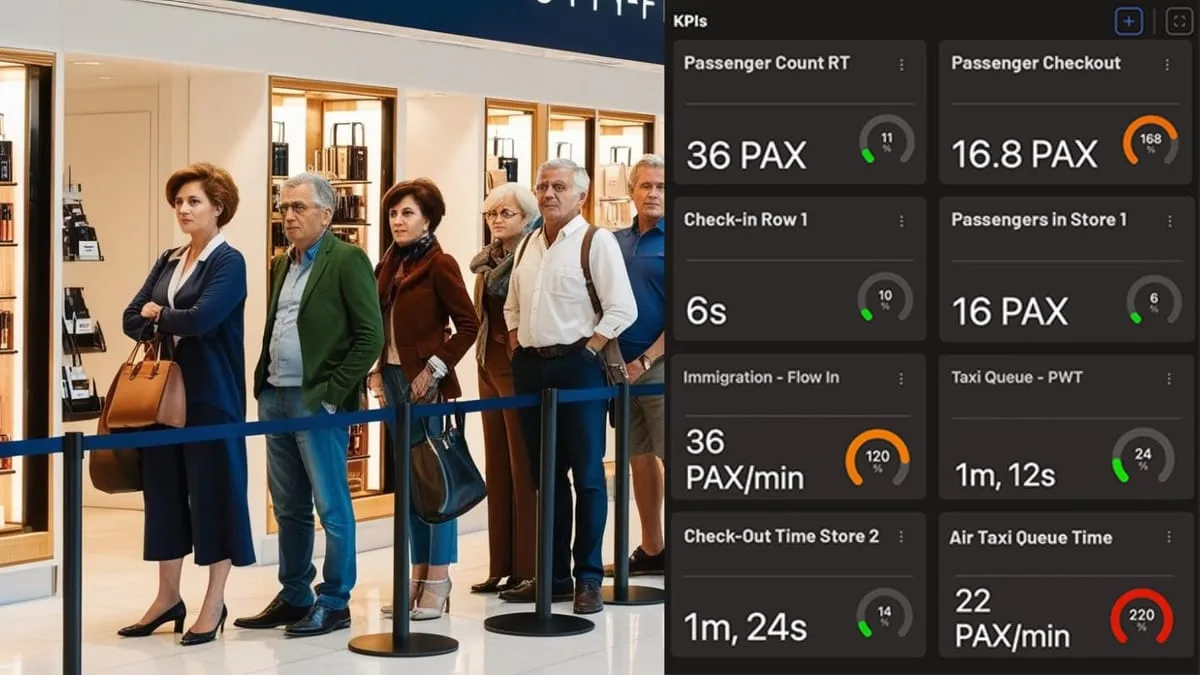
Learn more about elevating retail experiences in airports with 3D spatial intelligence.

To tackle these problems, retailers have tried different tools. Yet they rely on outdated tools that don’t offer the depth or speed needed to make effective decisions.

To address these challenges, retailers have experimented with various tools. However, many still depend on outdated solutions that lack the depth and speed required for effective decision-making.

For example, security cameras, Wi-Fi tracking, and point-of-sale (POS) systems. These offer some value but have key limitations.

Cameras can count people approximately and track their movement, but they often raise privacy concerns and are hard to scale across large areas. Wi-Fi and Bluetooth tracking depend on shoppers having their devices on and connected, which isn’t always the case, and even then, these methods lack precision.

POS data shows what was bought but not why it was chosen, or ignored.
CCTV Cameras

While helpful, these methods don’t show the full picture of how people move, behave, or engage within a store. Retailers need something more complete, precise, and privacy-respecting.

To solve this, new technologies are helping close the gap between physical stores and online shopping. One of the most powerful is 3D sensing, which gives retailers a clearer, real-time view of customer behavior.

A key technology behind this is LiDAR (Light Detection and Ranging).

LiDAR works by sending laser pulses and measuring how long they take to return, creating detailed 3D maps of real spaces.

Originally developed for self-driving cars to help them “see” their surroundings. LiDAR is now used in retail environments with impressive results.

In retail settings, LiDAR allows for precise, real-time tracking of people and objects within a space. Outsight’s Spatial Intelligence Software turns raw 3D LiDAR data from any sensor into clear, actionable insights.

Understanding the basics of 3D LiDAR Technology

Light Detection and Ranging, also known as LiDAR, is a technology for remote sensing that is used to measure distances in an environment.

Read article →

SHIFT, Outsight’s software platform, continuously processes raw 3D LiDAR data to identify and follow the movement of people and objects, without capturing any personal identifiers. This enables real-time tracking through anonymous volume-based detection, not facial or image recognition.

This includes:

  • How people enter and exit different zones
  • Where they stop and how long they dwell
  • Which areas of the store see more traffic and engagement
  • How groups form, move, and disperse

All of this is done without capturing any visual identity**,** no images, no facial data, only spatial behavior.

LiDAR Boosts Quick Service Restaurant Efficiency

The Quick Service industry is perpetually evolving, with technological advancements playing a pivotal role in shaping customer experiences and operational efficiencies.

Read article →
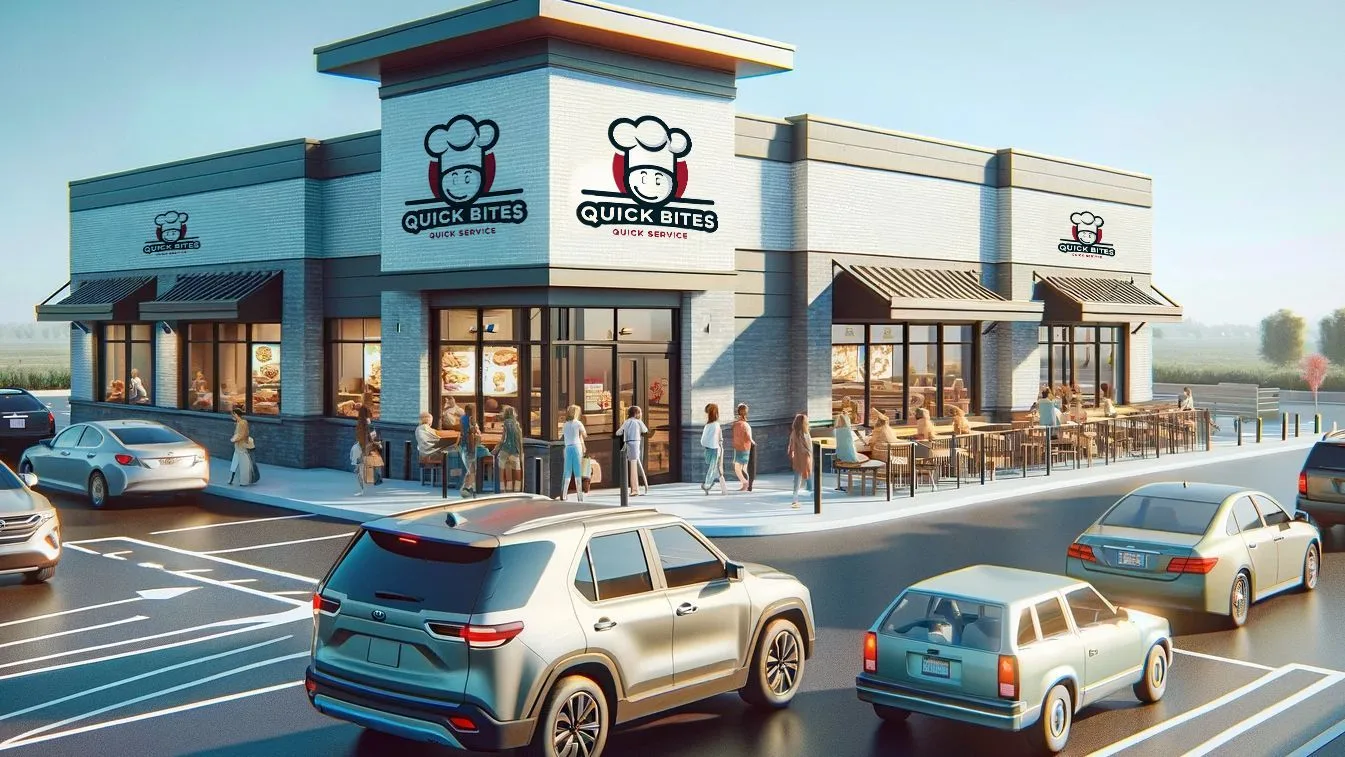
Learn more how LiDAR boosts quick service restaurant efficiency.

By shifting the perception from raw 3D data to contextual understanding, Shift Perception transforms.
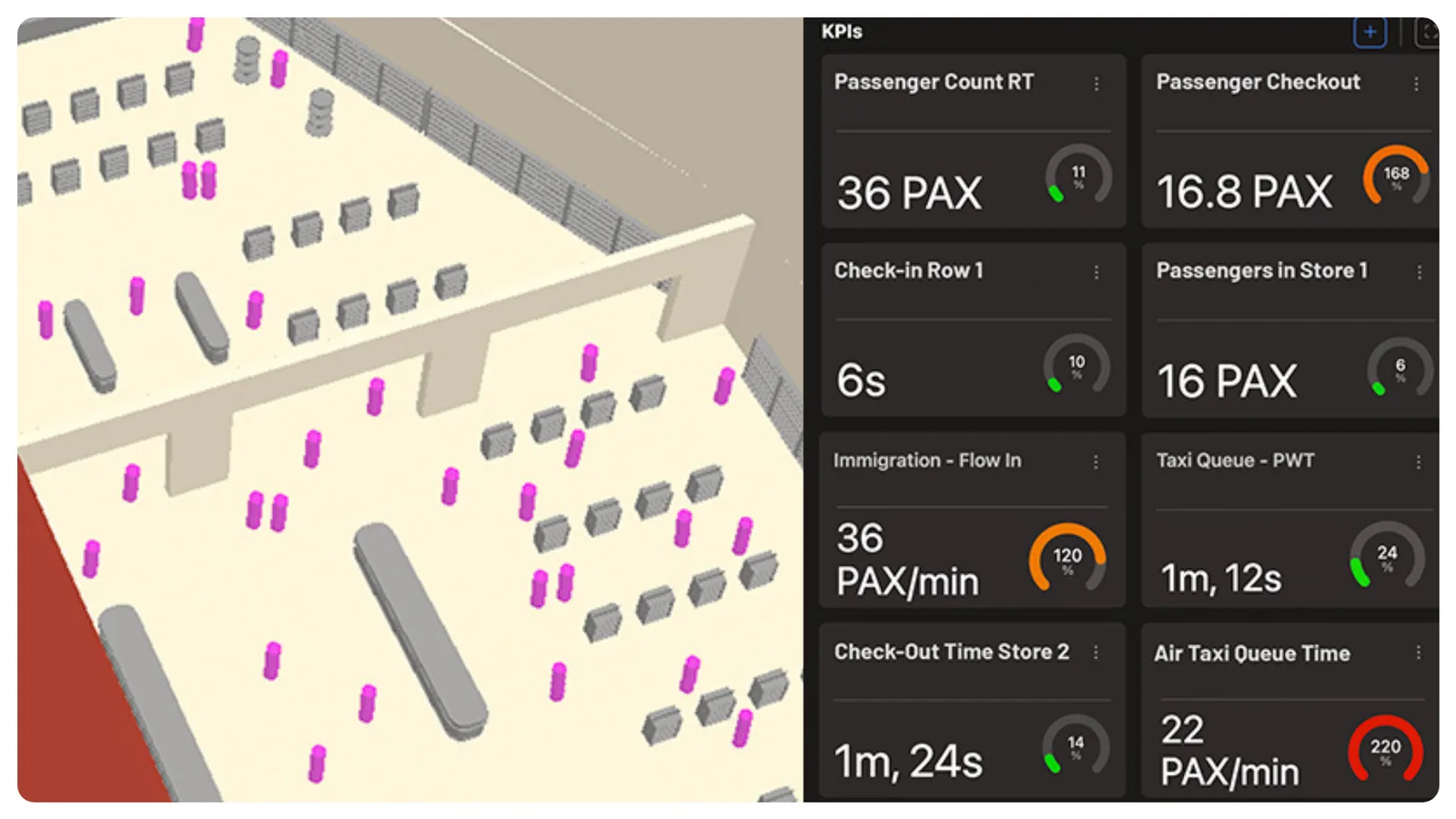
Dashboard with KPIs

These insights allow stores to respond faster and smarter. Retailers can optimize product placement, test how well promotions work, and adjust staffing in real time based on visitor flow. All of this leads to better service, fewer inefficiencies, and a more personalized shopping experience.

By delivering Spatial Intelligence at scale, Outsight bridges the digital-physical divide, helping turn any retail space into a smart, responsive environment.



Related Articles

AIRPORTS

Aeroporti di Roma to deploy Outsight's Physical AI solution at scale across Rome Fiumicino Airport

Aeroporti di Roma (ADR) is expanding its collaboration with Outsight to a large-scale deployment across almost all Schengen common-use areas at Rome Fiumicino Airport.

CORPORATE

Intel and Outsight Announce Strategic Collaboration to Bring Physical AI–Powered Spatial Intelligence to the Enterprise Edge

Outsight’s Shift platform integrated into Google Distributed Cloud Edge powered by Intel Xeon 6 SoC – Live demonstration at Google Cloud Next 2026

Let's connect

Send us a Message

Drop your email and we'll get back to you as soon as possible.

Frequently Asked Questions

  • How does LiDAR-based store analytics improve product placement decisions?

    LiDAR tracks dwell time and trajectory at the zone level, so a retailer can directly compare how long shoppers pause near a display before and after a planogram change. Unlike POS data, which records the purchase but not the path, spatial flow data shows which routes led to engagement and which bypassed a promotion entirely. Outsight's SHIFT platform applies this logic in real time, building an anonymous 3D replica of shopper movement across the store floor without capturing faces or biometric data. That gap between traffic volume and conversion at a specific fixture is the operational signal most traditional retail analytics systems cannot produce, and spatially precise dwell metrics are what close it.

  • Can LiDAR track group behavior, like families shopping together, as a single unit?

    LiDAR perception tracks each physical object as a separate entity with its own ID and bounding box. Groups are not merged into a single ID by default; instead, the analytics layer identifies clusters by proximity and synchronized movement. Outsight's SHIFT platform applies this approach in retail environments, where the Motional Digital Twin captures individual trajectories and then surfaces group-level patterns through proximity and motion correlation. This means a retailer can distinguish a family moving in formation from unrelated shoppers who happen to be near each other, which matters for category placement and service-staff routing in departments where group decision-making is common.

  • What is the difference between zone dwell time and visit frequency in retail spatial analytics?

    Dwell time measures how long a tracked entity remains within a defined zone on a single pass. Visit frequency counts how many times the same or different entities enter that zone across a time window. The two metrics answer different questions: high dwell with low frequency suggests a sticky display that few shoppers discover, while high frequency with low dwell suggests a transit corridor rather than a browsing area. Distinguishing them requires persistent per-entity tracking across the full store visit, not a snapshot count. Outsight's Motional Digital Twin enables exactly this kind of continuous, anonymous tracking through infrastructure-mounted LiDAR sensors, giving retail operators both metrics simultaneously without capturing any biometric or facial data.

  • Does real-time staffing adjustment based on visitor flow actually require sub-second latency?

    For most retail staffing decisions, sub-second latency is not necessary. A queue that warrants opening an additional checkout lane typically builds over two to five minutes. The relevant threshold is whether the alert reaches a floor manager before the queue reaches a length that drives abandonment. Latency in the range of a few seconds to one minute is sufficient for that workflow. Outsight's SHIFT platform does operate with a sub-50ms end-to-end pipeline, but that capability matters most for safety-critical applications like industrial robot coordination at facilities such as BMW factories. Retail staffing optimization is a different operating regime, where the value of real-time visitor flow data lies in accurate crowd detection and timely alerting, not in millisecond response.

  • How does physical retail spatial intelligence compare to what e-commerce already measures?

    E-commerce platforms record every click, scroll, hover, and path through a site at the individual session level, giving merchandisers a complete behavioral funnel. Physical stores have historically had no equivalent: door counters give entry volume, POS gives conversion, and nothing in between captured the browsing layer. 3D spatial tracking closes that gap by producing the physical-world analogue of a clickstream: entry point, path sequence, zone dwell, interaction with fixtures, and exit point, all at the individual journey level. Outsight's SHIFT platform applies this principle to retail environments using infrastructure-based LiDAR, generating anonymous motion data without capturing faces, license plates, or any biometric identifiers, so the behavioral depth rivals an e-commerce session log while remaining compliant with privacy expectations in physical spaces.

  • Can LiDAR sensors cover both stockroom and sales floor to measure operational efficiency end to end?

    Yes. LiDAR sensors mounted in fixed infrastructure form a sensor network where each unit contributes to a shared spatial model of whichever zones it covers, with no architectural requirement that those zones be customer-facing. A stockroom deployment tracks staff movement, pallet flow, and replenishment cycle time, while a sales floor deployment captures shopper behavior and traffic patterns. Outsight's SHIFT platform is designed around exactly this principle: infrastructure-based sensors feed a unified Motional Digital Twin that spans back-of-house and front-of-house simultaneously. When both feeds share the same analytics layer, operators can correlate replenishment latency with on-shelf availability gaps and the downstream traffic drops those gaps cause on the sales floor, giving a genuinely end-to-end view of operational efficiency.