Skip to content
Insights
Elevate Retail Experiences in Airports with 3D Spatial Intelligence

Elevate Retail Experiences in Airports with 3D Spatial Intelligence

Outsight and E23, a premier provider of retail technology solutions, today announced a strategic partnership aimed at transforming airport retail operations using LiDAR-based Spatial Intelligence.


As the retail industry in airports continues to evolve, optimizing passenger flow, dwell times, and customer interactions is becoming essential for maximizing revenue and improving shopping experiences.

How LiDAR Enhances Passengers’ Experience at Airports

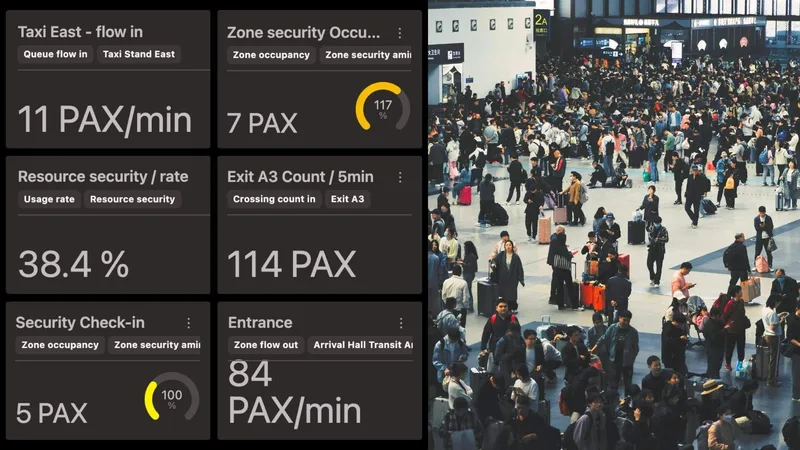
According to the New York Times, the cumulative wait time in airport queues is 37 billion hours. LiDAR Software can help.

Read article →

Traditional analytics solutions often rely on camera-based systems, which pose privacy concerns and limited accuracy in dynamic environments.

Through this partnership, Outsight’s Spatial AI Software Platform will work with E23’s retail solutions, enabling real-time, anonymous tracking of passenger movements within duty-free stores, lounges, and commercial areas.
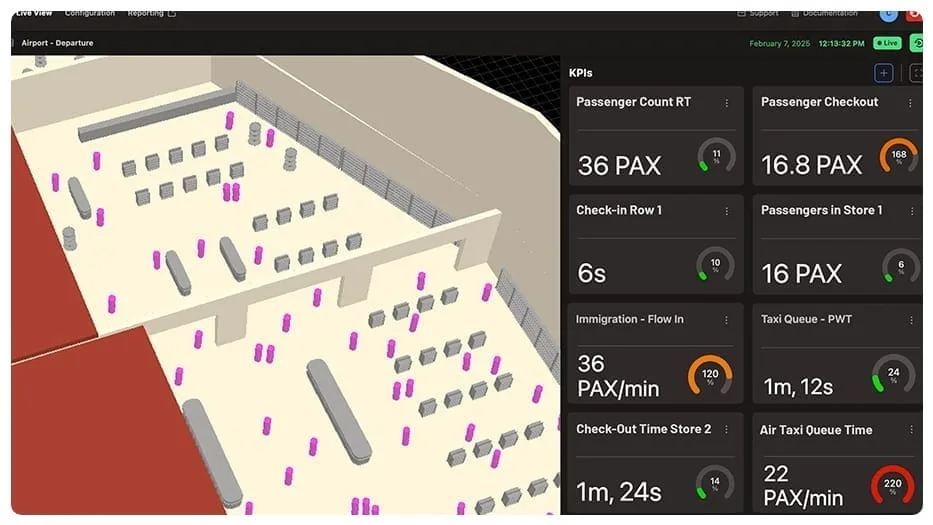
Airport Airport Duty-Free shop as viewed in from the operator interactive dashboard.

This LiDAR-driven approach provide airport retailers with unparalleled insights into foot traffic patterns, store engagement, and checkout behaviors, which helps retailers optimize store layouts, product placements, and queue management.
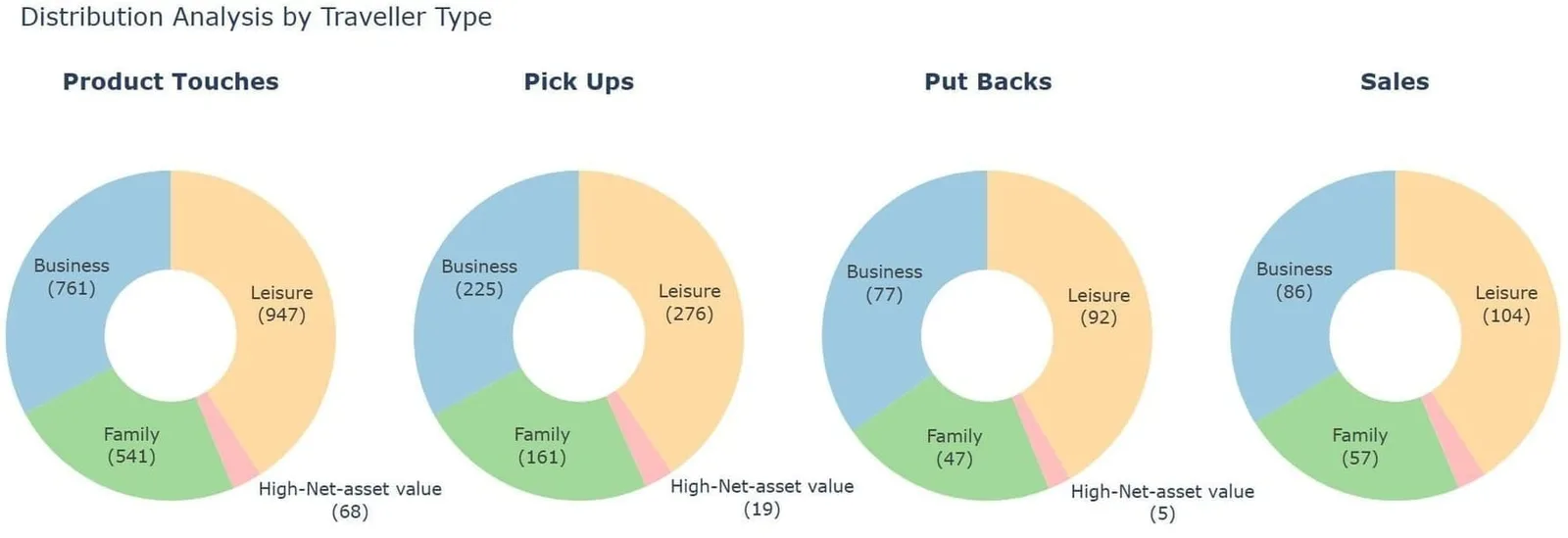
Distribution analysis by Traveller Type: Product touches, pick ups, put backs, sales.

Travel profiling and distribution analysis cross-referenced with consumer-brand interaction sequences.

This allows airport operators and retailers to enhance sales conversion rates, reduce congestion, and tailor offerings to meet passenger needs more effectively.

“Travel retail faces unique challenges in understanding the 3

ratio of non-purchasing to purchasing travelers,” said Alessandro Lo Piano, CEO of E23. “Our combined solution transforms this challenge into an opportunity by providing actionable insights that bridge the gap between attraction and purchase decisions.”

LiDAR Transforming Airport Flow Monitoring

LiDAR is a game changer technology enabling a whole new level of situation awareness in many airport contexts, from security to operational excellence.

Read article →
Raul Bravo, President and co-founder at Outsight, added: “This partnership with E23 is a step toward modernizing airport retail experiences. LiDAR-based tracking offers a privacy-friendly yet highly accurate method of understanding passenger movements, enabling data-driven decision-making that benefits both retailers and travellers alike.”
Related Articles

AIRPORTS

Optimizing Airport Operations with LiDAR-Based Passenger Tracking

Rising passenger volumes are pushing airports to operate with greater precision and efficiency. LiDAR-based Spatial Intelligence provides real-time visibility, enhancing flow, safety, and overall passenger experience.

AIRPORTS

Passenger Flow, Experience, and Wait Times: Improving the Airport Journey

In today's fast-paced world, airport efficiency and passenger experience are vital. Outsight's Spatial AI software is transforming airport passenger flow and wait time management.

Let's connect

Send us a Message

Drop your email and we'll get back to you as soon as possible.

Frequently Asked Questions

  • What is the typical ratio of non-purchasing to purchasing travelers in airport duty-free?

    In travel retail, roughly three travelers browse for every one who makes a purchase, a 3:1 non-purchasing to purchasing ratio. That gap is structurally different from high-street retail, where conversion rates are typically higher and dwell is self-selected. Understanding which store zones attract browsers versus buyers, and what behavioral sequences precede a purchase, is the core analytics problem that spatially-aware retail platforms are designed to address. Outsight's Motional Digital Twin captures anonymous 3D movement data across airport concourses and retail zones, giving operators the ability to correlate dwell patterns, flow paths, and zone engagement with actual purchase behavior, without collecting any biometric or identity data.

  • How does anonymous LiDAR tracking work inside a duty-free store?

    LiDAR sensors mounted in the store ceiling emit laser pulses and measure the 3D position and motion of every person in the space. Each shopper is assigned a temporary anonymous ID the moment they enter and tracked continuously through the store: which shelves they approach, how long they pause, whether they pick up or put back a product, and how long they wait at checkout. This is the foundational principle behind Outsight's approach to Spatial Intelligence, where LiDAR captures shape and motion rather than images, meaning faces, ethnicity, and personal appearance are never recorded. The result satisfies GDPR and similar regulations by design, not as an afterthought, making it a practical fit for high-footfall airport retail environments where privacy compliance is non-negotiable.

  • Can the same LiDAR sensors that track terminal passenger flow also cover airside retail?

    Yes, provided the sensor network extends into the retail zone. A continuous shared 3D point cloud covers both the terminal concourse and the individual stores within it, so a shopper tracked from the gate holdroom into a duty-free zone carries the same anonymous ID throughout. Outsight's infrastructure-based approach makes this practical: LiDAR sensors are mounted in the ceiling rather than attached to any moving entity, meaning the same physical hardware serves terminal flow monitoring and airside retail coverage within a single deployment. The SHIFT platform then correlates pre-store dwell behavior with in-store conversion across that uninterrupted feed, a behavioral chain that collapses when separate systems are stitched together after the fact.

  • How does LiDAR-based store analytics compare to camera-based retail analytics?

    Camera-based retail analytics infers position and dwell from 2D image frames, which degrades in dense crowds due to occlusions and requires post-processing to strip faces or biometric signals for privacy compliance. LiDAR measures 3D position and motion natively, assigns each shopper a unique ID with centimeter-level precision, and never records image data. Accuracy in high-density store entrances and queue areas is higher because depth measurements are not affected by overlapping bodies the way 2D pixel analysis is. Outsight's approach takes this further by processing LiDAR point clouds through its SHIFT platform with a sub-50ms pipeline, producing anonymous occupancy and flow data by definition, since LiDAR captures shape and motion rather than faces or biometric signals, making privacy compliance structural rather than a post-processing step.

  • What product placement decisions can airport retailers make with spatial flow data?

    Spatial flow data maps which areas of a store attract the most foot traffic, how long shoppers dwell at each fixture, and which product interactions do not convert to purchase. Outsight's SHIFT platform generates this data from infrastructure-mounted LiDAR sensors, producing anonymous 3D tracking of shopper movement without capturing faces or biometric identifiers. Retailers use these insights to relocate high-margin products to high-traffic zones, identify fixtures that generate browsing but not sales, and redesign store layouts to reduce the distance between high-attraction and high-conversion areas. Staffing decisions, such as where to position sales associates during peak boarding waves, are also grounded in measured zone density rather than intuition.

  • Does traveler type (transit, origin, destination) affect airport retail behavior, and can LiDAR measure it?

    Traveler type correlates strongly with dwell time and purchase propensity: origin-destination passengers with longer pre-boarding windows tend to browse more extensively than tight-connection transit passengers. LiDAR-based platforms can segment these behavioral patterns by time-in-store, movement speed, and interaction sequence. Outsight's Motional Digital Twin applies exactly this logic at infrastructure scale, fusing real-time 3D movement data with flight schedule inputs such as departure times and gate proximity to infer traveler category without collecting any personal identifier. Because LiDAR captures shape and motion rather than faces or biometric data, the segmentation is anonymous by definition. The result is a behavioral segmentation grounded in actual movement rather than survey estimates, giving airport retailers a reliable basis for staffing, assortment, and layout decisions.