Skip to content
Insights
Edge AI and Vision Product of the Year

Outsight wins the 2023 Edge AI and Vision Product of the Year Award

We’re thrilled to announce that the 6th generation of our 3D LiDAR processing software, has been awarded the 2023 Edge AI and Vision Product of the Year!


This award, known to be one of the most prestigious in the field of AI, is bestowed by the Edge Ai + Vision Alliance.

This achievement serves as a significant milestone for both Outsight and the entire LiDAR industry, recognizing 3D as a crucial member of the Computer Vision family.

LiDAR, originally developed for the automotive industry, uses lasers to measure distances, creating 3D images known as “point clouds”.

Our 3D LiDAR-based software SHIFT transforms this raw data into actionable insights, analyzing positions and movements of people, objects, and vehicles with precision.

Explaining 3D LiDAR Preprocessors

The software behind this promising 3D technology

Read article →
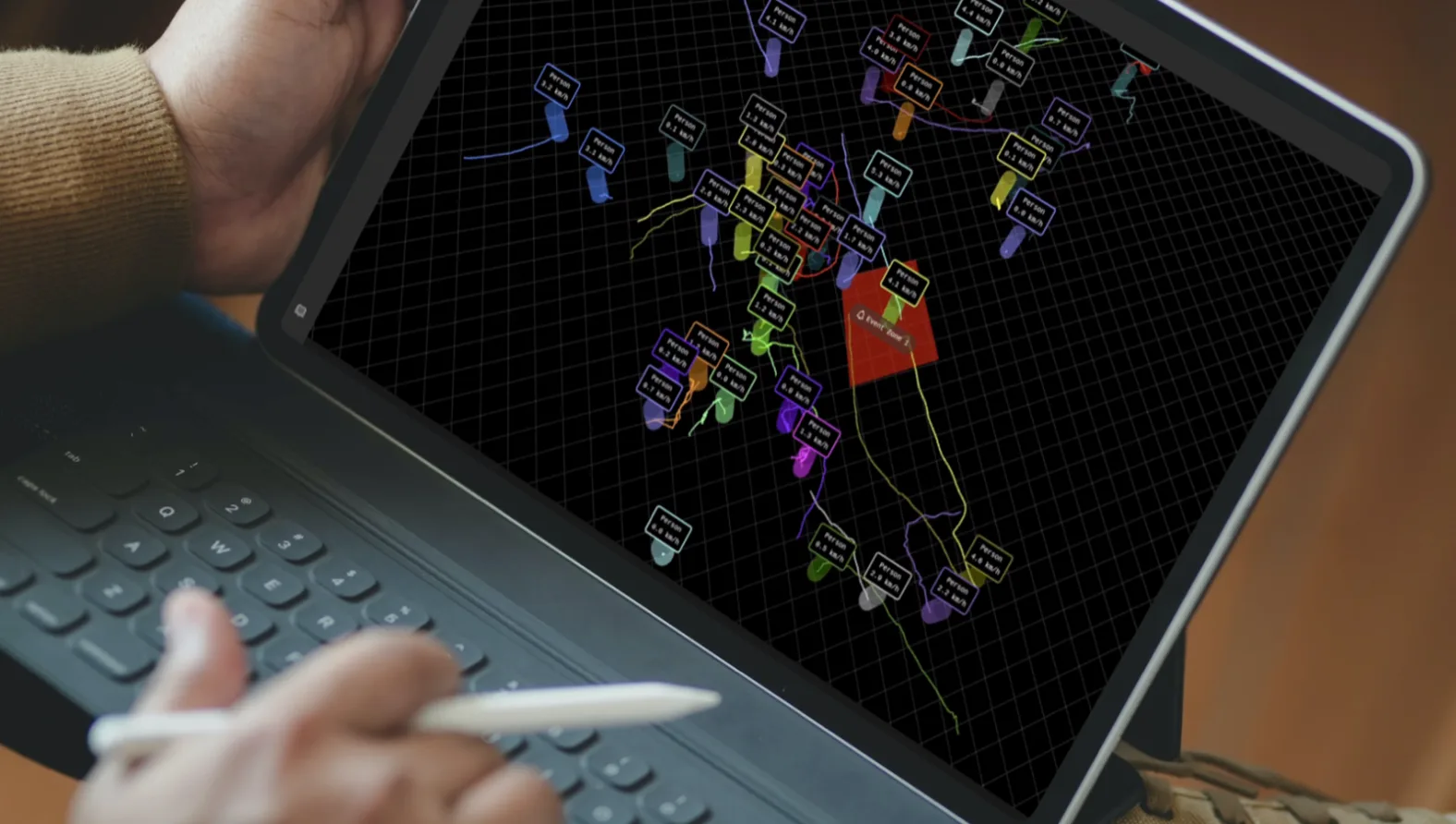
These insights can be leveraged across a multitude of industries, including transportation infrastructure, industrial automation, security, and many more.

Our software is sensor-agnostic, allowing customers to choose the most appropriate hardware manufacturer based on their needs.

After years of development, 73 patent filings, and feedback from hundreds of customers globally, we’re proud to be recognized again as a leader in the burgeoning field of 3D Edge AI software!

This award follows many other recognitions!

Outsight's awards and recognitions

Related Articles

AIRPORTS

Aeroporti di Roma to deploy Outsight's Physical AI solution at scale across Rome Fiumicino Airport

Aeroporti di Roma (ADR) is expanding its collaboration with Outsight to a large-scale deployment across almost all Schengen common-use areas at Rome Fiumicino Airport.

CORPORATE

Intel and Outsight Announce Strategic Collaboration to Bring Physical AI–Powered Spatial Intelligence to the Enterprise Edge

Outsight’s Shift platform integrated into Google Distributed Cloud Edge powered by Intel Xeon 6 SoC – Live demonstration at Google Cloud Next 2026

Let's connect

Send us a Message

Drop your email and we'll get back to you as soon as possible.

Frequently Asked Questions

  • What is the Edge AI and Vision Alliance and why does its product award matter?

    The Edge AI and Vision Alliance is an industry consortium focused on AI and vision processing at the network edge. Its annual product award is peer-nominated and judged by a community of engineers, chip architects, and software developers building edge inference systems. Recognition from this body signals that the awarded product meets production-grade performance standards at the edge, rather than relying on cloud offload. That distinction matters in latency-sensitive deployments such as intersection safety and real-time crowd management, where decisions must be made in milliseconds. Outsight's 6th-generation 3D LiDAR processing software earned this award in 2023, a result consistent with the sub-50ms end-to-end pipeline that underpins the SHIFT platform across live infrastructure deployments in airports, train stations, and smart-city intersections.

  • Why does 3D LiDAR processing qualify as a computer vision technology?

    Computer vision is broadly defined as machine interpretation of visual sensor data, and 3D point clouds are a form of that: structured spatial data produced by active optical sensors. The Edge AI and Vision award recognizing LiDAR software reflects an industry consensus that 3D sensing belongs inside the computer vision family, not as a separate category. The distinction from classical 2D computer vision is that point clouds encode depth directly, eliminating the geometric reconstruction step that makes camera-only depth estimation error-prone in dynamic scenes. Outsight's 6th-generation 3D LiDAR processing software, which earned the 2023 Edge AI and Vision Product of the Year Award, is built around this principle, converting raw point clouds into real-time spatial intelligence across infrastructure deployments at sites including Dallas Fort Worth Airport and BMW factories.

  • What does it mean for LiDAR software to be sensor-agnostic in practice?

    Sensor-agnostic software parses the raw point-cloud output of any compatible LiDAR model through a unified processing pipeline, regardless of which manufacturer produced the sensor. In practice, this means a site operator can mix hardware from different vendors across zones, replace a discontinued model without rearchitecting the software stack, and negotiate on price rather than being tied to a single supplier. Outsight's SHIFT platform demonstrates this in deployment: it supports hardware from Hesai, RoboSense, Ouster, Velodyne, and Seyond across sites spanning airports, train stations, factories, and smart-city intersections on five continents. That breadth of compatibility, covering more than 210 LiDAR models, reflects the broadest published compatibility range in the infrastructure spatial intelligence market.

  • How does edge AI processing differ from cloud-based LiDAR analytics for real-time use cases?

    Edge AI runs inference on hardware co-located with the sensors, typically within the same building or street cabinet. This keeps raw point-cloud data local, avoids the round-trip latency of a cloud call, and reduces the bandwidth cost of streaming hundreds of megabytes of point-cloud data per second per sensor. For use cases requiring sub-50ms response, such as robot collision avoidance or intersection safety alerts, cloud offload introduces unacceptable latency. Outsight's 3D LiDAR processing software, recognized with the 2023 Edge AI and Vision Product of the Year Award, is built around exactly this constraint: its end-to-end pipeline operates at sub-50ms latency by running perception workloads at the edge, on infrastructure-mounted sensors, rather than routing raw point clouds to a remote data center. Edge processing also limits the personal-data exposure surface, since raw spatial data never leaves the premises.

  • What is a LiDAR point cloud and how is it turned into an operational metric like queue length?

    A point cloud is the raw output of a LiDAR scan: millions of (x, y, z) coordinate measurements taken each second, representing the surfaces that returned laser pulses. Turning that into a queue-length metric requires several steps: filtering static background geometry, clustering the remaining points into discrete objects, classifying each cluster by shape and motion as a person or vehicle, tracking each object frame-to-frame with a persistent ID, and then applying zone logic to count how many tracked persons are stationary within a defined area for longer than a threshold duration. Outsight's 3D LiDAR processing software executes this entire pipeline end-to-end in under 50 milliseconds, a capability recognized with the 2023 Edge AI and Vision Product of the Year Award and deployed at scale in airports, train stations, and factories across five continents.

  • How does a 6th-generation LiDAR processing software differ from earlier versions in terms of capability?

    Successive software generations in LiDAR processing typically reflect accumulated improvements in detection range, multi-sensor fusion fidelity, classification accuracy across object types (including finer distinctions like adults versus children or cars versus two-wheelers), and edge hardware efficiency. By the 6th generation, a mature stack also carries feedback from large-scale production deployments rather than lab benchmarks, which corrects for real-world occlusion patterns, sensor degradation, and edge-case behaviors that only appear at high throughput. Outsight's 6th-generation LiDAR processing software, the engine behind the SHIFT platform, reflects exactly this trajectory: its development draws on deployments across airports, train stations, factories, and smart-city intersections on 5 continents, and the cumulative algorithmic work is backed by 73 patents covering advances built up across those generations.