Skip to content
Insights
Outsight joined Airport AI Alliance

Outsight Joins the Airport AI Alliance to Drive Innovation in Aviation

Outsight joins the Airport AI Alliance to drive innovation and shape the future of AI-powered airport solutions. By collaborating within the Alliance, members are driving innovation in airport infrastructure.


As a new member of this prestigious global initiative, Outsight will collaborate with airport executives and industry pioneers to accelerate the adoption of cutting-edge AI technologies across airport operations, enhancing efficiency, security, and passenger experience worldwide.

As AI continues to reshape industries, real-time 3D data is playing a crucial role in enhancing operational efficiency and decision-making in aviation.

LiDAR Transforming Airport Flow Monitoring

LiDAR is a game changer technology enabling a whole new level of situation awareness in many airport contexts, from security to operational excellence.

Read article →

“LiDAR-powered Spatial Intelligence is transforming airports, and Outsight’s expertise in this field brings immense value to the Airports AI Alliance, enabling smarter, data-driven decisions for airports worldwide.” - Willem Fast, Chief Commercial Officer, Airports AI Alliance.

Through our active participation, airport operators and industry stakeholders within the Alliance not only gain access to tailored 3D Spatial Intelligence solutions but also develop a deep understanding of them, working in close collaboration to create unique solutions that address the aviation sector’s specific operational challenges.
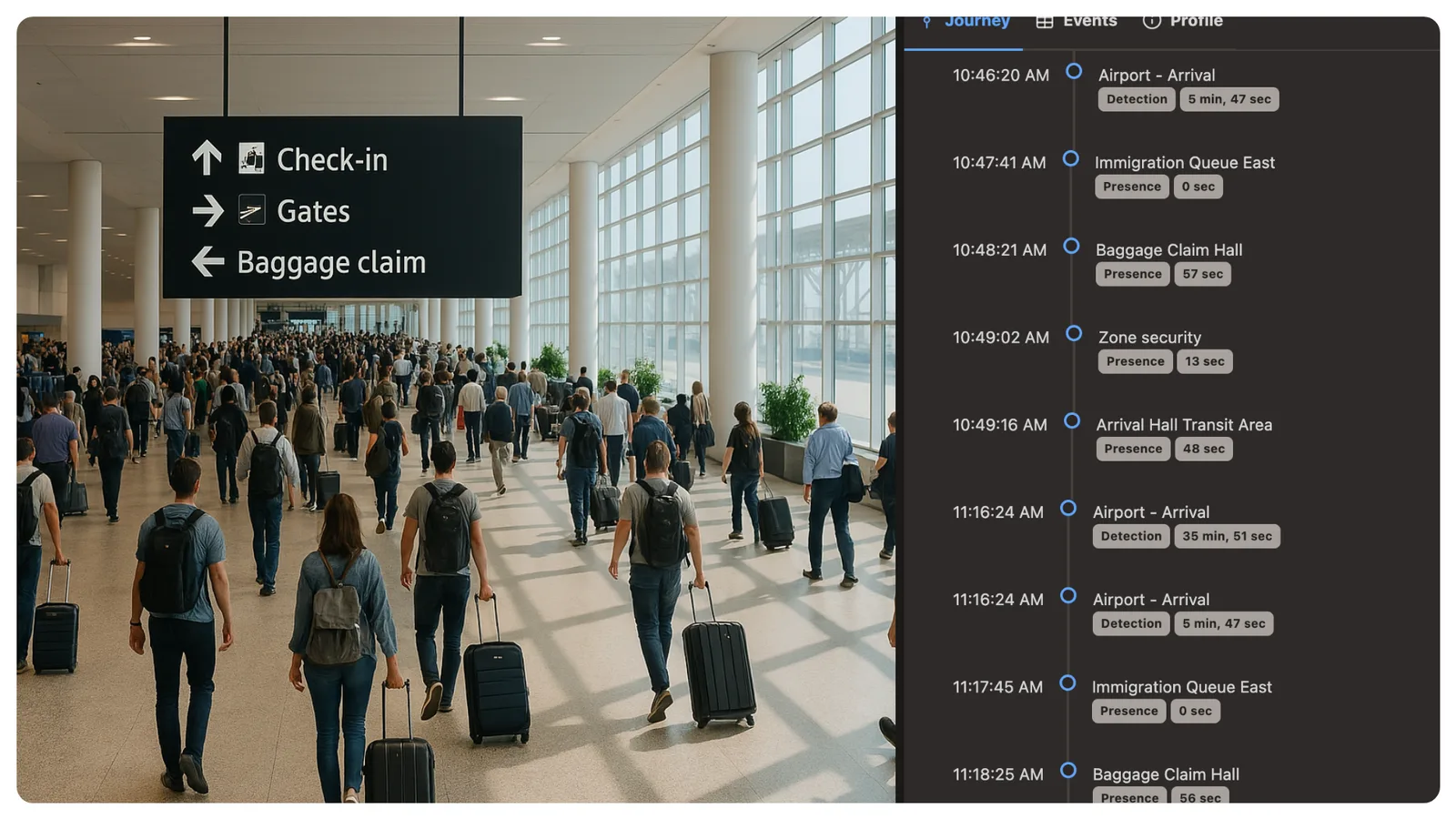
LiDAR-powered spatial intelligence enabling smarter, data-driven decisions for airports

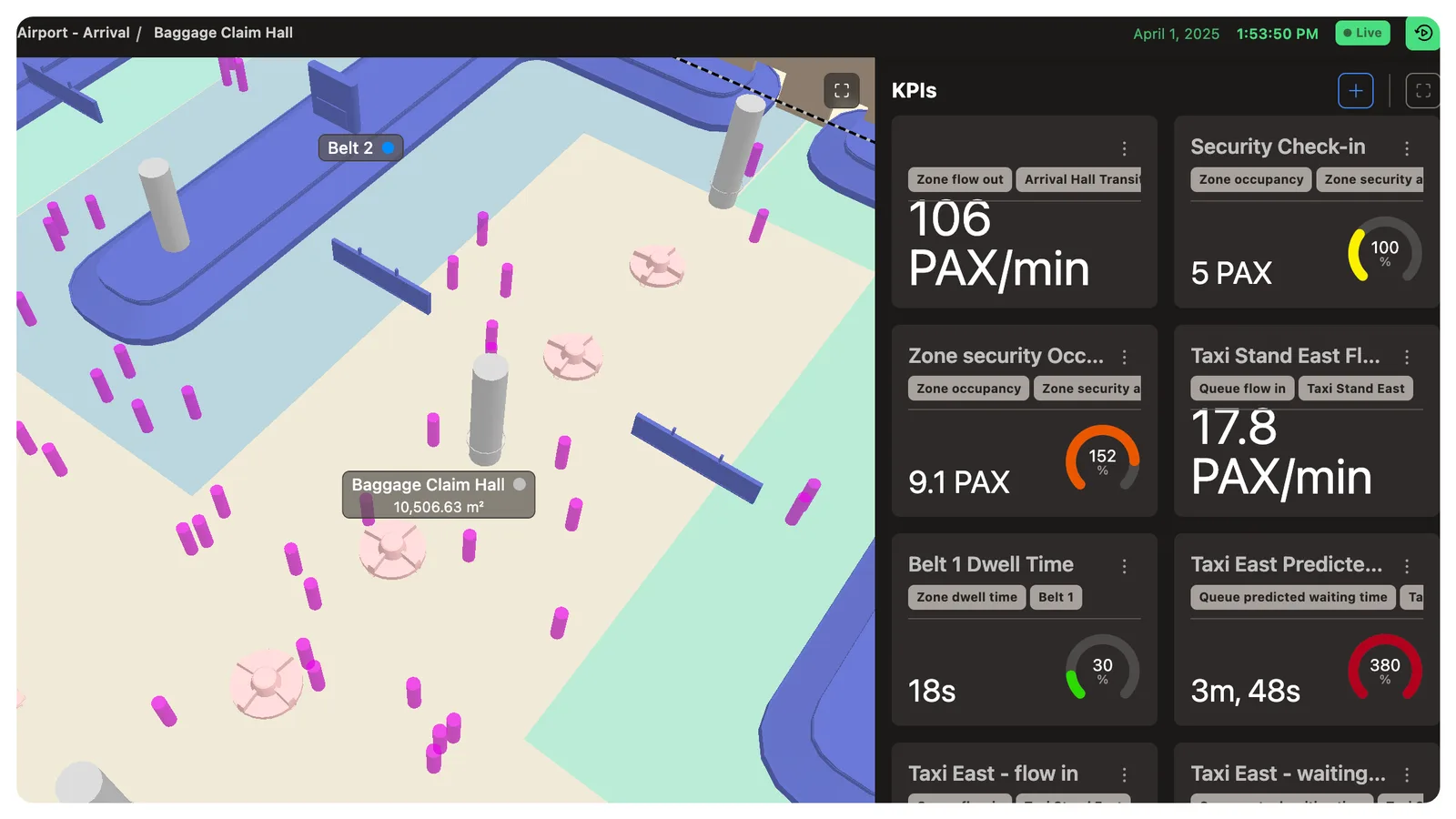
The Alliance already incorporates a wide range of advanced technologies, and Outsight’s 3D LiDAR People Flow monitoring solution brings a new layer. Our technology helps airports better understand passenger movement in real time, enabling smarter decisions around passenger flow, resource allocation, and infrastructure optimization.

By collaborating within the Alliance, members, including Outsight, are driving innovation in airport infrastructure and operational excellence. These joint efforts are essential in addressing security challenges and improving the overall passenger experience.

6 Key Benefits of LiDARs for Airports

LiDAR technology and Software is shaping a new wave of operational excellence, passenger experience and safety for airports of all sizes.

Read article →

As the aviation industry continues to grow at rapid pace, it’s essential for airports to adapt to the latest trends and evolving demands and Outsight is at the forefront of this.

“Spatial AI and 3D sensing represent the next frontier in digitizing physical flows, creating unprecedented opportunities for airports to optimize passenger journeys within the existing infrastructure. As the global leader in this field, we’re glad to integrate the Airports AI Alliance” –Raul Bravo, President, Outsight.

How LiDAR Enhances Passengers’ Experience at Airports

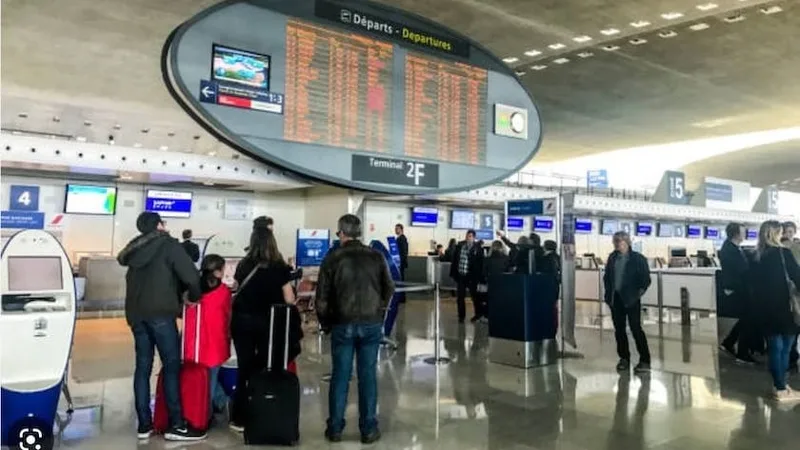
According to the New York Times, the cumulative wait time in airport queues is 37 billion hours. LiDAR Software can help.

Read article →

Outsight's Spatial AI Software Platform tracks physical flows in the airport

Through collaboration, we strive to shape the future of airport technology and accelerate AI adoption.

As a recognized leader in Spatial Intelligence, we see it as our responsibility to contribute to shaping the future of airport operations, by sharing our expertise, accelerating AI adoption, and helping the market better understand the value of 3D LiDAR-based technologies.

Related Articles

AIRPORTS

Aeroporti di Roma to deploy Outsight's Physical AI solution at scale across Rome Fiumicino Airport

Aeroporti di Roma (ADR) is expanding its collaboration with Outsight to a large-scale deployment across almost all Schengen common-use areas at Rome Fiumicino Airport.

CORPORATE

Intel and Outsight Announce Strategic Collaboration to Bring Physical AI–Powered Spatial Intelligence to the Enterprise Edge

Outsight’s Shift platform integrated into Google Distributed Cloud Edge powered by Intel Xeon 6 SoC – Live demonstration at Google Cloud Next 2026

Let's connect

Send us a Message

Drop your email and we'll get back to you as soon as possible.

Frequently Asked Questions

  • What is the Airport AI Alliance and what does membership involve?

    The Airport AI Alliance is a global industry initiative that connects airport executives, technology vendors, and operational specialists to accelerate AI adoption across aviation. Members collaborate on practical deployments rather than purely theoretical standards, meaning a technology provider joining the alliance gains direct working relationships with airport operators who can test and refine solutions against real operational constraints. Membership typically requires contributing domain expertise, not just a commercial presence in the sector. Outsight joined the Alliance to bring its infrastructure-based Physical AI experience to that collaborative work, drawing on deployments such as Dallas Fort Worth and Paris-Charles de Gaulle to inform how AI-powered airport solutions are shaped and validated.

  • How does 3D spatial intelligence help airports optimize infrastructure they already have rather than building new capacity?

    Airport construction pipelines run years behind passenger growth, so operators must extract more throughput from fixed terminal layouts. Continuous 3D tracking of every passenger's trajectory reveals which corridors, checkpoints, and gate areas are chronically underutilized versus chronically congested at which times of day. Outsight's Motional Digital Twin builds exactly this kind of real-time, anonymous replica of passenger flow across a terminal, fed by LiDAR sensors installed in the infrastructure rather than on any moving entity. That evidence base lets planners redraw walking routes, reposition staff and kiosks, and adjust lane scheduling based on measured behavior rather than assumptions, deferring or avoiding capital expenditure. Deployments at airports such as Dallas Fort Worth and Paris-Charles de Gaulle illustrate how operators apply this approach at scale.

  • What is the difference between a consortium or standards body and an innovation alliance in aviation AI?

    Standards bodies such as IATA and ACI publish specifications that all operators are expected to adopt uniformly, which suits interoperability but slows innovation. An innovation alliance operates differently: members co-develop and field-test new approaches within live airport environments, share operational learnings under agreed terms, and collectively shape procurement criteria before formal standards exist. Outsight's participation in the Airport AI Alliance reflects this model, drawing on real-world deployments like Dallas Fort Worth and Paris-Charles de Gaulle to bring field-validated insight into alliance working groups. The feedback loop from deployment to product iteration is measured in months rather than the multi-year cycles typical of formal standardization.

  • Can a single AI platform address both security and passenger experience goals at an airport, or do they require separate systems?

    The underlying data layer is shared. A 3D LiDAR sensor network tracking passenger positions continuously generates the same stream of spatial events regardless of the downstream application. Security workflows (perimeter breach, loitering detection, crowd density thresholds) and experience workflows (queue wait-time prediction, gate dwell, retail conversion) consume the same entity tracks with different analytics rules applied on top. This is precisely how Outsight's SHIFT platform operates at deployments such as Dallas Fort Worth and Paris-Charles de Gaulle: one infrastructure-based sensor network feeds both security and operations teams through a single Motional Digital Twin, avoiding the cost and integration overhead of reconciling two separate spatial data sources.

  • How do airport technology vendors demonstrate ROI to operators who are skeptical about AI investments?

    The clearest path is tying AI output directly to metrics operators already report: security lane throughput per hour, average wait time at checkpoints, staff headcount per thousand passengers processed. When a spatial intelligence system can show a measurable shift in those figures over a comparable period (same terminal, adjacent quarter), the case builds on the operator's own KPI framework rather than on vendor-supplied benchmarks. Outsight's Motional Digital Twin, deployed at airports including Dallas Fort Worth and Paris-Charles de Gaulle, follows exactly this approach by tracking real-time flow data against baseline periods within the operator's own reporting structure. Alliance structures accelerate this broader effort by giving vendors access to operators willing to share baseline data in exchange for priority deployment.

  • How does LiDAR-based people flow monitoring handle a sudden crowd surge, like a mass flight cancellation?

    Because the system tracks every person continuously at sub-50ms latency, density and flow-velocity metrics update in near real time across every zone simultaneously. Outsight's Motional Digital Twin applies exactly this approach in airport terminals: infrastructure-mounted LiDAR sensors feed a live 3D replica of crowd movement, so when a surge begins, operators receive threshold alerts before the crowd reaches a level that becomes difficult to manage. Deployments such as Dallas Fort Worth and Paris-Charles de Gaulle demonstrate this capability at scale. The historical replay capability also lets incident managers reconstruct exactly how a surge propagated through the terminal after the fact, which feeds revised crowd management protocols and staffing trigger points for future disruptions.