Skip to content
Insights
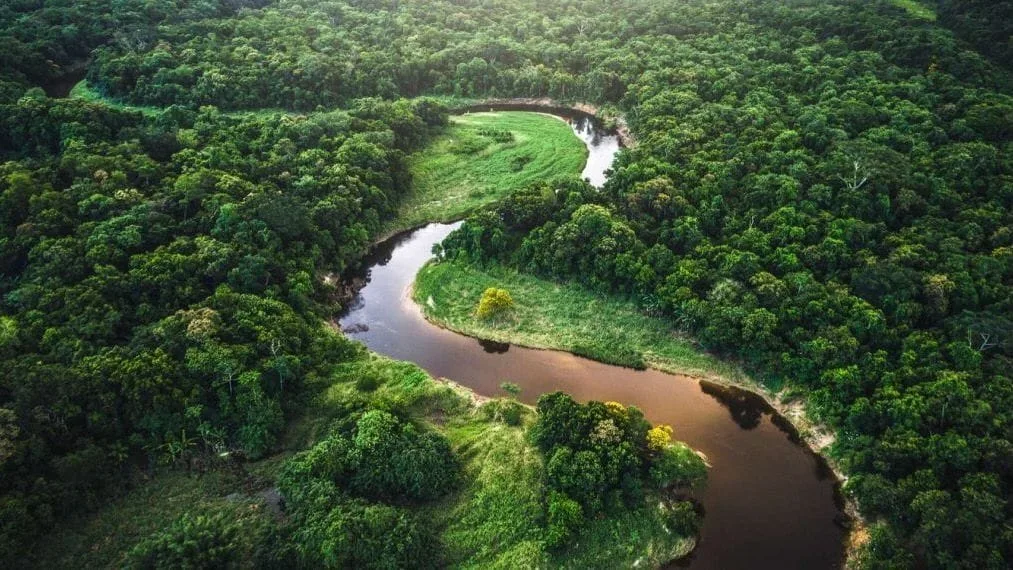
Aerial view of a winding river cutting through dense Amazon rainforest, illustrating the natural landscape where ancient urban remains were discovered.

Impressive urban remains in the heart of the Amazon

Thanks to a new technique to map forests in 3D and in real time with LiDAR, the study of archaeological sites has been possible, revealing urban remains in dense forests


Due to its dense forest, the study of archaeological sites in the Amazon has always been complicated and limited in detail. A new technique for obtaining 3D images of the ground surface has recently been used and has revealed remarkable urban archaeological remains!

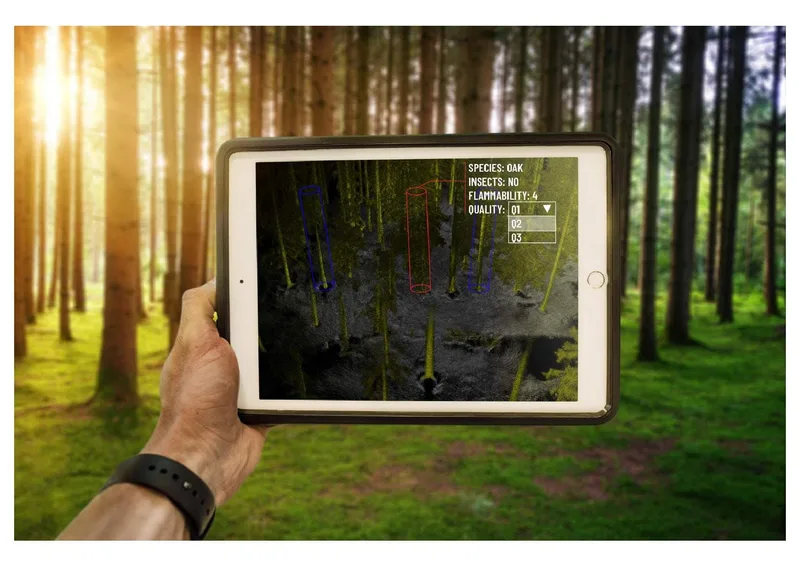
The forest mapped in 3D like never before Outsight, a leader in 3D Spatial Intelligence, has developed an automated solution capable of real-time 360° forest mapping.

The solution uses lidar technology to locate each tree as the forest agent moves, who can then digitally tag it with additional information (tree species, presence of insects, etc.).


Over the past few thousand years, pre-Hispanic farmers from the Llanos de Mojos, Bolivia, settled in the savannahs of the Amazon whose soil benefits from rather advantageous agricultural and aquaculture properties.

This area of ​​plains was flooded for a long time during the saison rains favoring a significant sedimentary deposit and therefore the creation of an elevated topography over time and a rich and well-drained soil.

Scientists know that the Casarabe culture largely developed there approximately between 1,400 and 500 years ago, with a locality covering an area of ​​4,500 km2. It had been found in these places the presence of 189 large monumental sites, 273 smaller sites and finally 957 kilometers of canals and roads.

Moreover, the excavations affirm that these sites were well inhabited throughout the year and that the natives were very organised: they cultivated their food, they had control systems of the waterhunted and fished for their food needs. protein.

The laser technique

Despite all this archaeological information collected, the mapping of the sites has always been very complicated and limited in detail due to its location in a tropical forest environment.

To overcome this constraint, Dr. Heiko Prümers and his colleagues carried out airborne laser mapping for six areas in which the known major settlements are concentrated.

This is the first time that this technique, Lidar (_Light Detection and Ranging), is used in the Amazon region.

Understanding the basics of 3D LiDAR Technology

Light Detection and Ranging, also known as LiDAR, is a technology for remote sensing that is used to measure distances in an environment.

Read article →

It involves attaching a laser scanner to a helicopter, small plane or drone, making it possible to map the terrain. The images were then digitally worked to remove the vegetation and keep only the land surface, they made it possible to obtain beautiful models in the form of a 3D image, shared in the review Nature.

Surprising remains!

The images revealed two remarkably extensive sites giving way to urban archaeological remains including civic (dwellings) and ceremonial architecture. These infrastructures include stepped platforms on top of which are U-shaped structures, mounds of rectangular shapes and conical pyramids rising up to 22 meters high.

These two large settlement sites are surrounded by concentric polygonal beds representing knots hubs that are connected to lower-tier sites by straight, elevated causeways that stretch for several kilometres. Finally, these 3D images also show massive infrastructure for water management, consisting of canals and reservoirs.

However, it is not yet possible to estimate how many people lived in this anthropized system.

The organization and layout of the settlement indicates that many hands must have been at work and that this population must have increased as evidenced by the expansion of the rampart-moat system.


-


Related Articles

APPLICATIONS

Can LiDAR save the Earth?

More and better data about the world around us is being collected by LiDARs, which means that the opportunities to combat climate change are growing as well.

APPLICATIONS

Outsight launches the first real-time LiDAR solution for the forestry industry

Outsight, a leader in 3D Spatial Intelligence, has announced the launch of the first real-time LiDAR solution for the forestry industry.

Let's connect

Send us a Message

Drop your email and we'll get back to you as soon as possible.

Frequently Asked Questions

  • How does airborne LiDAR remove tree cover to reveal ground features in dense jungle?

    Airborne LiDAR pulses fire at high enough density that some pass through gaps in the forest canopy and reflect off the ground beneath. Post-processing software classifies each return by its vertical position: last returns that hit soil are kept, while earlier returns from branches and leaves are filtered out. The result is a bare-earth digital elevation model that reveals topographic features, earthworks, platforms, canals, and roads regardless of how thick the vegetation above them is. This same principle of extracting meaningful 3D structure from dense point clouds underpins infrastructure-scale deployments on the ground. Outsight, for example, applies LiDAR-native 3D perception in real time across airports, train stations, and city intersections, using the SHIFT platform to classify and track objects within a sub-50ms pipeline, demonstrating how mature point-cloud filtering has become across both archaeological and operational contexts.

  • Can LiDAR distinguish archaeological earthworks from natural topography?

    Trained analysts can distinguish archaeological earthworks from natural topography, though it requires careful interpretation. Archaeological earthworks such as raised platforms, causeways, and moats tend to follow geometric patterns, straight lines, regular polygons, and uniform slopes that natural floodplain deposition does not reproduce. Conical mounds rising 22 meters or rectangular platform alignments are strong human-construction signals. The core advantage of LiDAR here is its ability to capture precise 3D shape and elevation data through dense canopy cover, a capability that companies like Outsight have scaled into real-time infrastructure deployments, demonstrating how LiDAR point clouds can resolve fine structural geometry at speed. Distinguishing subtle raised fields from natural levees, however, still depends on ground-truthing through excavation.

  • What did airborne LiDAR reveal about the Casarabe culture in the Bolivian Amazon?

    Airborne LiDAR mapping of six areas in the Llanos de Mojos, Bolivia, revealed two remarkably extensive settlement sites of the Casarabe culture, which developed there roughly 1,400 to 500 years ago. The 3D images show civic and ceremonial architecture, including stepped platforms topped by U-shaped structures, rectangular mounds and conical pyramids up to 22 metres high. The sites are surrounded by concentric polygonal ramparts and linked to lower-tier sites by straight, elevated causeways stretching several kilometres, along with canals and reservoirs for water management. The results were published in the journal Nature.

  • What platforms carry LiDAR scanners for archaeological mapping under forest cover?

    For archaeological mapping, a laser scanner is attached to a helicopter, a small plane or a drone, which flies over the terrain and records it in 3D. The resulting data is processed digitally to remove the vegetation and keep only the ground surface, producing a detailed 3D model of the land beneath the canopy. In the Bolivian Amazon, Dr. Heiko Prümers and his colleagues used this airborne approach over six areas where the known major settlements are concentrated. It was the first time LiDAR had been used in the Amazon region for this purpose.

  • Can foresters tag individual trees with species or pest information during a LiDAR survey?

    Yes. Outsight developed an automated solution for real-time 360° forest mapping that uses LiDAR to locate each tree as the forest agent moves through the stand. The agent can then digitally tag each located tree with additional information, such as its species or the presence of insects. This combines the geometric precision of 3D LiDAR with on-the-ground expertise, producing a forest inventory in which every tree has both an exact position and field observations attached.

  • When did the Casarabe culture flourish in the Bolivian Amazon and how large was its territory?

    Scientists know that the Casarabe culture developed in the Llanos de Mojos region of Bolivia approximately between 1,400 and 500 years ago. Its territory covered an area of about 4,500 square kilometers of Amazon savannah. Excavations indicate that its sites were inhabited throughout the year by a well organized population. People cultivated their food, controlled water, and hunted and fished to meet their protein needs. Airborne LiDAR later revealed the detailed urban layout of its largest settlements.

  • How many Casarabe sites and kilometers of canals were known before the LiDAR survey of Llanos de Mojos?

    Before the airborne LiDAR mapping, researchers had already identified 189 large monumental sites and 273 smaller sites attributed to the Casarabe culture. They had also recorded 957 kilometers of canals and roads across the region. Despite this archaeological knowledge, mapping the sites had always been complicated and limited in detail because of the tropical forest environment. The LiDAR survey then revealed two remarkably extensive settlement sites with civic and ceremonial architecture.

  • Who carried out the LiDAR mapping of the Casarabe settlements and where were the results published?

    The airborne laser mapping was carried out by Researcher Heiko Prümers and his colleagues. They surveyed six areas where the known major Casarabe settlements are concentrated in the Llanos de Mojos, Bolivia. After processing the data to remove vegetation and keep only the land surface, the team produced detailed 3D models of the terrain. These results were shared in the scientific journal Nature. This was the first time the LiDAR technique had been used in the Amazon region, where dense forest had long limited mapping.

  • Was the Casarabe survey the first time LiDAR was used for archaeology in the Amazon region?

    Yes, according to the article, this was the first time the LiDAR (Light Detection and Ranging) technique was used in the Amazon region. The method involves attaching a laser scanner to a helicopter, small plane or drone to map the terrain from the air. The resulting data was digitally processed to strip away vegetation and keep only the ground surface. It revealed urban archaeological remains that had been impossible to map in detail under the dense forest.

  • How tall were the pyramids and platforms that LiDAR revealed at the Casarabe urban sites?

    The LiDAR images revealed civic and ceremonial architecture at two remarkably extensive Casarabe sites. The structures include stepped platforms topped by U-shaped structures, rectangular mounds and conical pyramids rising up to 22 meters high. These buildings sit within large settlements surrounded by concentric polygonal features. Such monumental architecture had not been mapped in this detail before because of the dense forest cover. Airborne LiDAR made them visible by digitally removing the vegetation from the scans.

  • What water management systems did LiDAR uncover at the ancient Casarabe settlements in Bolivia?

    The 3D LiDAR images show massive infrastructure for water management, consisting of canals and reservoirs. This fits with excavation evidence that the Casarabe people were very organized, with systems to control water, and that they cultivated their food, hunted and fished. The Llanos de Mojos plains were flooded for long periods during the rainy season, and their soil offered advantageous agricultural and aquaculture properties. These hydraulic works appear alongside ceremonial architecture and long elevated causeways.

  • How were the large Casarabe settlements connected to smaller sites according to the LiDAR data?

    The two large settlement sites revealed by LiDAR are surrounded by concentric polygonal features that act as hubs. From these hubs, straight, elevated causeways stretch for several kilometers to connect lower-tier sites. This network suggests a structured, hierarchical settlement system spread across the landscape. Together with canals, reservoirs and a rampart and moat system, it points to a highly organized society. These features appeared once the LiDAR data was processed to strip away the forest canopy and keep only the land surface.

  • Can LiDAR data tell archaeologists how many people lived in the Casarabe cities?

    Not yet. The article states that it is not possible to estimate how many people lived in this human-shaped landscape from the LiDAR data alone. The organization and layout of the settlements do indicate that many hands must have been at work to build them. The expansion of the rampart and moat system also suggests the population increased over time. LiDAR thus reveals the scale and structure of the settlements, while population size remains an open question.

  • Why was the Llanos de Mojos region in Bolivia so favorable for pre-Hispanic farmers?

    The Llanos de Mojos plains were flooded for long periods during the rainy season, which led to significant sediment deposits over time. This created an elevated topography with rich, well-drained soil. As a result, the Amazon savannah there offered advantageous properties for both agriculture and aquaculture. Pre-Hispanic farmers settled the area over thousands of years, and the Casarabe culture developed there between roughly 1,400 and 500 years ago.

  • Why has mapping archaeological sites under the Amazon rainforest been so difficult until LiDAR?

    Dense tropical forest has always made the study of archaeological sites in the Amazon complicated and limited in detail, even where a lot of archaeological information had been collected. Airborne LiDAR overcomes this constraint by scanning the terrain from a helicopter, small plane or drone. The data is then digitally processed to remove the vegetation and keep only the land surface. The resulting 3D models, shared in the journal Nature, revealed remarkable urban remains in the Bolivian Amazon.