Skip to content
Insights
LiDAR is powering to approach Vision Zero

How LiDAR and Edge Computing Are Powering Vision Zero

Edge Computing + LiDAR enable real-time road safety. Outsight’s software solution ensures seamless integration, making Vision Zero a reality.


Edge computing, processing data close to where it’s generated, is transforming how cities approach traffic safety. This shift is particularly vital for realizing Vision Zero, the international initiative aimed at eliminating all traffic-related fatalities and serious injuries.

Vision Zero is a strategy to eliminate all traffic fatalities and severe injuries, while increasing safe, healthy, equitable mobility for all.

When paired with 3D LiDAR-based Spatial Intelligence, edge computing becomes a transformative enabler of real-time decision-making in dynamic urban environments.

Understanding How Lidar Works

3D LiDAR is a complex technology that enables unprecedented Spatial Intelligence. Many engineering choices are possible when building a new device.

Read article →

Traditional models transmit real-time sensor data to cloud platforms for analysis. Although the sensors operate in real time, offsite data processing demands substantial bandwidth and can introduce latency, an unacceptable compromise in environments where every millisecond matters.

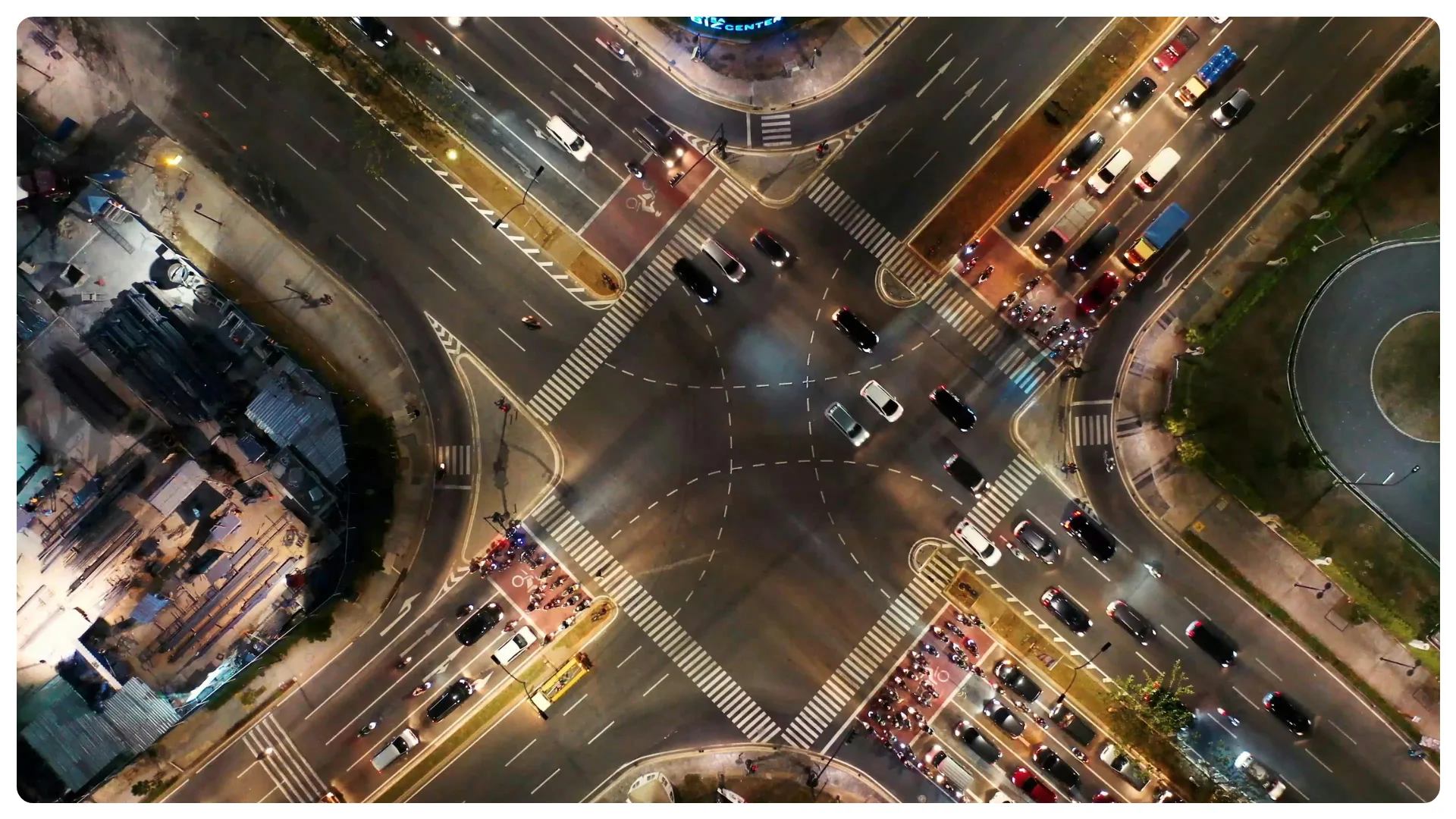
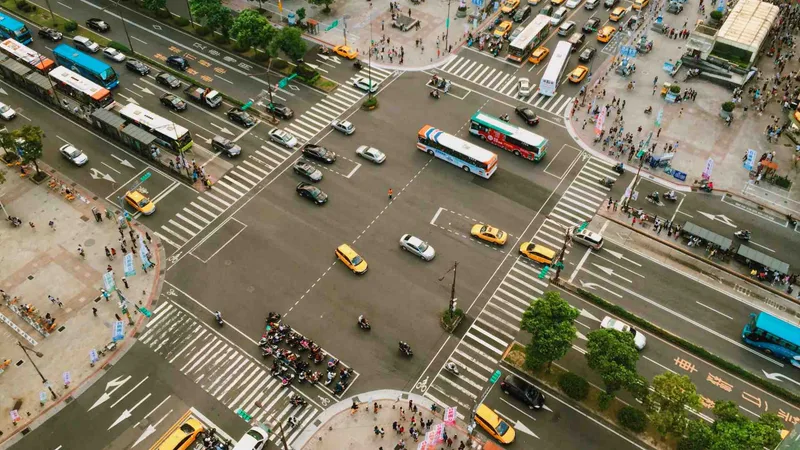
LiDAR enhances traffic safety on the busy intersection

In urban settings, where over 50% of fatal traffic incidents occur due to limited visibility or delayed detection, real-time responsiveness in all lighting conditions is non-negotiable.

By processing 3D LiDAR data directly at the edge, municipalities and infrastructure operators can instantly detect hazards, optimize traffic flow, and enhance road user safety.

Unlike traditional sensors, such as cameras, LiDAR generates precise,anonymous 3D maps unaffected by lighting or weather conditions, offering robust detection of pedestrians, cyclists, and vehicles in real time.

Why LiDAR Surpasses Cameras and Radar for ITS

LiDAR, Cameras, and Radar are evolving Intelligent Transportation Systems, with LiDAR leading the way.

Read article →
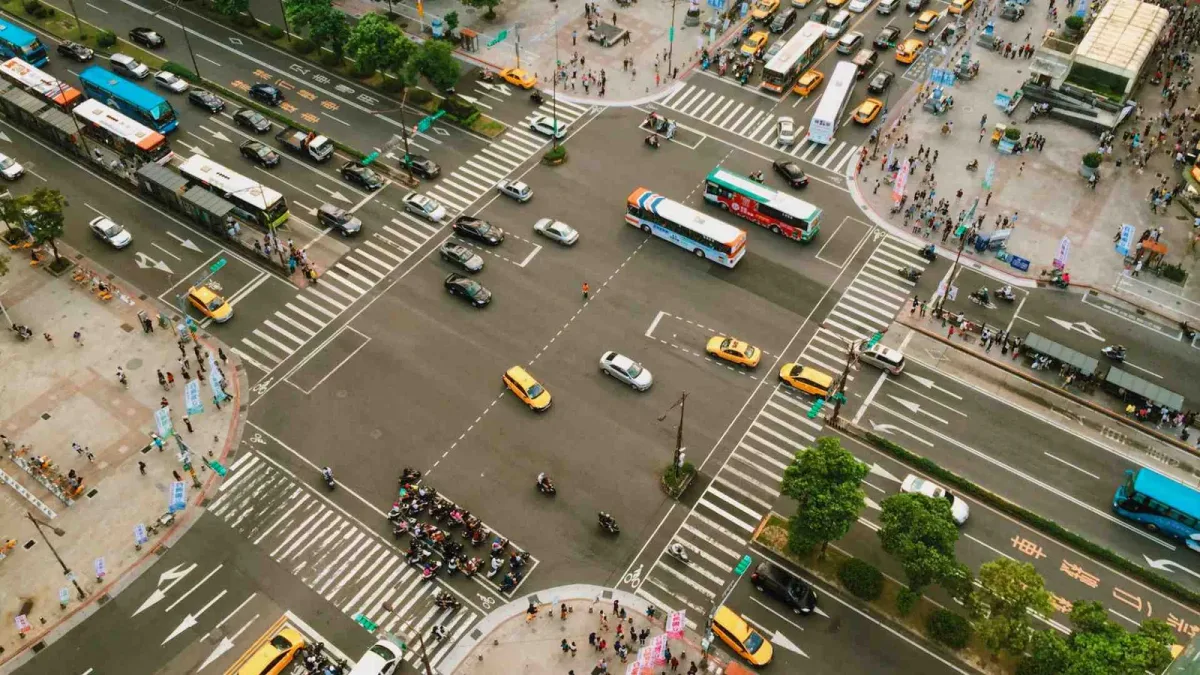
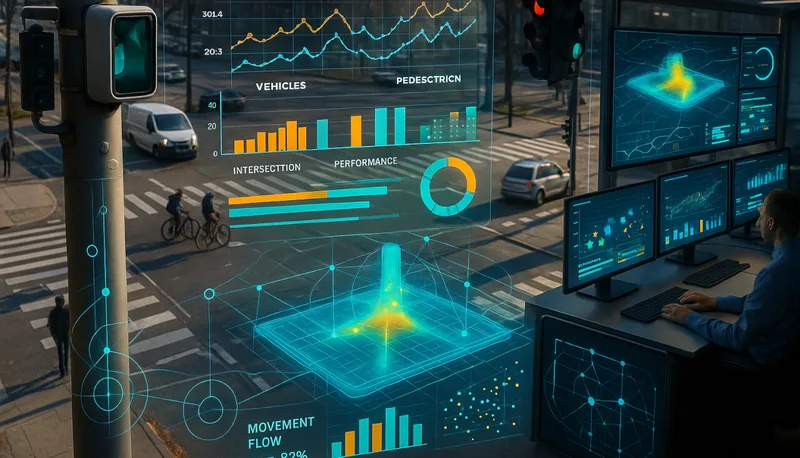
This high-frequency, high-fidelity data, when processed at the edge, enables predictive analytics, real-time alerts, and continuous traffic monitoring. As the result, it enhance safer streets, smarter intersections, and accelerated progress toward Vision Zero goals.
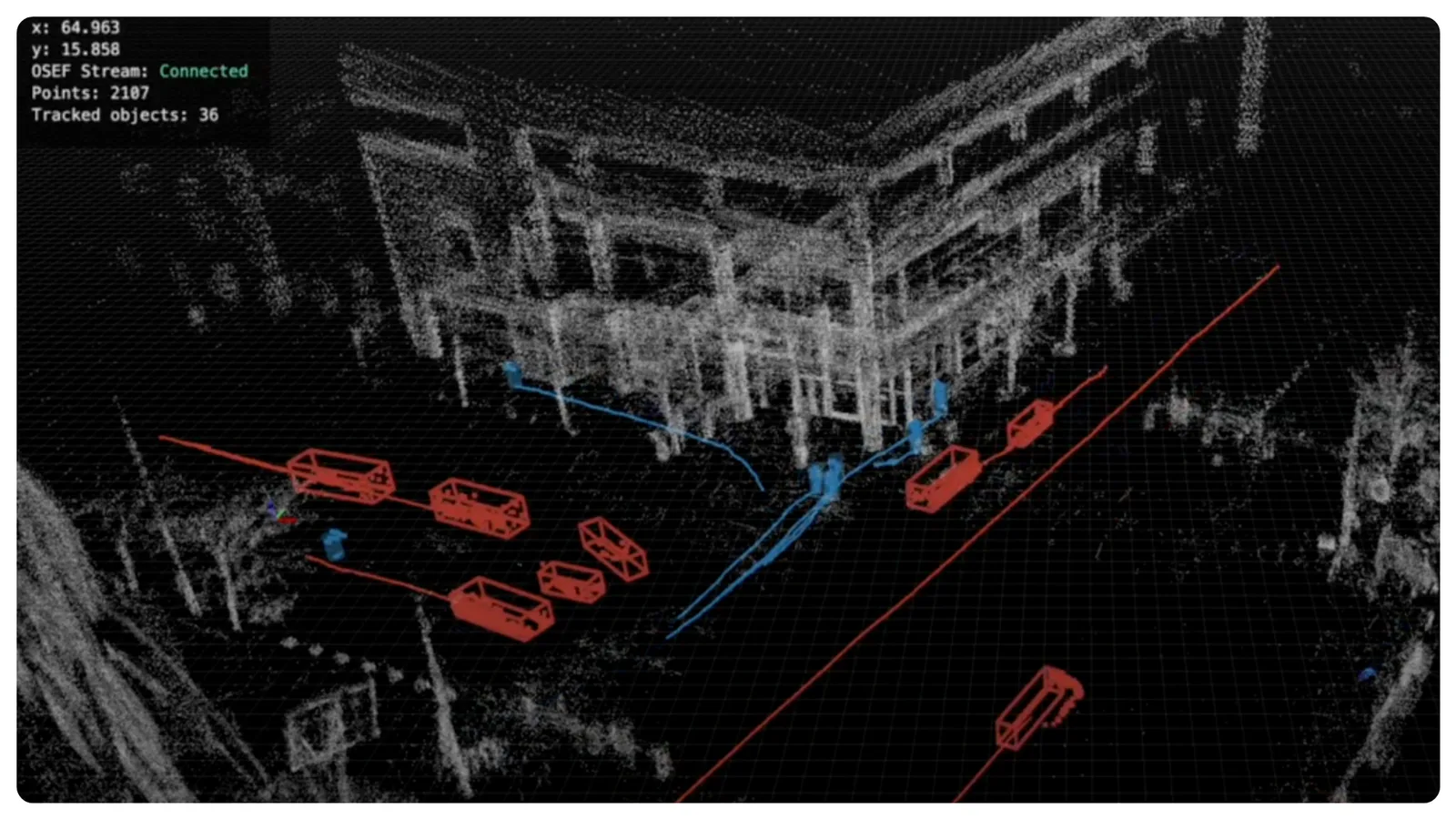
Fusion of Two Lidars on Intersection by Outsight

Despite its potential, large-scale LiDAR adoption is hindered by fragmentation in hardware protocols. Many LiDAR manufacturers use proprietary data formats, complicating integration and limiting scalability. Open and standardized data formats are essential to accelerate deployment and prevent vendor lock-in.

Outsight’s Comprehensive ITS Solution

Outsight provides the easiest and most comprehensive way to use LiDAR in ITS: from Simulation to Deployment and Analytics’ Dashboard.

Read article →
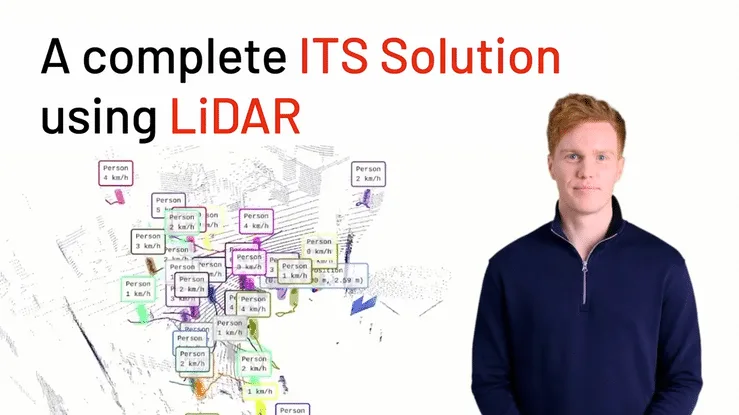
Outsight brings the solution to this challenge with a hardware-agnostic software platform designed to work seamlessly with multiple sensor brands, overcoming compatibility challenges and enabling faster adoption.

Outsight’s open LiDAR data approach ensures compatibility across a wide range of sensor models, significantly streamlining integration and accelerating deployment timelines.

LiDAR hardware is only part of the equation. Without powerful software to interpret raw data in real time, its potential remains untapped. Outsight’s software transforms complex 3D data into meaningful, real-time insights, enabling smarter mobility decisions directly at the edge.

Key Features of Open Data for LiDAR

When choosing a 3D LiDAR processing software it’s important to ensure that it uses an open and standard data format, that must meet seven key characteristics.

Read article →

Learn more about attributes of an open data format for LiDAR software

Outsight is the leading and most experienced player in real-time edge processing for LiDAR, a position recognized as early as 2023 by the prestigious Edge AI Product of the Year award.

Outsight Wins 2023 Edge AI and Vision Product Award

We’re thrilled to announce that the 6th generation of our 3D LiDAR processing software, has been awarded the 2023 Edge AI and Vision Product of the Year!

Read article →
From traffic analytics to vulnerable road user detection, Outsight’s technology empowers infrastructure operators and cities to make faster, more informed safety decisions.

By enabling real-time Spatial Intelligence through open, scalable software, we help move global mobility systems closer to Vision Zero, turning real-time perception into real-world impact.

Related Articles

AIRPORTS

Aeroporti di Roma to deploy Outsight's Physical AI solution at scale across Rome Fiumicino Airport

Aeroporti di Roma (ADR) is expanding its collaboration with Outsight to a large-scale deployment across almost all Schengen common-use areas at Rome Fiumicino Airport.

CORPORATE

Intel and Outsight Announce Strategic Collaboration to Bring Physical AI–Powered Spatial Intelligence to the Enterprise Edge

Outsight’s Shift platform integrated into Google Distributed Cloud Edge powered by Intel Xeon 6 SoC – Live demonstration at Google Cloud Next 2026

Let's connect

Send us a Message

Drop your email and we'll get back to you as soon as possible.

Frequently Asked Questions

  • Why does processing LiDAR data at the edge matter for intersection safety?

    Cloud-based sensor pipelines introduce round-trip latency that can reach hundreds of milliseconds depending on network conditions. At a busy intersection, that gap is long enough for a pedestrian to step into a crosswalk after a hazard is detected but before an alert fires. Edge processing keeps the full perception-to-alert cycle local, cutting latency to the sub-50ms range that Outsight's SHIFT platform achieves in infrastructure-based deployments, such as the City of Bellevue's Vision Zero intersections. The practical result is that conflict-avoidance signals, variable-message warnings, and emergency-vehicle pre-emption can all respond to conditions as they develop rather than after they have already changed.

  • What share of fatal traffic incidents happen in urban environments where edge LiDAR could help?

    Over 50% of fatal traffic incidents occur in urban settings, according to figures cited in infrastructure safety literature, with limited visibility and delayed detection named as the dominant contributing factors. That concentration makes cities the primary deployment target for real-time LiDAR-based safety systems: the combination of dense pedestrian activity, mixed road-user types, and constrained sight lines is precisely where an always-on, all-weather 3D sensor network provides the most marginal safety gain per sensor installed. Outsight's infrastructure-based approach applies directly to this challenge, as demonstrated in its deployment with the City of Bellevue, where LiDAR sensors built into the intersection infrastructure feed the SHIFT platform to support Vision Zero safety goals without capturing any biometric or facial data.

  • What is Vision Zero and where did it originate?

    Vision Zero is a road-safety strategy that sets the goal of eliminating all traffic fatalities and serious injuries while improving safe, healthy, and equitable mobility. It originated in Sweden in 1997 as national transport policy and has since been adopted by cities and national governments across Europe, North America, and beyond. The framework shifts moral responsibility for deaths and injuries away from individual road users and toward the designers of roads, vehicles, and traffic systems, making infrastructure-level interventions such as real-time conflict detection central to its implementation rather than optional. The City of Bellevue, for example, applies this infrastructure-first principle through Outsight's SHIFT platform, using 3D LiDAR sensors deployed at intersections to detect vehicle and pedestrian conflicts in real time as part of its Vision Zero program.

  • Why do proprietary LiDAR data formats slow down smart city deployments?

    Most LiDAR manufacturers ship sensors that emit data in proprietary binary formats, meaning perception software written for one vendor's hardware cannot ingest another vendor's point cloud without a custom translation layer. For a city deploying sensors across dozens of intersections, each potentially sourced from different vendors due to procurement rules or hardware availability, that fragmentation multiplies integration effort and creates long-term dependency on specific sensor lines. Standardized, hardware-agnostic software layers decouple the sensor choice from the analytics pipeline, allowing cities to swap or mix hardware without rewriting their traffic-management stack. Outsight addresses this directly through its SHIFT platform, which is LiDAR-native and compatible across multiple sensor vendors including Hesai, RoboSense, Ouster, and Velodyne, a capability already applied in smart-city deployments such as the City of Bellevue's Vision Zero intersections.

  • Can LiDAR-based edge systems handle fog, rain, and direct sunlight at the same intersection?

    LiDAR is an active sensor: it emits its own near-infrared laser pulses and measures their return times rather than relying on ambient light. That design makes it insensitive to lighting transitions (dawn, dusk, glare, full darkness) and largely tolerant of moderate precipitation and fog at the ranges relevant to intersection monitoring, typically under 100 meters. Cameras lose contrast in glare or low light and require separate night-vision hardware; radar handles weather well but lacks the spatial resolution to classify pedestrians, cyclists, and vehicles individually. LiDAR covers all three conditions with a single sensor type, which simplifies the hardware stack at each roadside cabinet. Outsight applies this capability at the infrastructure level through its SHIFT platform, processing 3D LiDAR data in real time across live intersections, including deployments such as the City of Bellevue's Vision Zero program, where consistent detection across weather and lighting conditions is a core operational requirement.

  • How does edge-processed LiDAR support vulnerable road user detection differently from standard vehicle detection loops?

    Inductive loops embedded in road surfaces detect metal mass, so they count vehicles reliably but are blind to pedestrians, cyclists, and e-scooters, the road users who account for a disproportionate share of fatal outcomes. A 3D LiDAR sensor mounted above the intersection classifies every object in its field of view by shape and motion, distinguishing a child on a bicycle from an adult on a scooter from a person using a wheelchair, and tracking each with a unique anonymous ID. That per-entity classification is what enables targeted alerts, such as extending a pedestrian phase when a slow-moving road user is still in the crosswalk, which loops cannot support. Outsight applies this capability at the infrastructure level through its SHIFT platform, including a deployment with the City of Bellevue supporting Vision Zero intersection safety goals, where the same anonymous 3D tracking feeds real-time signal logic without capturing any biometric data.