Skip to content
Insights
Outsight and RoboSense Join Forces to Advance LiDAR Technology.

Outsight and Robosense announce partnership agreement

Combining 3D LiDAR technology with a real-time analytics and comprehension solution, it leads to the mass deployment of 3D perception technologies


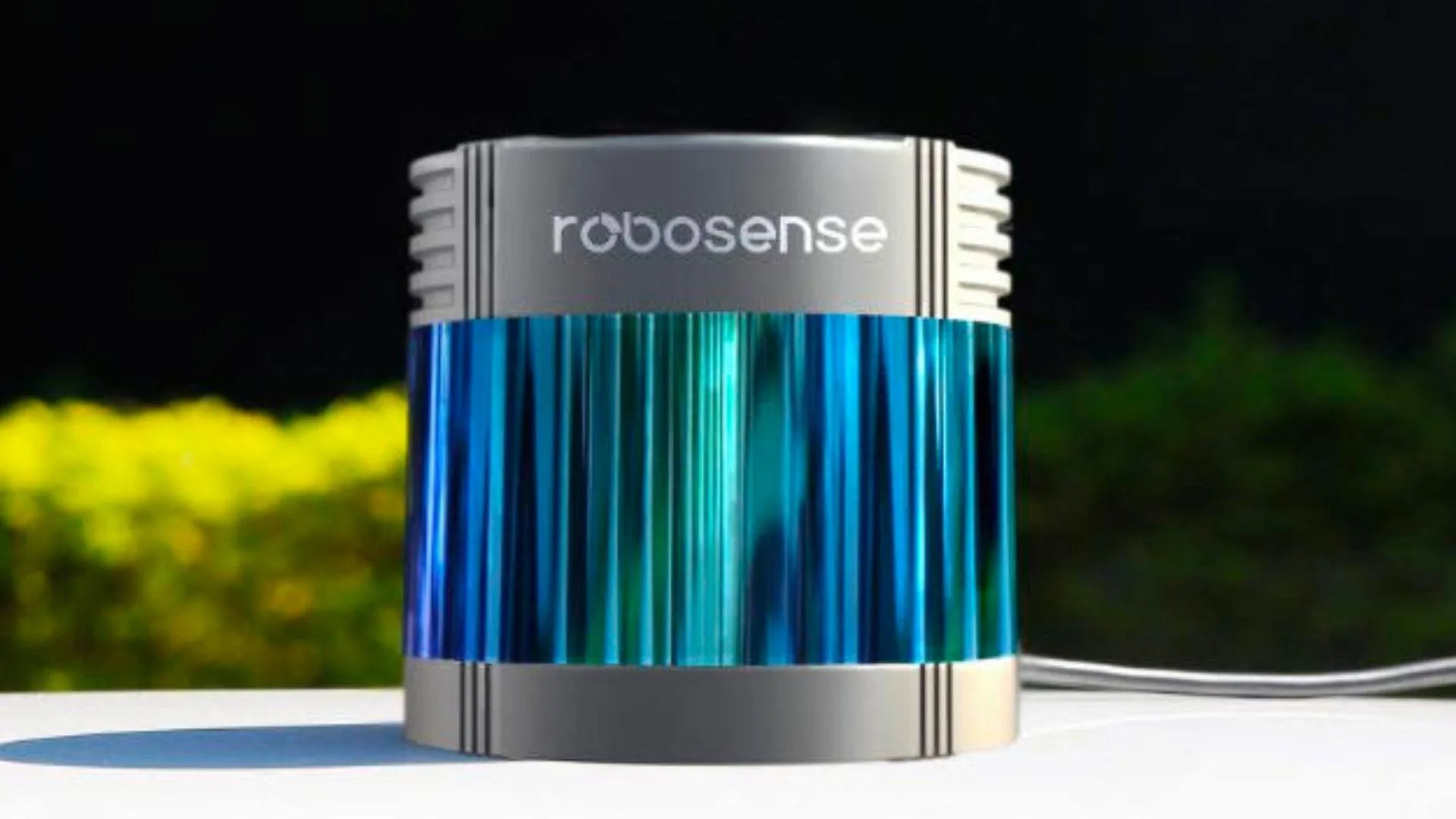
PARIS, FRANCE–(EINPresswire.com)– Outsight, specialist in 3D Spatial Intelligence, and RoboSense, a leading manufacturer of advanced LiDAR solution for autonomous driving, today announced a new partnership aiming to combine the pre-processing software engine from Outsight with RoboSense’s products.

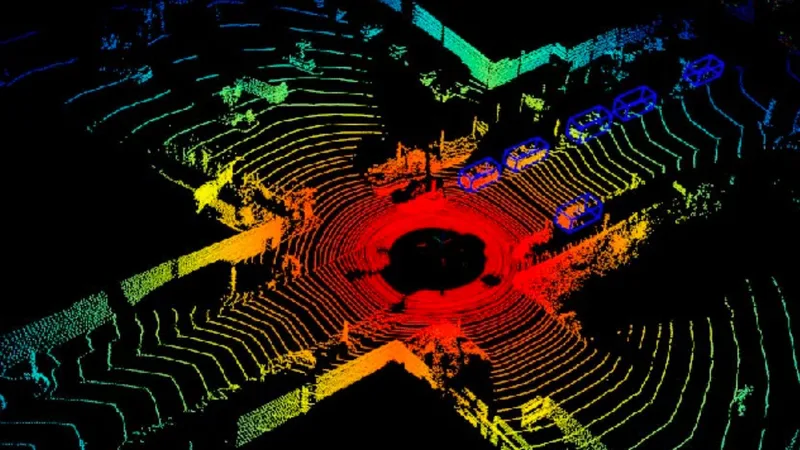
Outsight provides LiDAR data processing software to make 3D lidar easier than ever to use. Outsight’s Spatial AI detects, classifies, and tracks objects providing comprehensive insights. In a few months, its solution has grown rapidly in many applications including Infrastructure-based Perception and Analytics.

As one of the world’s first mass-production-ready LiDAR manufacturers, RoboSense provides high-performance and cost-effective automotive LiDAR solutions for autonomous driving applications.

With shared mission, RoboSense cooperates with Outsight in the revolution of machine 3D perception.

Thanks to this partnership, the joint solution delivers real-time, reliable, processed 3D data, becoming one of the most advanced 3D perception technologies available and offering an ideal solution which can be easily integrated across many industries beyond automotive.

Specifically, it will be applied both in the context of Smart Cities’ and Industrial applications. Following this partnership, RoboSense will collaborate with Outsight’s to ensure the best integration between the latest innovations and products of each company.

Outsight will develop specific drivers and interfaces to allow its Spatial Intelligence solutions to leverage the unique value of RoboSense LiDARs.

Award-Winning Technology In less than a year, Outsight has successfully designed and industrialized a new generation of lidar processing solutions, which has been the subject of 60 patent applications.

Outsight innovation has won many awards, including the prestigious Best of CES Innovation Award in Las Vegas as well as the Prism Award by the world leaders in photonics and lasers.
Related Articles

AIRPORTS

Aeroporti di Roma to deploy Outsight's Physical AI solution at scale across Rome Fiumicino Airport

Aeroporti di Roma (ADR) is expanding its collaboration with Outsight to a large-scale deployment across almost all Schengen common-use areas at Rome Fiumicino Airport.

CORPORATE

Intel and Outsight Announce Strategic Collaboration to Bring Physical AI–Powered Spatial Intelligence to the Enterprise Edge

Outsight’s Shift platform integrated into Google Distributed Cloud Edge powered by Intel Xeon 6 SoC – Live demonstration at Google Cloud Next 2026

Let's connect

Send us a Message

Drop your email and we'll get back to you as soon as possible.

Frequently Asked Questions

  • What does a LiDAR pre-processing software engine actually do before data reaches analytics?

    A LiDAR pre-processor converts raw point clouds, streams of millions of 3D coordinates per second per sensor, into structured, classified, tracked entity streams. It handles sensor-specific data formats, removes noise, segments the scene into distinct objects, assigns each a bounding box and classification, and outputs a compact entity feed that downstream analytics can consume without touching raw sensor output. Outsight's SHIFT platform performs exactly this role: running at the edge with a sub-50ms end-to-end pipeline, it normalizes data across multi-vendor hardware (including RoboSense, Hesai, Ouster, and others), then delivers clean entity feeds into the Motional Digital Twin. This approach reduces the data volume that needs to be transmitted or stored by orders of magnitude.

  • Why do automotive LiDAR manufacturers partner with infrastructure software companies instead of building their own analytics stack?

    Sensor manufacturing and perception software require fundamentally different engineering disciplines and go-to-market motions. A LiDAR manufacturer optimizes for optics, photon budgets, scan patterns, and mass-production yields. Perception software for infrastructure optimizes for multi-sensor fusion, occlusion handling, behavior classification, and integration with building management or traffic systems. The specialization gap is wide enough that partnership is faster and more reliable than vertical integration for either party. The agreement between RoboSense and Outsight reflects exactly this logic: RoboSense contributes hardware depth while Outsight contributes the SHIFT platform, a real-time analytics layer purpose-built for infrastructure-scale 3D perception, accelerating deployment for operators who need both sensor fidelity and actionable intelligence from day one.

  • How many LiDAR sensor models is Outsight's software compatible with across manufacturers?

    Outsight's software supports over 210 compatible LiDAR sensor models across manufacturers including RoboSense, Hesai, Ouster, and Seyond. The SHIFT platform is intentionally hardware-agnostic, meaning operators are not locked into a single sensor vendor and can mix models across a deployment to optimize coverage, cost, or performance for specific zones within a site. This multi-vendor compatibility is central to how Outsight enables large-scale infrastructure deployments, such as the world's largest 3D LiDAR airport deployment at Dallas Fort Worth, where flexibility across sensor hardware directly affects the economics and feasibility of full-site coverage.

  • What makes RoboSense notable among LiDAR manufacturers?

    RoboSense is recognized as one of the first manufacturers to achieve mass-production-ready status for automotive-grade LiDAR, a milestone that requires passing automotive supply-chain qualification standards (IATF 16949, AEC-Q standards) that most sensor startups take years to reach. That manufacturing maturity, combined with cost-effective unit economics from volume production, makes their sensors attractive for non-automotive deployments where large sensor counts per site drive total cost. Outsight, which maintains multi-vendor LiDAR compatibility across hardware from RoboSense, Hesai, Ouster, Velodyne, and others, recognized this advantage when the two companies formalized a partnership to combine RoboSense sensors with the SHIFT platform for real-time 3D perception at infrastructure scale.

  • What is the difference between infrastructure-based perception and onboard vehicle perception?

    Onboard vehicle perception places sensors on the moving entity itself: each robot or vehicle sees only from its own vantage point and must solve its own localization and obstacle-avoidance problems independently. Infrastructure-based perception mounts sensors in fixed positions on ceilings, poles, and gantries, giving a shared, site-wide view of every entity simultaneously. Every vehicle or robot in the scene benefits from that shared view without needing its own sensor stack, and occlusions that would blind a single moving observer are resolved by the fixed network. Outsight's approach, which it calls Infrastructure-based Physical AI, applies exactly this model: LiDAR sensors are deployed in the infrastructure rather than on the moving entities, feeding the Motional Digital Twin with a real-time, anonymous 3D representation of how every person, vehicle, and robot moves through a site.

  • Does a LiDAR sensor need custom software drivers for each manufacturer's hardware?

    Yes, in practice. Each LiDAR manufacturer uses proprietary point-cloud encoding formats, calibration schemas, and transport protocols. Software that claims multi-vendor compatibility must maintain a dedicated driver and interface layer for each supported model, including updates whenever a manufacturer releases new firmware or a new sensor generation. Outsight develops specific drivers and interfaces per sensor so that its SHIFT platform can ingest and correctly interpret data from each manufacturer's hardware without operator-level configuration work. This approach underpins Outsight's compatibility across Hesai, RoboSense, Ouster, Velodyne, and Seyond hardware, a range that reflects the practical complexity of multi-vendor LiDAR deployments at infrastructure scale.