Skip to content
Insights
Outsight and Hesai announce a strategic partnership to advance real-time 3D LiDAR technology.

Partnership agreement between Outsight and Hesai

The partnership enables a large-scale deployment of 3D perception by combining the sensors developed by Hesai with the LiDAR data processing software developed by Outsight.


PARIS, FRANCE–(EINPresswire.com)–Outsight, leader in real-time processing of 3D LiDAR data, announced today a new partnership with Hesai, a key and innovative manufacturer of 3D LiDAR.

Outsight’s drivers and interfaces with Hesai LiDAR family of sensors have been developed, initially built for Mobile Robotics applications.

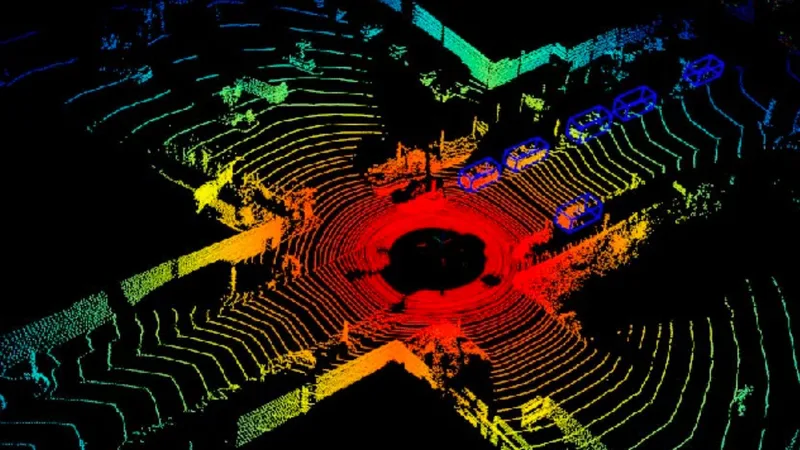
The solution delivers real-time, reliable, processed 3D data, becoming one of the most advanced 3D perception technologies available and offering an ideal solution which can be easily integrated across many industries beyond automotive.

Outsight creates Spatial Intelligence software to make 3D lidar easier than ever to use.

It detects, classifies and tracks objects in real time. In a few months, Outsight’s solution has grown rapidly in many applications including Infrastructure-based Perception.

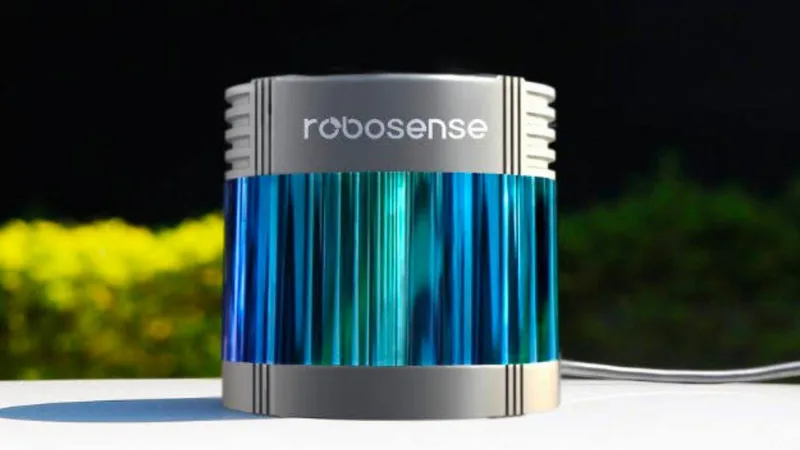
To accelerate its adoption beyond these industries, Outsight has partnered with Hesai, an innovative manufacturer of 3D LiDAR. Hesai has released its next-generation mechanical LiDAR, Pandar128.

Pandar128 is one of the most advanced mechanical LiDARs available and offers an ideal solution for autonomous driving applications.

Following this partnership, Hesai will collaborate with Outsight’s to ensure the best integration between the latest innovations and products of each company.

Outsight will develop specific drivers and interfaces to allow its LiDAR data processing solutions to leverage the unique value of Hesai LiDARs.

This collaboration has also been extended to include the company Cadden, the distributor of Hesai in France.

Award-Winning Technology
In less than a year, Outsight has successfully designed and industrialized this new generation of LiDAR data processing solutions, which has been the subject of 60 patent applications. Outsight’s innovation won many awards, including the prestigious Best of CES Innovation Award in Las Vegas as it’s the youngest company ever to have won the Prism Award by the world leaders in photonics and lasers. Outsight has already attracted the largest organizations and equipment manufacturers in the automotive and aeronautics markets, including Faurecia and Safran.

About Hesai LiDAR
Hesai Technology is the global leader in 3D-sensors (LiDAR). Founded in Shanghai, Hesai’s team of 500 has created a suite of innovative sensor solutions that combine three core strengths: industry-leading performance, manufacturability, and reliability. Hesai’s proprietary micro-mirror and waveform fingerprint technologies continue to lead the market in sensor innovation, creating 500+ patent portfolios and winning customers spanning 70 cities in 23 countries and regions. To date, Hesai has raised over hundreds of millions from Bosch, LightSpeed, Baidu and other global investors.
Related Articles

AIRPORTS

Aeroporti di Roma to deploy Outsight's Physical AI solution at scale across Rome Fiumicino Airport

Aeroporti di Roma (ADR) is expanding its collaboration with Outsight to a large-scale deployment across almost all Schengen common-use areas at Rome Fiumicino Airport.

CORPORATE

Intel and Outsight Announce Strategic Collaboration to Bring Physical AI–Powered Spatial Intelligence to the Enterprise Edge

Outsight’s Shift platform integrated into Google Distributed Cloud Edge powered by Intel Xeon 6 SoC – Live demonstration at Google Cloud Next 2026

Let's connect

Send us a Message

Drop your email and we'll get back to you as soon as possible.

Frequently Asked Questions

  • What is the Hesai Pandar128 and what makes it useful for infrastructure deployments?

    The Pandar128 is a mechanical spinning LiDAR from Hesai with 128 laser channels, producing denser vertical resolution than earlier 64-channel designs. More channels mean tighter point spacing at a given distance, which improves reliable detection and classification of objects like pedestrians and smaller vehicles in fixed infrastructure scenarios. The sensor was initially targeted at autonomous driving, but its high channel count makes it equally suited to wide-area infrastructure coverage where vertical resolution determines whether a person is distinguishable from a bollard at range. Outsight, whose SHIFT platform is LiDAR-native and compatible with Hesai hardware, pairs sensors like the Pandar128 with its real-time 3D processing pipeline to build infrastructure-based deployments across airports, train stations, and factories.

  • Why does a LiDAR sensor manufacturer like Hesai need a separate software partner rather than shipping its own perception stack?

    Sensor manufacturers optimize for photonics, optics, and signal reliability, which is a distinct engineering discipline from real-time 3D perception algorithms. Writing production-grade detection, classification, and tracking software across diverse deployment environments (airports, factories, road intersections) requires a separate, sustained software R&D effort. Outsight, for example, has spent two decades focused specifically on LiDAR software, resulting in 73 patents and a processing pipeline that operates end-to-end in under 50 milliseconds. Maintaining compatibility across firmware revisions and integrating with downstream operational systems adds further scope that a sensor manufacturer would struggle to absorb without diverting resources from hardware innovation. Splitting these responsibilities lets each company focus on its core competency rather than building a full vertical stack independently.

  • What role does a French distributor like Cadden play in an international LiDAR hardware-software partnership?

    A regional distributor handles import logistics, local regulatory compliance, after-sales support, and field relationships with system integrators who may lack direct access to an international manufacturer. Including Cadden in the Outsight-Hesai partnership means French customers and integrators can source Hesai hardware through a local channel while accessing Outsight's LiDAR data processing software through a single coordinated engagement. This structure reduces procurement friction for projects that would otherwise require parallel contracts with two overseas entities. For deployments of the SHIFT platform, where Hesai sensors feed real-time 3D perception pipelines, having a local hardware distributor also simplifies on-site commissioning, spare-parts logistics, and ongoing technical support across the project lifecycle.

  • How does adding a new LiDAR sensor family to a hardware-agnostic software platform actually work technically?

    Each sensor manufacturer uses a proprietary binary packet format and UDP stream structure for its raw point cloud output. A software vendor writes a dedicated driver that parses those packets, normalizes the coordinate frame, applies factory calibration corrections, and delivers a standardized point cloud to the processing pipeline. Once that driver layer exists, all upstream algorithms (object detection, tracking, behavior classification) run without modification. The effort is concentrated in the driver, not the perception logic. This is the architecture behind Outsight's multi-vendor compatibility: the SHIFT platform supports hardware from Hesai, RoboSense, Ouster, Velodyne, and Seyond through exactly this driver abstraction, allowing new sensor families to be added incrementally without rewriting the perception stack.

  • What is mobile robotics perception, and how is it different from infrastructure-based perception?

    Mobile robotics perception runs on sensors mounted on a moving machine. The sensor itself moves, so the algorithm must continuously re-estimate both the robot's own position and the positions of external objects simultaneously. Infrastructure-based perception uses sensors fixed to ceilings, poles, or gantries; the sensor pose is static and known after calibration, so the algorithm dedicates all compute to tracking the moving objects in the scene rather than solving for ego-motion. Outsight is built around this second model: its Infrastructure-based Physical AI approach processes LiDAR data from fixed infrastructure sensors to generate a real-time Motional Digital Twin of everyone and everything moving through a site. The two approaches share sensor hardware and point-cloud processing primitives but require different algorithm architectures and carry different performance trade-offs.

  • What industries beyond automotive were early adopters of 3D LiDAR perception software?

    Aeronautics and factory automation were among the earliest non-automotive adopters of 3D LiDAR perception software. Early customer references included Safran in aeronautics and Faurecia in automotive supply. Airports became a high-growth vertical shortly after, with the Paris-Charles de Gaulle deployment by Groupe ADP representing one of the first large-scale infrastructure use cases, now extended across facilities like Dallas Fort Worth and Rome Fiumicino through Outsight's SHIFT platform. These verticals share a common requirement: real-time spatial awareness in dense, safety-sensitive environments where camera-based analytics face lighting, occlusion, or privacy constraints that LiDAR avoids structurally. Factory deployments at BMW followed a similar logic, prioritizing anonymous, precise motion tracking on the production floor.