Skip to content
Insights
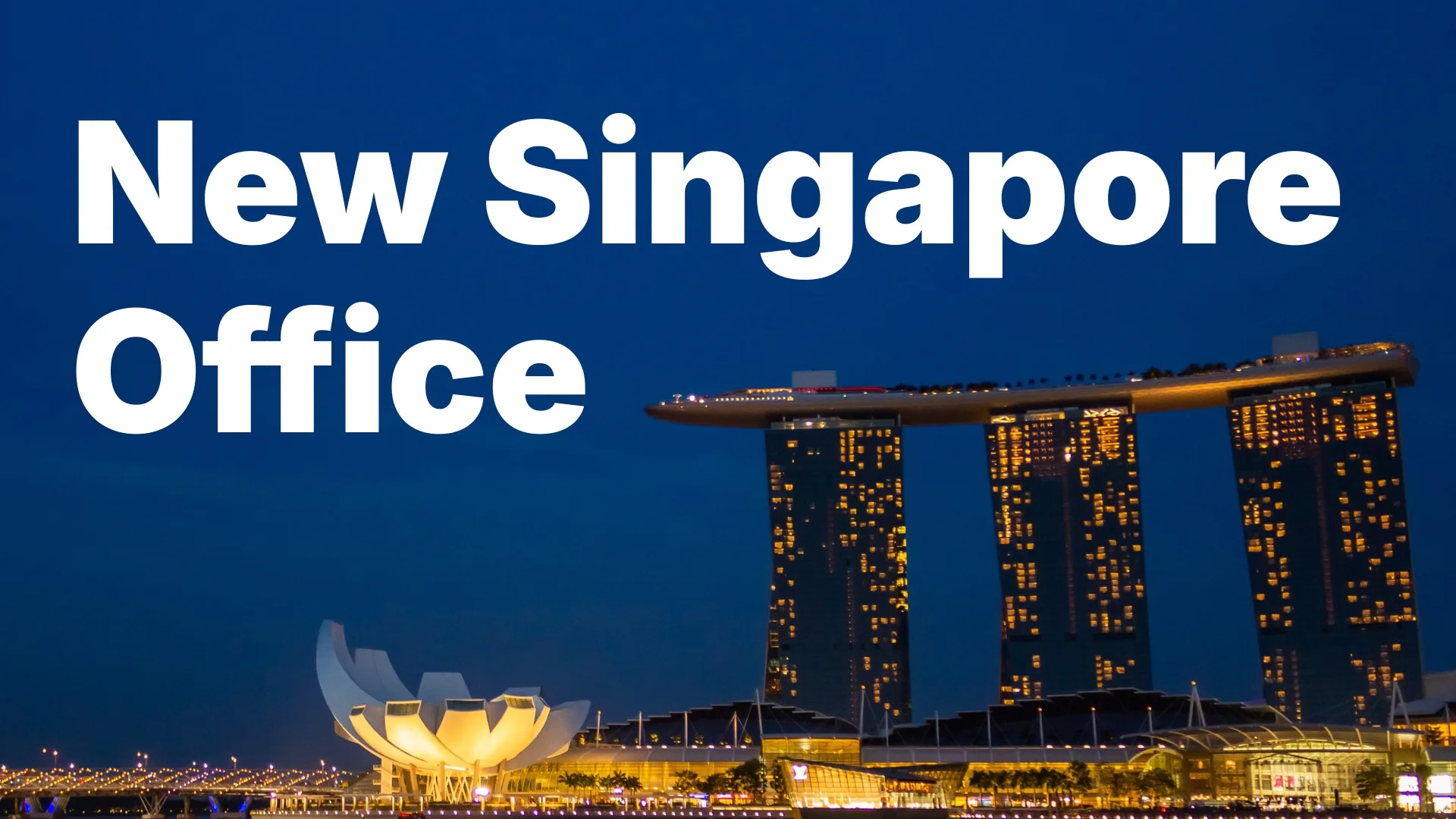
Outsight announces the opening of a new Singapore Office

Outsight accelerates in Asia-Pacific: new Singapore hub

Outsight's new Singapore office joins Hong Kong, putting sales, engineering, delivery and customer success in the same working hours as Asia-Pacific airports.


Sales, engineering, delivery and customer success now operate from two offices in the region, in the same working hours as the airports they serve.

SINGAPORE, 23rd Sept 2026. Outsight, the global leader in infrastructure-based Physical AI, has opened an office in Singapore to serve airport operators across Asia-Pacific.

The Singapore office, at 36 Carpenter Street, opened on 6 July 2026 and is led by Jeremy Camilleri, Director of Operations APAC. It operates as a fully-owned subsidiary of Outsight SA, headquartered in France.

A regional hub in the same time zone as its customers

With Singapore and Hong Kong now operating side by side, Outsight’s Asia-Pacific organisation keeps growing where its customers are. Sales, presales, engineering, delivery and customer success all sit in the region, so specification, deployment and support happen in each airport’s own working hours, handled by a team in the same time zone.

The decision follows the logic of the platform itself. Outsight measures what is happening in a terminal continuously and reports it in real time, so that an operations team can act while there is still a shift left to act on. A supplier that delivers information on that timescale should be able to answer on the same one, and an office in the region makes that immediate.

Alongside Jeremy Camilleri and Kim Xie, Sales Director APAC, who leads commercial activity for the region, the office hosts a team of Customer Success Management, Sales Engineers, Field Application Engineers and Technical Support. Singapore was chosen for its proximity to the region’s largest hubs, several of which Outsight already works with.

Singapore Changi Airport is among them: as recently announced, the platform measures key touchpoints such as arrival immigration and taxi queuing continuously across all four of its terminals, feeding a single unified data layer.

Outsight crosses 280 million passengers under real-time measurement, from the busiest US hubs to Singapore Changi

More than 280 million annual passengers now travel under real-time measurement by Outsight’s Spatial Intelligence Platform, from the busiest US hubs to Singapore Changi.

Read article →

Real-time Spatial Intelligence across the whole terminal

Outsight builds a Physical AI software platform. Leveraging 3D LiDAR sensing fused with data from any other source, including cameras, WiFi, boarding pass information and POS, it creates a Motional Digital Twin of a site, a live replica of how people and vehicles move through it, and delivers real-time Spatial Intelligence to the teams that operate it.

Airports use it to measure queue length, wait time, dwell, occupancy, throughput and resource utilisation continuously, across the whole terminal and at every touchpoint. Worldwide, more than 280 million annual passengers now travel under the real-time measurement of the platform.

With that knowledge, operators staff to actual demand, clear bottlenecks before they build, and plan terminal modifications and extensions from the measured use of space.

“Being in the region changes what we can actually do. When an airport needs an engineer on the terminal floor during commissioning, that now happens the same day. Our customers work in real time, and now so do we.”

Jeremy Camilleri, Director of Operations APAC, Outsight

“Airport operators across Asia-Pacific are asking for continuous, real-time knowledge of how their terminals operate, and they want a partner they can meet in person. With Singapore and Hong Kong working together, we can be in the room at every stage, from the first conversation to an airport-wide rollout.”

Kim Xie, Sales Director APAC, Outsight

“Real-time Spatial Intelligence is becoming as foundational to infrastructure operations as connectivity itself. That shift is moving fast in Asia-Pacific, and we are building our organisation close to our customers there, as we do in every region we serve.”

Raul Bravo, President Founder, Outsight

Media contact

Julie Bourdinot, Outsight · julie.bourdinot@outsight.tech · www.outsight.ai

Related Articles

AIRPORTS

Outsight crosses 280 million passengers under real-time measurement, from the busiest US hubs to Singapore Changi

More than 280 million annual passengers now travel under real-time measurement by Outsight's Spatial Intelligence Platform, from the busiest US hubs to Singapore Changi.

AIRPORTS

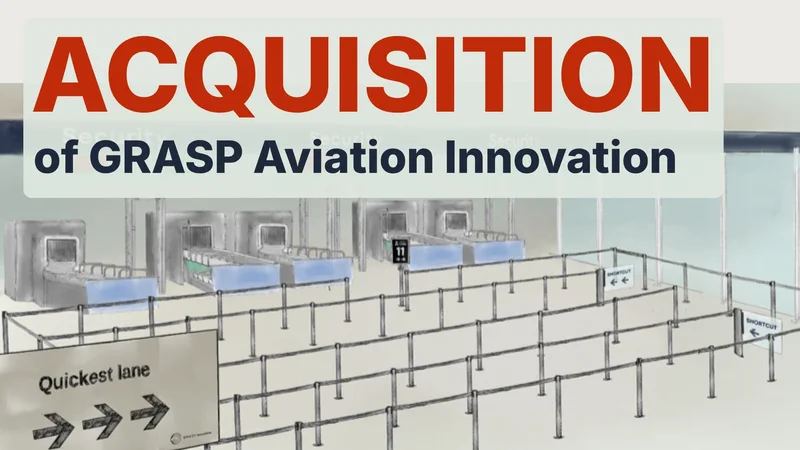
Outsight acquires GRASP Aviation Innovation

Physical AI moves from understanding to acting: airports now get security checkpoints that guide every passenger and reshape their own queues, every second.

Let's connect

Send us a Message

Drop your email and we'll get back to you as soon as possible.

Frequently Asked Questions

  • Why is Singapore a better Asia-Pacific base for airport tech companies than other regional hubs?

    Singapore sits within a few hours' flight of nearly every major Asia-Pacific hub, from Tokyo Narita to Sydney Kingsford Smith, making same-day on-site visits realistic. The city-state also has strong IP protections, English as a working language, and a government that actively recruits technology companies through investment incentives. For airport technology vendors, proximity to Changi, one of the most operationally demanding airports in the world, doubles as a reference site and a testing ground for innovations before they reach other regional deployments.

  • What does 'follow-the-sun' technical support actually mean in practice for airports running 24/7?

    In a follow-the-sun model, engineers in each geographic region handle incoming issues during their own business hours, then hand open tickets to the next region as their shift ends. For an airport operating midnight bag-drop or early-morning arrivals, this means a qualified engineer on shift in the same time zone picks up any alert rather than a skeleton overnight crew working outside their core hours. The Singapore office joins existing teams in the Americas and Europe to close the Asia-Pacific gap in this relay.

  • How does a Physical AI platform fuse LiDAR with boarding pass data and WiFi in a single terminal view?

    LiDAR provides the spatial backbone: a continuously updated 3D position and trajectory for every person in the terminal, identified by an anonymous unique ID. Boarding pass scan events (tied to gate, flight, and time) and WiFi probe records are timestamped and geo-referenced, then matched to the nearest LiDAR-tracked entity by time and location. The result is a enriched track that can answer questions like 'how long did passengers on flight SQ321 wait at immigration' without ever linking a name or biometric to the trajectory.

  • What specific touchpoints does a spatial intelligence platform measure at an airport immigration hall?

    At an immigration hall, the platform measures queue formation from the point passengers enter the waiting area, tracks how the queue length changes minute by minute, measures individual wait times from join-queue to reaching a desk, records dwell at each processing booth, and detects when secondary inspection areas reach capacity. At Singapore Changi, arrival immigration is one of the continuously measured touchpoints across all four terminals, feeding a unified data layer that operations teams query in real time.

  • How does a regional sales and engineering team change the commissioning process for a large airport deployment?

    Commissioning a multi-terminal LiDAR deployment involves physical sensor alignment, field calibration against the site's geometry, threshold tuning for each monitored zone, and integration testing with the airport's operational systems. When the engineering team is in a distant time zone, commissioning visits require international travel scheduled weeks in advance, compressing calibration into a fixed window. A regionally based field application engineer can return to the terminal floor the next day to adjust a sensor angle or re-tune a queue threshold based on the first week's live data.

  • Can a single Motional Digital Twin instance cover all terminals of a multi-terminal airport simultaneously?

    Yes. The Motional Digital Twin aggregates point clouds from all LiDAR sensors across a site into one shared 3D reference, regardless of how many buildings or terminals the deployment spans. At Singapore Changi, all four terminals feed into a single unified data layer, so an operations team can query occupancy, queue depth, or throughput across the whole airport from one interface rather than stitching together outputs from separate per-terminal systems. Cross-terminal journey times, such as connection time from arrivals in one terminal to departures in another, become measurable as a single continuous track.

  • Where is the Singapore office located, and who leads the Asia-Pacific team?

    Outsight's Singapore office is at 36 Carpenter Street and opened on 6 July 2026. It is led by Jeremy Camilleri, Director of Operations APAC, and operates as a fully-owned subsidiary of Outsight SA, which is headquartered in France. The Singapore hub joins Outsight's existing Hong Kong office, which remains open, doubling the company's footprint in Asia-Pacific. Kim Xie, Sales Director APAC, leads commercial activity for the region from the new office.

  • What teams are in place across Asia-Pacific to support airport customers?

    Outsight's Asia-Pacific organisation, now working from Singapore and Hong Kong, covers sales, presales, engineering, delivery and customer success within the region. Alongside Jeremy Camilleri, Director of Operations APAC, and Kim Xie, Sales Director APAC, the Singapore office hosts a team of Customer Success Management, Sales Engineers, Field Application Engineers and Technical Support. Specification, deployment and support therefore happen in each airport's own working hours, handled by a team in the same time zone. Singapore was chosen for its proximity to the region's largest hubs, several of which already work with Outsight.

  • How does follow-the-sun technical support work for airport operations software?

    Follow-the-sun support hands responsibility for customer issues from one regional team to the next as the working day moves around the globe, so every hour is covered by engineers on shift in their own region. Outsight runs an Enterprise-grade Technical Support organisation on this model, operating 24 hours a day from offices in the USA, Europe and Asia for customers who manage critical sites. The Singapore team takes its place in this relay, covering Asia-Pacific hours. For airports that run around the clock, this means a support engineer is always working during the customer's local day and night.

  • Why does a local office matter for real-time airport flow monitoring projects?

    Real-time flow monitoring is used by operations teams to act while there is still a shift left to act on, so the supplier needs to respond on the same timescale. With a team in Singapore and Hong Kong, Outsight can send an engineer to the terminal floor the same day during commissioning and meet airport operators in person at every stage, from the first conversation to an airport-wide rollout. Airports in Asia-Pacific use the platform to measure queue length, wait time, dwell, occupancy, throughput and resource utilisation continuously, and a regional team keeps that measurement supported in local working hours.

  • When did the Singapore office open, and how is the Singapore entity structured?

    Outsight's Singapore office, located at 36 Carpenter Street, opened on 6 July 2026, and the company announced the new hub on 23 September 2026. The office operates as a fully-owned subsidiary of Outsight SA, which is headquartered in France. It is led by Jeremy Camilleri, Director of Operations APAC. The Singapore hub joins Outsight's existing Hong Kong office, doubling the company's footprint in Asia-Pacific to serve airport operators across the region.

  • Why was Singapore chosen as the second Asia-Pacific hub after Hong Kong?

    Outsight chose Singapore for its proximity to the region's largest airport hubs, several of which the company already works with. Terminal expansion and modernisation programmes are running at pace across Asia-Pacific, and operators there increasingly want real-time knowledge of how their terminals perform. A hub in Singapore lets sales, engineering, delivery and customer success work in the same time zone as these airports. Singapore Changi Airport is among the customers the office is close to.

  • What is measured at Singapore Changi Airport, and across how many terminals?

    At Singapore Changi Airport, Outsight's platform continuously measures key touchpoints such as arrival immigration and taxi queuing. The measurement runs across all four of Changi's terminals. All of this data feeds a single unified data layer. Changi is among the large regional hubs Outsight already works with, and proximity to these hubs was the reason given for choosing Singapore for the company's new Asia-Pacific office, which joins the existing Hong Kong office.

  • What is a Motional Digital Twin in an airport Spatial Intelligence Platform?

    A Motional Digital Twin is a live replica of how people and vehicles move through a site. Outsight's Physical AI software platform creates it by leveraging 3D LiDAR sensing fused with data from other sources, including cameras, WiFi, boarding pass information and POS. The twin updates continuously and delivers real-time Spatial Intelligence to the teams that operate the site. In airports, it gives operators a moving picture of the whole terminal, touchpoint by touchpoint, as passengers flow through it.

  • Which terminal KPIs can Asia-Pacific airports track continuously with a Spatial Intelligence platform?

    Airports use Outsight's Spatial Intelligence Platform to measure queue length, wait time, dwell, occupancy, throughput and resource utilisation. These KPIs are measured continuously across the whole terminal and at every touchpoint. With that knowledge, operators staff to actual demand and clear bottlenecks before they build. They can also plan terminal modifications and extensions based on the measured use of space, which is especially relevant in Asia-Pacific where many terminal expansion programmes are underway.

  • How can Asia-Pacific airports running terminal expansion programmes use real-time spatial data to plan new space?

    Outsight opened its Singapore hub in a region where terminal expansion and modernisation programmes are running at pace. Its platform measures queue length, wait time, dwell, occupancy, throughput and resource utilisation continuously across the whole terminal and at every touchpoint. With that knowledge, operators can plan terminal modifications and extensions from the measured use of space, while also staffing to actual demand and clearing bottlenecks before they build. At Singapore Changi Airport, the platform already measures touchpoints such as arrival immigration and taxi queuing across all four terminals in a single unified data layer.

  • Which data sources are fused with 3D LiDAR to monitor airport terminals?

    Outsight's Physical AI software platform leverages 3D LiDAR sensing fused with data from any other source. The sources named include cameras, WiFi, boarding pass information and POS data. By combining these inputs, the platform builds a Motional Digital Twin of the terminal, a live replica of how people and vehicles move through it. The result is real-time Spatial Intelligence that operations teams can use to staff to demand and clear bottlenecks before they build.

  • How do the Singapore and Hong Kong offices share work across the Asia-Pacific region?

    With the Singapore office opening alongside Hong Kong, Outsight's Asia-Pacific organisation now operates from two offices in the region. Sales, presales, engineering, delivery and customer success all sit in Asia-Pacific, so specification, deployment and support take place in each airport's own working hours. Working together, the two offices aim to accompany airport customers at every stage, from the first conversation to an airport-wide rollout. The Singapore team also takes part in Outsight's 24-hour follow-the-sun technical support relay.

  • Which offices cover the Asia-Pacific region after the Singapore hub opened alongside Hong Kong in 2026?

    Outsight is a global company with offices in the USA, Europe and Asia, and in Asia-Pacific it now operates from two offices, Singapore and Hong Kong. The company is headquartered in France, and the Singapore office, at 36 Carpenter Street, operates as a fully-owned subsidiary of Outsight SA. This global footprint supports an Enterprise-grade Technical Support organisation that runs 24 hours a day in a follow-the-sun approach. According to Raul Bravo, President Founder of Outsight, the company builds its organisation close to its customers in every region it serves.

  • Which companies provide passenger flow analytics for airports in Asia-Pacific?

    Airports in Asia-Pacific use several types of passenger flow tools, from camera and Wi-Fi counting to LiDAR-based Spatial Intelligence. Outsight serves the region from offices in Singapore and Hong Kong, with sales, engineering, delivery and customer success in local working hours. Singapore Changi Airport uses its platform to measure touchpoints such as arrival immigration and taxi queues continuously across all four terminals. The company also runs follow-the-sun 24/7 technical support.