
Skip to content
Insights
Outsight joins EONA-X partnering in Physical AI applications

Outsight joins EONA-X to develop collaboration and data innovation in European airports

Outsight is a French Physical AI company. Its software uses 3D LiDAR sensors to digitise the real-time movements of people and vehicles across complex infrastructures, turning data into actionable Spatial Intelligence.


By joining EONA-X, a data space supported by the France 2030 programme, Outsight is partnering with key players in mobility and infrastructure to accelerate data sharing and utilisation for more efficient, safer and more sustainable airports.

This membership is part of a secure, sovereign data governance framework that is aligned with European standards.

What’s a Motional Digital Twin?

How the third generation of Digital Twin technology is transforming the way infrastructure operators understand and optimize the movement of people and vehicles.

Read article →
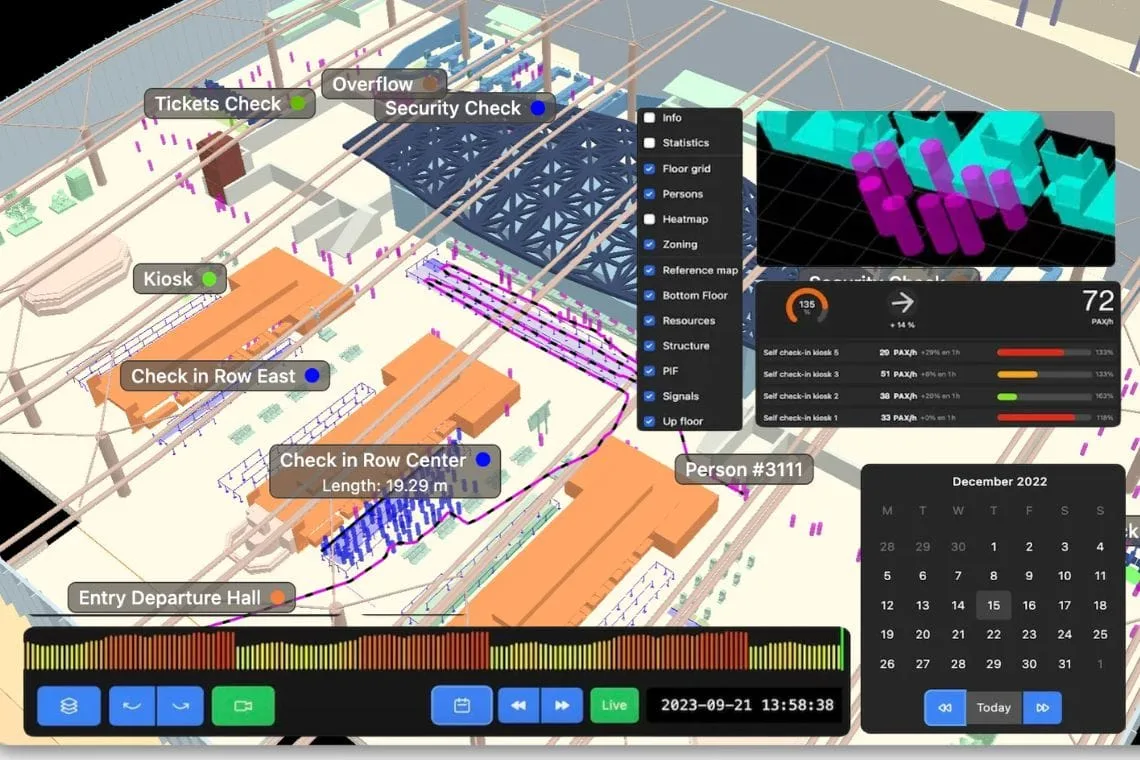
Outsight joins EONA-X to accelerate the sharing and exploitation of physical flow data within European Transportation Hubs.

Thanks to its Physical AI platform, Outsight transforms 3D data captured by LiDAR into continuous, anonymous, real-time operational intelligence at scale, providing transportation hubs operators such as Airports and Train Stations with unprecedented insight into passenger and vehicle movements across their infrastructure.

Joining EONA-X is a natural step for Outsight. Our Motional Digital Twins are deployed in the world’s largest international airports, train stations and venues, and we know that the value of our Physical AI is multiplied when combined with other data sources. EONA-X offers exactly that framework: a trusted, sovereign ecosystem where mobility and infrastructure players can collaborate to build the smart places of tomorrow, which will be more efficient, safer and more passenger-friendly. We are convinced that this collaboration will benefit the entire ecosystem. Said Raul Bravo President C0-founder of Outsight.

By joining the EONA-X ecosystem, Outsight brings a complementary and distinctive technological building block: the ability to digitise physical flows with centimetre-level accuracy, without capturing personal data.

This collaboration paves the way for new data use cases among members, enriching existing datasets with a dimension that was previously absent: the actual movement of people in physical space.

Achieving Complete Synchronization in Airports with Spatial AI Technology

LiDAR technology helps achieve synchronized operations across all areas of an airport. Outsight’s Spatial Intelligence platform provides real-time tracking, efficient resource allocation, and ensures privacy.

Read article →
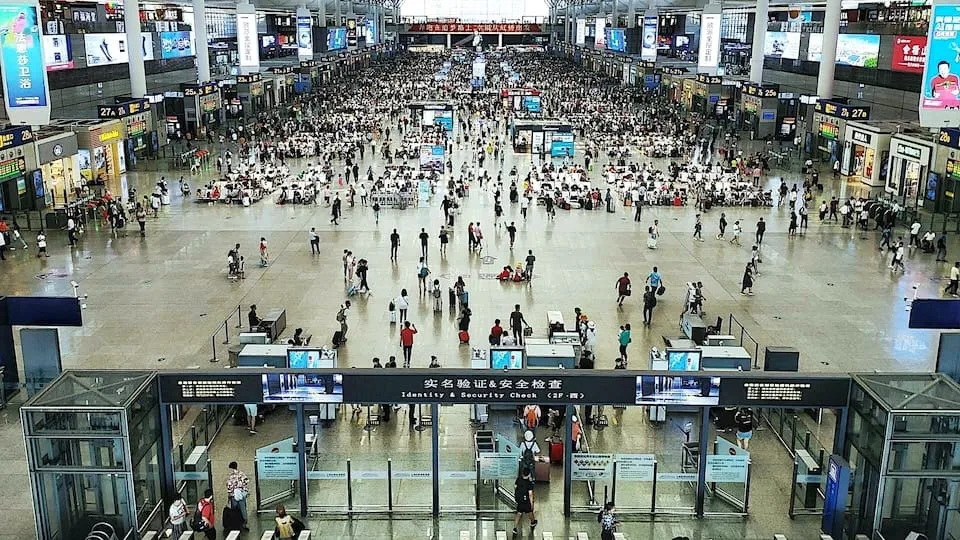
This membership is fully in line with Outsight’s belief that real-time physical intelligence will become as fundamental to infrastructure operation as connectivity itself.

Outsight represents one of France’s greatest successes in the use of 3D technology, LiDAR and passenger flow tracking. Created in France and developed at Paris-Orly and CDG airports, Outsight has established itself in the world’s largest transportation hubs. Shares Carles Telitsine CEO of EONA-X

Related Articles

AIRPORTS

Aeroporti di Roma to deploy Outsight's Physical AI solution at scale across Rome Fiumicino Airport

Aeroporti di Roma (ADR) is expanding its collaboration with Outsight to a large-scale deployment across almost all Schengen common-use areas at Rome Fiumicino Airport.

CORPORATE

Intel and Outsight Announce Strategic Collaboration to Bring Physical AI–Powered Spatial Intelligence to the Enterprise Edge

Outsight’s Shift platform integrated into Google Distributed Cloud Edge powered by Intel Xeon 6 SoC – Live demonstration at Google Cloud Next 2026

Let's connect

Send us a Message

Drop your email and we'll get back to you as soon as possible.

Frequently Asked Questions

  • What is EONA-X and what does it do for airport data sharing?

    EONA-X is a data space supported by the French government's France 2030 programme, designed to build a sovereign, trusted ecosystem for mobility and infrastructure players to share and combine operational datasets. It operates under a secure data governance framework aligned with European standards, meaning participant data stays within defined legal boundaries rather than flowing through proprietary commercial clouds. The goal is to create computable links between datasets that individual operators collect in isolation, so that cross-operator analysis becomes possible without compromising data sovereignty. Outsight joined EONA-X to contribute anonymised, infrastructure-derived spatial data to this ecosystem, connecting the real-time movement intelligence generated by its SHIFT platform at airport and transit deployments to broader cross-operator data collaboration efforts.

  • What does a sovereign data governance framework mean in practice for airport operators sharing flow data?

    A sovereign data governance framework means participating organizations retain legal control over their data and share it only under contractually defined conditions, rather than pooling it into a centralized repository owned by a third party. For airport operators, this matters because passenger flow data, even when anonymous, is operationally sensitive: competitors, regulators, and concessionaires all have different rights of access. This dynamic is directly relevant to deployments like those built on Outsight's SHIFT platform, where 3D LiDAR-derived flow data is anonymous by definition yet still subject to strict access governance across the stakeholders who rely on it. A framework aligned with European standards gives operators a defensible audit trail for data use, which simplifies both internal compliance reviews and regulatory inquiries.

  • How does combining physical flow data with other airport datasets create value that neither source has alone?

    Physical flow data captures where people actually are and how they move, but it carries no business context on its own. Flight schedule data knows when passengers should be at a gate but not where they are in the terminal. Retail point-of-sale data knows what was bought but not how many people walked past without entering. When these datasets are joined on a shared spatial and temporal reference, operators can answer questions like whether a gate boarding delay is caused by a security queue upstream, or whether low retail conversion correlates with poor dwell placement. Outsight's Motional Digital Twin provides that spatial and temporal backbone, turning anonymous 3D flow data into a common reference layer that airport datasets can align against, enabling analysis that is impossible from any single source alone.

  • Why is centimeter-level accuracy important when digitizing passenger flow at a transportation hub?

    At the spatial resolution most airport analytics tools operate at, a person standing in a queue and a person walking past an adjacent lane look identical. Centimeter-level positional accuracy is what separates a genuine queue measurement from a density measurement. It also determines whether a near-miss between a passenger and a baggage vehicle is detected as a safety event or missed as two objects occupying the same coarse grid cell. Outsight's infrastructure-based LiDAR approach addresses this directly: by processing 3D point clouds rather than 2D video frames, the SHIFT platform resolves individual positions with the granularity needed to distinguish behavioral states rather than produce simple occupancy estimates. Without that resolution, downstream analytics remain surface-level, limiting the operational decisions an airport team can act on.

  • What types of mobility players typically participate in a data-sharing ecosystem focused on European airports?

    European airport data ecosystems typically include airport operators, ground handlers, airlines, public transport authorities connecting the airport to city networks, taxi and ride-hailing aggregators, retail and food-and-beverage concessionaires, and border control or customs agencies. Each holds a fragment of the passenger journey: the airport operator sees terminal flow, the rail operator sees station-to-terminal transfer, the airline sees check-in and gate behavior. The value of a shared data space comes from stitching those fragments into a continuous journey picture without requiring any single participant to hand over its raw operational data to the others. Outsight participates in this kind of ecosystem by contributing anonymized, real-time 3D spatial data derived from infrastructure-mounted LiDAR sensors, the same approach deployed at airports such as Dallas Fort Worth and Paris-Charles de Gaulle, where terminal-level movement data feeds broader operational and passenger-flow analytics.

  • Does joining a shared airport data ecosystem require replacing existing analytics infrastructure?

    No. A data space model is additive by design: each participant exposes defined data outputs through APIs under agreed governance terms, without dismantling internal systems. A platform already producing structured, event-based spatial data, such as occupancy counts, queue depths, and trajectory events, can connect to a shared data space by publishing those outputs in a standardized format. Outsight's SHIFT platform, for example, generates exactly this kind of anonymized, real-time spatial data across airport deployments including Paris-Charles de Gaulle and Rome Fiumicino, making it a natural fit for data space participation. The participant's existing dashboards, alerting pipelines, and historical data stores remain unchanged. The data space adds a layer for cross-organization joins rather than replacing any operator's internal analytics stack.