
Skip to content
Insights
Paris Olympics 2024

Outsight Selected for Advancing People Flow Understanding at Olympic Venues

We have been awarded the Olympic LiDAR award for People Counting and Flow Monitoring in Sport venues.


This prestigious award, presented by the Île-de-France region, celebrates Outsight’s innovative contributions to enhancing people flow monitoring, security and privacy at large-scale sporting events, particularly the upcoming 2024 Paris Olympics.

As France prepares to host numerous high-profile sporting events, culminating in the 2024 Olympics, the demand on its infrastructure to provide smart people flow monitoring, as well as secure, efficient, and technologically advanced environments for spectators has never been greater.
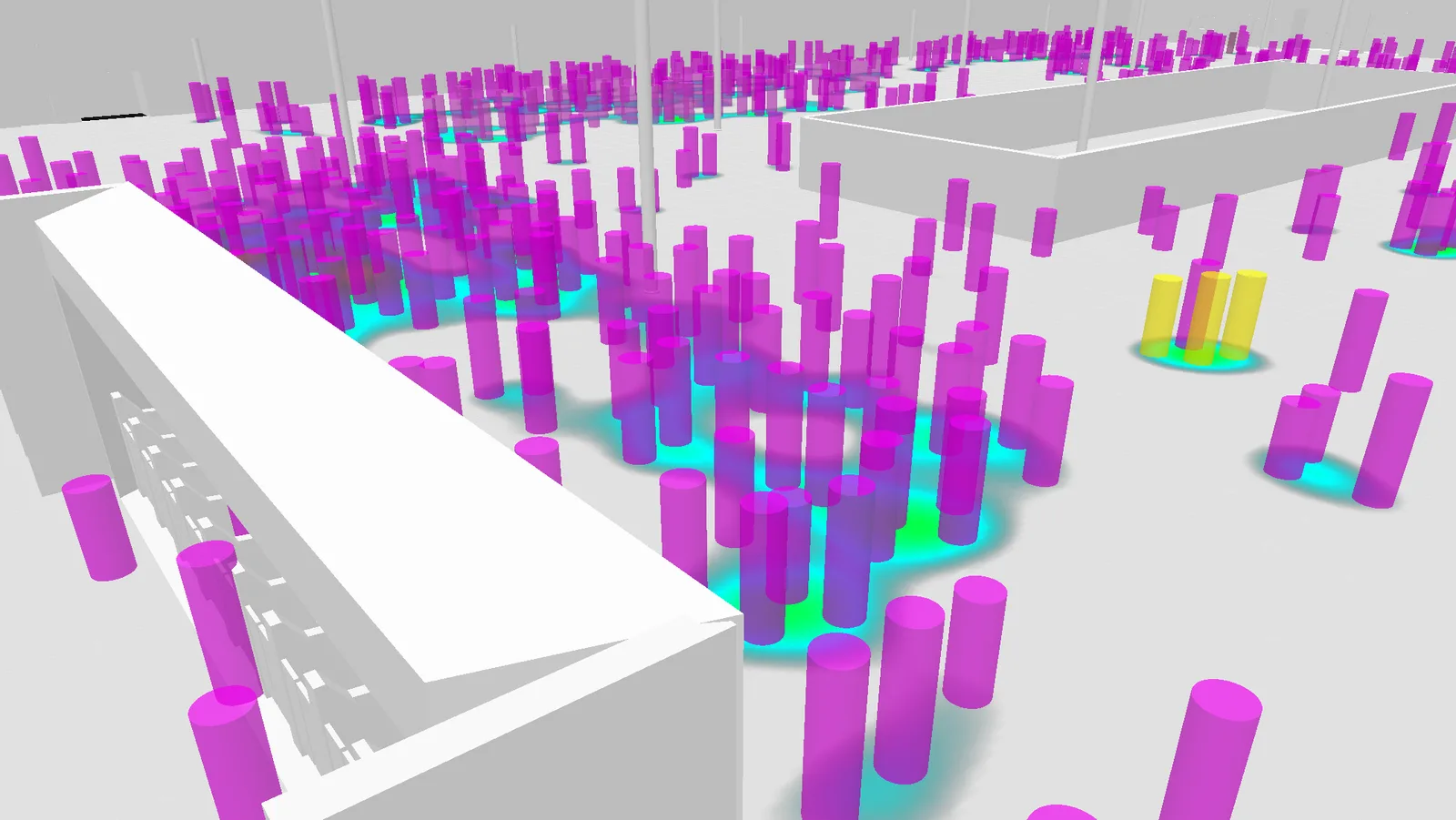
Lidar software accurately showing each persons' while remaining anonymous

The position of each visitor is known precisely, but they remain completely anonymous.

With its Spatial AI and LiDAR technology solutions being deployed across four continents, this latest recognition cements Outsight’s position as the leading innovator in the Spatial Intelligence domain.

How does Lidar work? (in detail)

3D LiDAR is a complex technology that enables unprecedented Spatial Intelligence. Many engineering choices are possible when building a new device.

Read article →

LiDAR (Light Detection and Ranging) is a remote sensing technology that uses laser light to measure distances and create detailed 3D maps of environments.

Unlike cameras, LiDAR does not capture images or personal identifiers, making it a natively anonymous solution.

It accurately detects and tracks objects and people without recording facial features or other sensitive information, ensuring privacy while providing precise Spatial Intelligence.

Outsight’s award-winning “Olympic LiDAR” project leverages their Spatial Intelligence Platform to offer unmatched privacy-focused people flow monitoring and security solutions.

People Flow Monitoring 2.0: How LiDAR solutions outperform other technologies

LiDAR solutions’ accuracy and versatility make them a superior solution and will undoubtedly lead to improved safety and efficiency in high-traffic areas.

Read article →
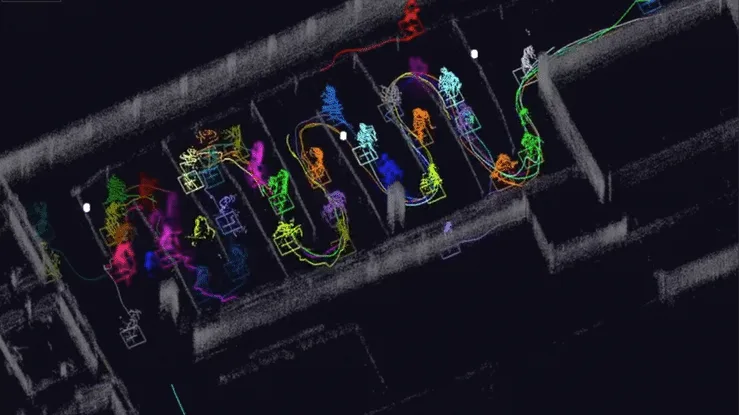
Unlike traditional camera systems, LiDAR technology from Outsight ensures complete anonymity by tracking the position of individuals without capturing any personally identifiable information.

This makes it an ideal choice for privacy-conscious applications, offering superior perception in all lighting and weather conditions.

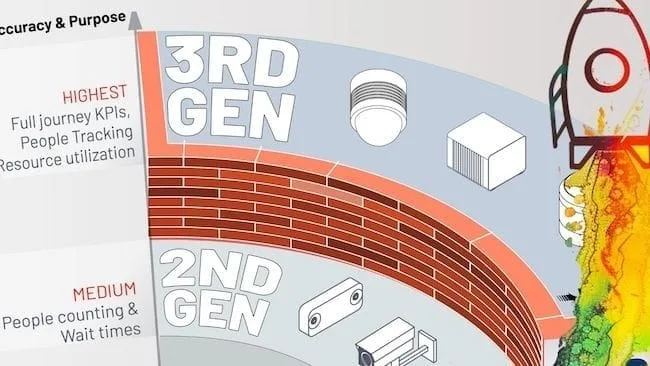
Meet the 3rd Generation of People Counting Technology

Mirroring the technological evolution seen across various industries, People Tracking and Counting Technologies have already entered their third generation.

Read article →
With seamless integration capabilities, Outsight’s software is compatible with any LiDAR sensor from various manufacturers, transforming raw data into actionable insights. This allows for precise tracking and management of people and vehicles in complex environments like stadiums, tourism sites, transportation hubs, and parking areas.

Outsight’s Spatial Intelligence Platform enhances operational efficiency, crowd management, and safety by providing real-time, anonymous tracking and a comprehensive overview of movements and interactions.

Outsight’s technology empowers stadium personnel with real-time data, enabling them to monitor and manage spectator flows efficiently and in a fully anonymous manner.
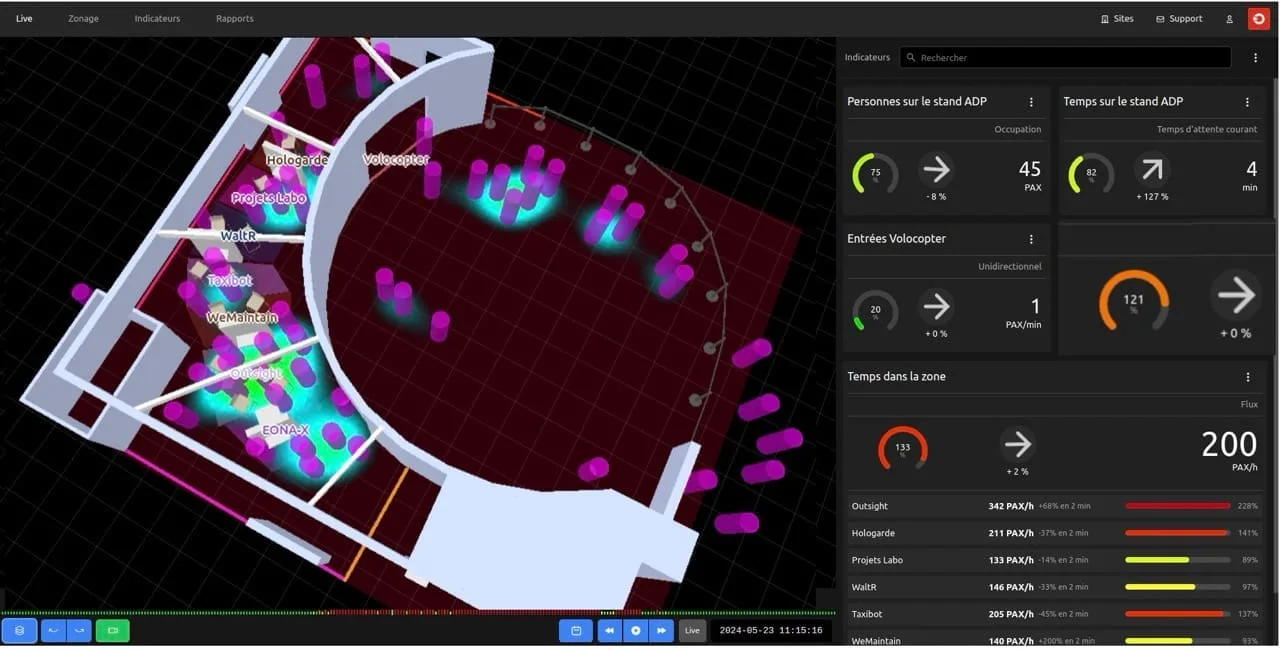
Detailed and accurate KPIs for different zones of interest on one dashboard

The system generates detailed KPIs for various zones, allowing operators to anticipate and respond to changing demands swiftly.

Raul Bravo, Founder-President of Outsight, said,

For the first time, there is an alternative to capturing images with cameras, using 3D LiDAR sensors that only capture anonymous laser points. Unlike the situation two years ago, these sensors are now price-competitive and highly performant.”

“This award recognizes not only the maturity of this technology, which we’re already deploying at scale in many markets, but also its significant interest for sports venues that must ensure a precise understanding of people flow for better operations, visitor experience, and safety.

This award follows many others:

Numerous awards Outsight has won

This project was funded by the French government as part of the France 2030 initiative which aims at investing in innovative technologies and support the ecological transition.

For more information about Outsight and its innovative solutions, please visit outsight.ai


Related Articles

AWARDS

Outsight Wins the French-American Business Award

We have been selected as Tech Company of the Year for our outstanding innovation and growth.

AWARDS

Outsight Wins the Terminal Excellence Innovation Award at Inter Airport Europe 2025

The award highlights how our cutting-edge 3D LiDAR-based Spatial Intelligence solutions have contributed to airport innovation across Europe and beyond.

Let's connect

Send us a Message

Drop your email and we'll get back to you as soon as possible.

Frequently Asked Questions

  • What specific crowd management challenges do Olympic venues face that airports don't?

    Olympic venues concentrate extreme peak loads into discrete multi-hour windows, often with no prior operational history for that facility. Airports run repeating daily schedules that allow staffing models to be refined over months. A stadium hosting an opening ceremony may see its entire capacity arrive and depart within 90 minutes, with no equivalent dry-run period. That compresses the window for detecting bottlenecks and adjusting staff deployment, making real-time spatial intelligence far more operationally critical than historical analytics. Outsight addresses exactly this constraint through its Motional Digital Twin, which builds a live, anonymous 3D replica of crowd movement with sub-50ms latency, giving venue operators actionable awareness in the moment rather than after the fact.

  • How does LiDAR-based people counting handle temporary structures at event venues?

    Because LiDAR sensors capture live 3D geometry, the system builds its spatial reference from the actual environment at installation time rather than from a pre-existing BIM. Temporary fencing, staging, barriers, and tent structures are mapped as part of the site's occupancy mesh. This is central to how Outsight's Motional Digital Twin operates: the infrastructure-mounted sensors continuously reconstruct the real physical environment, so a reconfigured venue floor plan is reflected in the digital twin without replacing hardware. Any change to the physical layout that affects sensor sight lines can be recalibrated through software alone, which matters at venues where the configuration shifts between events and crowd dynamics change with each use.

  • Is LiDAR-based flow monitoring approved for use under French data protection law at public events?

    LiDAR sensors capture geometric point clouds, recording the shape, position, and motion of objects rather than images, faces, or any biometric identifiers. Under GDPR and French data protection law, personal data is defined by whether a natural person can be identified. Because 3D point clouds contain no facial features, license plates, or other identifiers, they do not constitute personal data at the point of capture, removing the legal basis for a data-protection objection. This structural property, rather than a post-processing anonymization step, is what distinguishes LiDAR from camera analytics. Outsight's Motional Digital Twin is built on this same principle: anonymity is a function of the sensor modality itself, making the system anonymous by definition rather than by policy, a characteristic that supported its selection for people flow monitoring at Olympic venues in France.

  • What KPIs does a spatial intelligence platform surface for stadium zone management?

    Zone-level KPIs typically include occupancy count and density, ingress and egress throughput rates, dwell time distributions, queue length and estimated wait time, and anomaly flags such as sudden stops or reverse flows. Each zone is operator-defined, so a concourse, a gate funnel, a concession corridor, and an emergency exit can each carry distinct thresholds that trigger alerts independently. Outsight's SHIFT platform surfaces exactly this layer through its Motional Digital Twin, building a real-time 3D replica of how people move through each defined zone without capturing faces or biometric data. The same data feeds both a live operations dashboard and a post-event replay layer for debriefing, a capability recognized when Outsight was selected for people counting and flow monitoring at Olympic venues.

  • What is the France 2030 initiative and why does it fund LiDAR deployments?

    France 2030 is a French government investment plan targeting strategic industries and technological sovereignty. It funds projects at the intersection of industrial competitiveness and public-interest outcomes, including smart infrastructure that reduces the need for camera surveillance in sensitive public spaces. LiDAR-based people flow monitoring qualifies because it addresses both the security and operational demands of large public events and the privacy requirements that camera-based alternatives struggle to meet under French and European regulation. Outsight's selection for people flow monitoring at Olympic venues reflects exactly this rationale: its Infrastructure-based Physical AI approach uses LiDAR to capture shape and motion anonymously, never collecting faces or biometric data, aligning with the privacy-by-design criteria that France 2030 prioritizes for public-space deployments.

  • Can the same LiDAR deployment used during an Olympics be repurposed for regular stadium operations afterward?

    Yes. Sensors mounted in fixed infrastructure serve any event the venue hosts after the games. The operator-defined zones, KPI thresholds, and alert rules are reconfigured per event without new hardware. This is precisely how the Outsight SHIFT platform is architected: because sensing is infrastructure-based rather than event-specific, a deployment sized for Olympic peak loads carries excess capacity for typical league matches, which can be traded for reduced processing cost by running the analytics pipeline at a lower delivery rate. Historical data from the games also becomes a planning baseline for future event staffing and layout decisions, giving venue operators a persistent Motional Digital Twin that grows more accurate with every event it observes.