Skip to content
Insights
A good Lidar solution must be agnostic to the hardware. Learn why.

Why Do You Need LiDAR Sensor Freedom?

Choosing a LiDAR-based solution for your operations, whether in an airport, a train station, a logistics center, or a city infrastructure, means more than selecting a sensor.


Deploying a Lidar-based solution means committing to a scalable, and robust system that delivers real-world value.

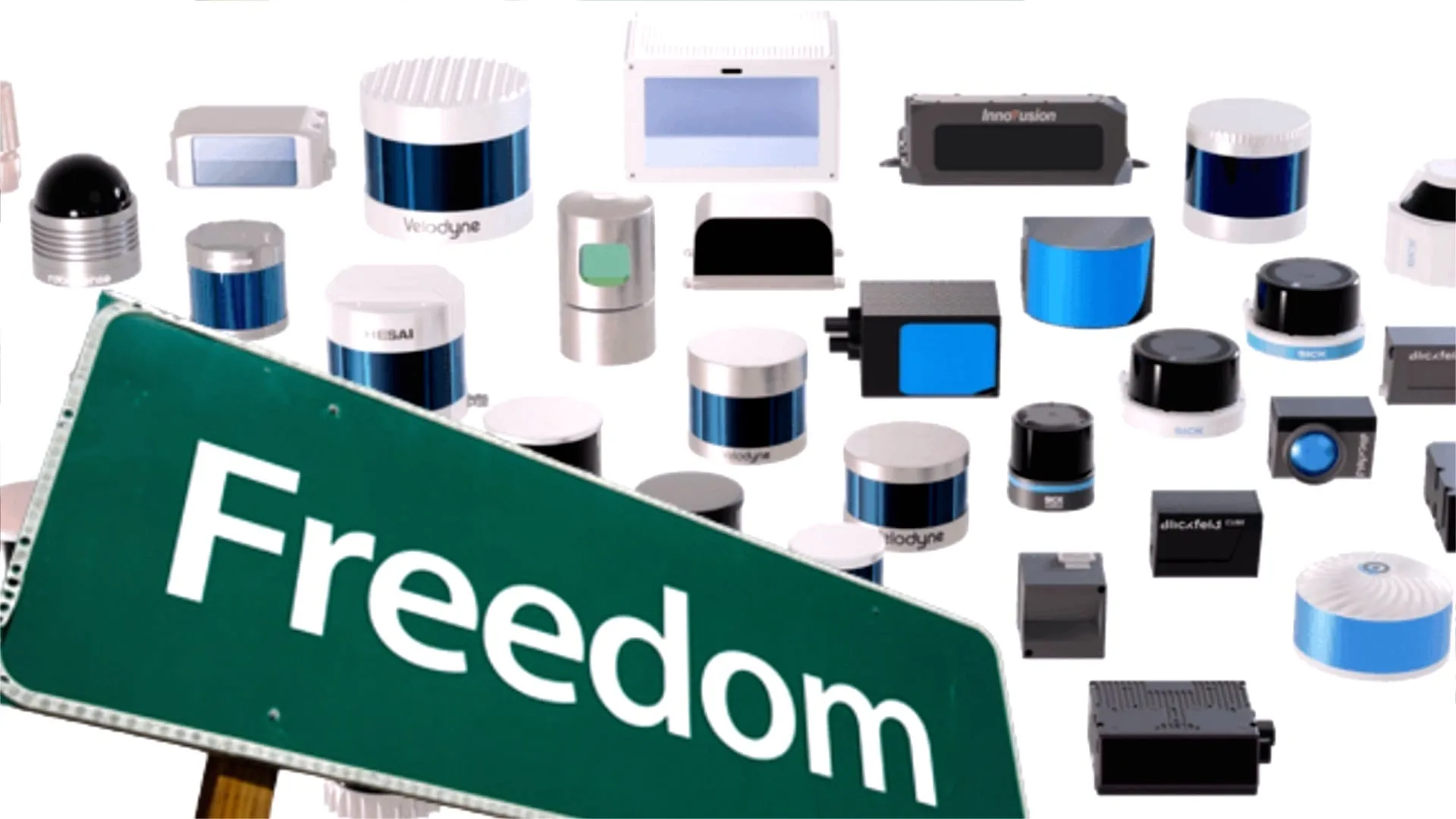
One of the most strategic decisions you can make is to ensure hardware freedom: the ability to use different LiDAR sensors from different manufacturers, without being locked into a single vendor.

This approach is not just about flexibility, it’s about sustainability, scalability, and resilience.

Here are the key reasons why LiDAR Sensor Freedom should be a non-negotiable in your decision-making process:

Supply Chain Security

Depending on a single sensor vendor exposes your project to supply disruptions, delivery delays, or geopolitical risks.

While this may sound theoretical, the reality is quite the opposite. In the relatively short history of LiDAR technology, there have already been at least five cases where manufacturers, including some of the industry’s leading brands, were unable to deliver products for several months due to manufacturing setbacks or global supply chain disruptions. These incidents highlight how real and immediate the risks can be when relying solely on a single vendor.

A hardware-agnostic solution ensures you can adapt quickly and maintain deployment schedules, regardless of vendor-specific issues.


Maintenance Continuity - Double Source Strategy

Even if you deploy a single sensor brand initially, maintaining compatibility with other manufacturers ensures long-term system maintainability.

If a vendor discontinues a product or exits the market, you won’t need to redesign your whole installation.


Scalable and Context-Aware Expansion

Whether you’re adapting an existing site or rolling out to new ones, every location presents unique challenges, new layouts, evolving use cases, or entirely different physical environments.

A sensor that works perfectly in an indoor terminal might not be suitable for an outdoor parking area or a warehouse with narrow aisles. You can learn more why in this article:

Not All LiDAR Sensors Are Equal: Key Differences Explained

This article explores LiDAR differences and why customers use multiple vendors to meet their needs.

Read article →
Hardware freedom ensures that you can always choose the most appropriate sensor for each context, allowing you to scale efficiently and adapt intelligently without being limited by a single vendor’s portfolio.


Innovation Agility (Cost & Performance)

The LiDAR ecosystem is rapidly evolving.

Newer sensors often deliver better performance at lower costs.
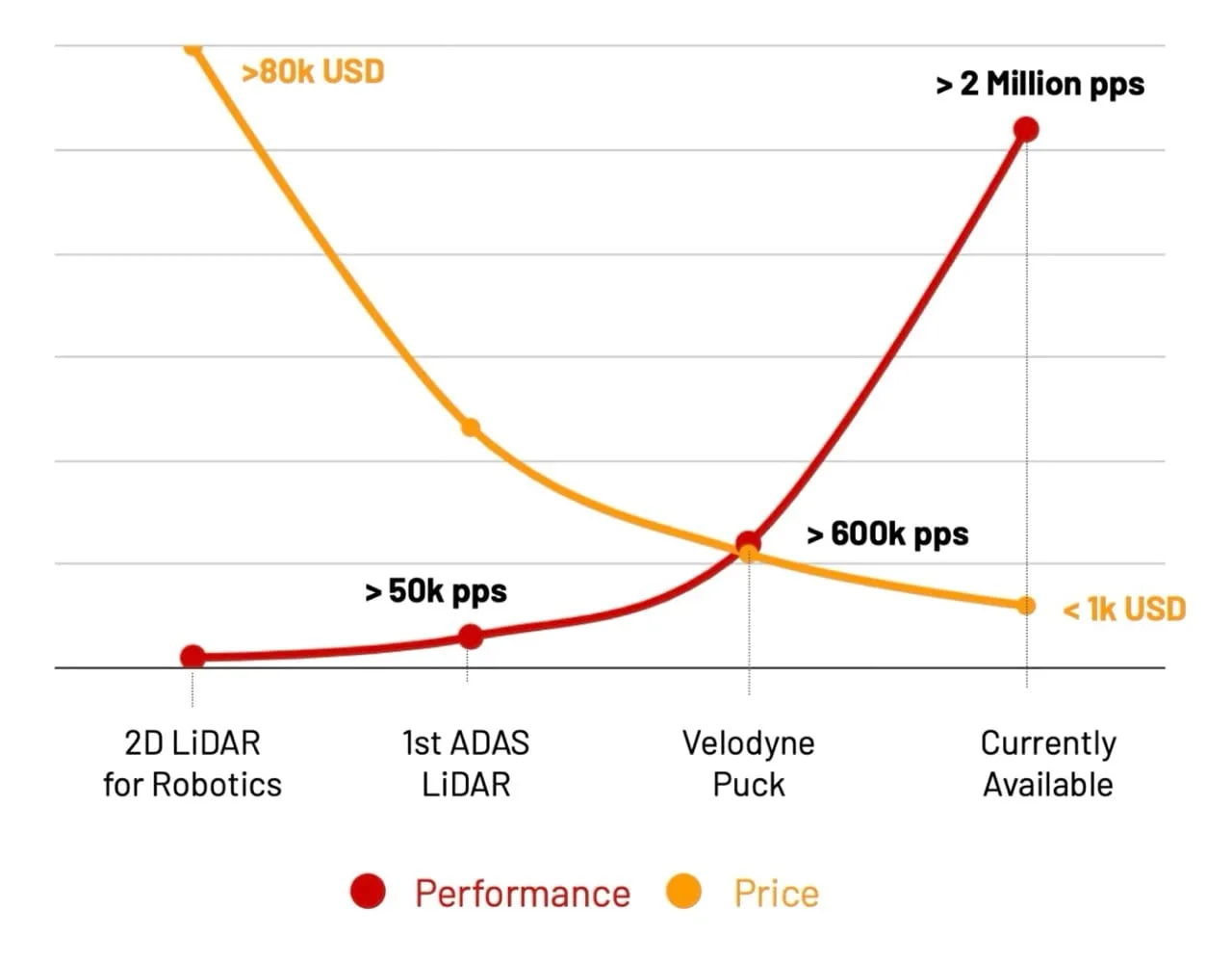
The price of Lidar has rapidly decreased while the performance levels have greatly increased

The price of Lidar has rapidly decreased while the performance levels have greatly increased

With sensor freedom, you stay agile, able to benefit from these innovations as they emerge without reworking your entire system.


Optimal Sensor-Use Per Context

Different environments require different sensor capabilities.
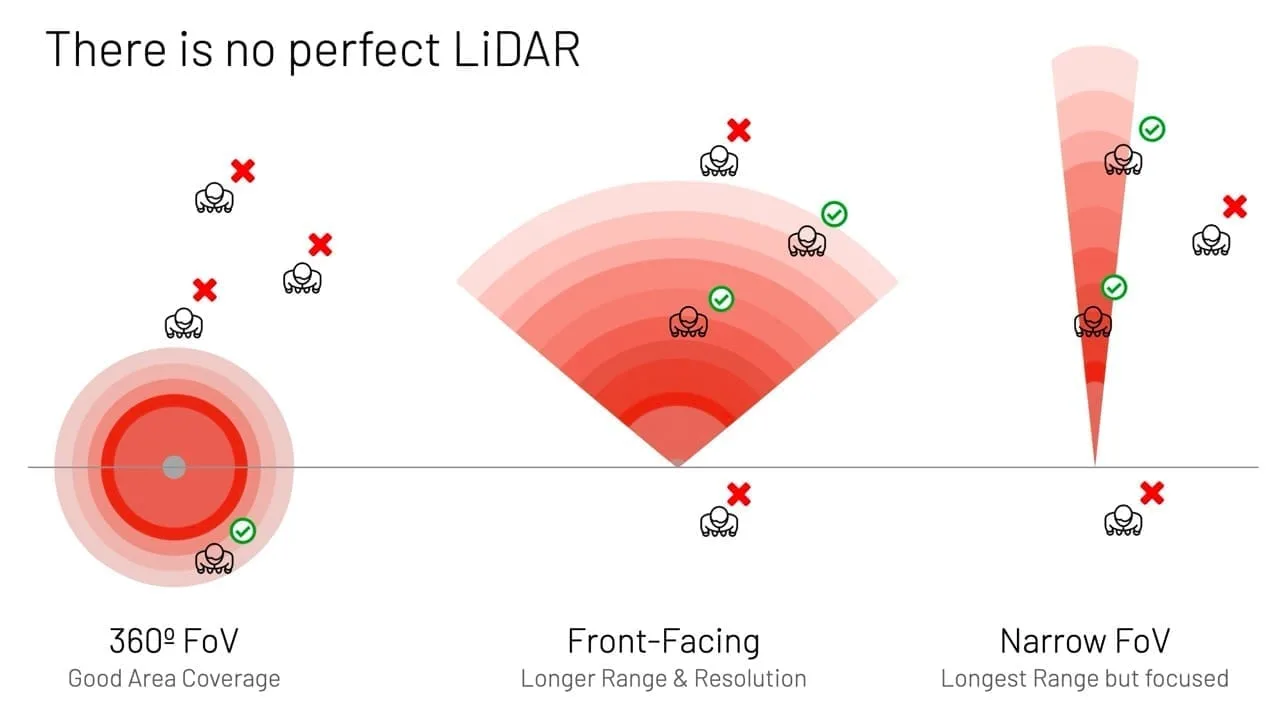
Some persons will be detected or missed depending on the type of LiDAR sensor

Some persons will be detected or missed depending on the type of LiDAR sensor

For example, narrow indoor corridors may require narrow field of view and high-resolution sensors, while large outdoor zones need long-range wide-FOV models.

No single manufacturer excels in all use cases.


Cost Efficiency Through Vendor Flexibility

When you can choose from multiple sensor brands for the same application, you encourage faire pricing.

This enables you to secure the best total cost of ownership without compromising performance or future adaptability.

You can have an overview of the diversity of manufacturers in our LiDAR Manufacturers Directory:

LiDAR Directory | Outsight

Check out our list of LiDAR manufacturers for a curated collection of companies producing LiDAR sensors beyond self-driving cars. Discover affordable and efficient options tailored to your needs, and gain unparalleled insight into the expanding landscape of LiDAR technology.

Read article →


Interoperability Across Lifecycles

LiDAR hardware evolves rapidly, and generations change frequently.

Sensor-agnostic software ensures backward and forward compatibility, allowing you to upgrade sensors without redesigning your entire perception and application stack.


Consistency Across Diverse Stakeholders

Large infrastructure projects often involve various integrators, partners, or regional contractors.

Ensuring that all stakeholders can work with the same software, regardless of sensor brand, prevents fragmentation and simplifies project coordination.


Outsight’s Approach: Freedom Built-In

At Outsight, we believe that 3D Spatial Intelligence should be universally accessible and future-ready.
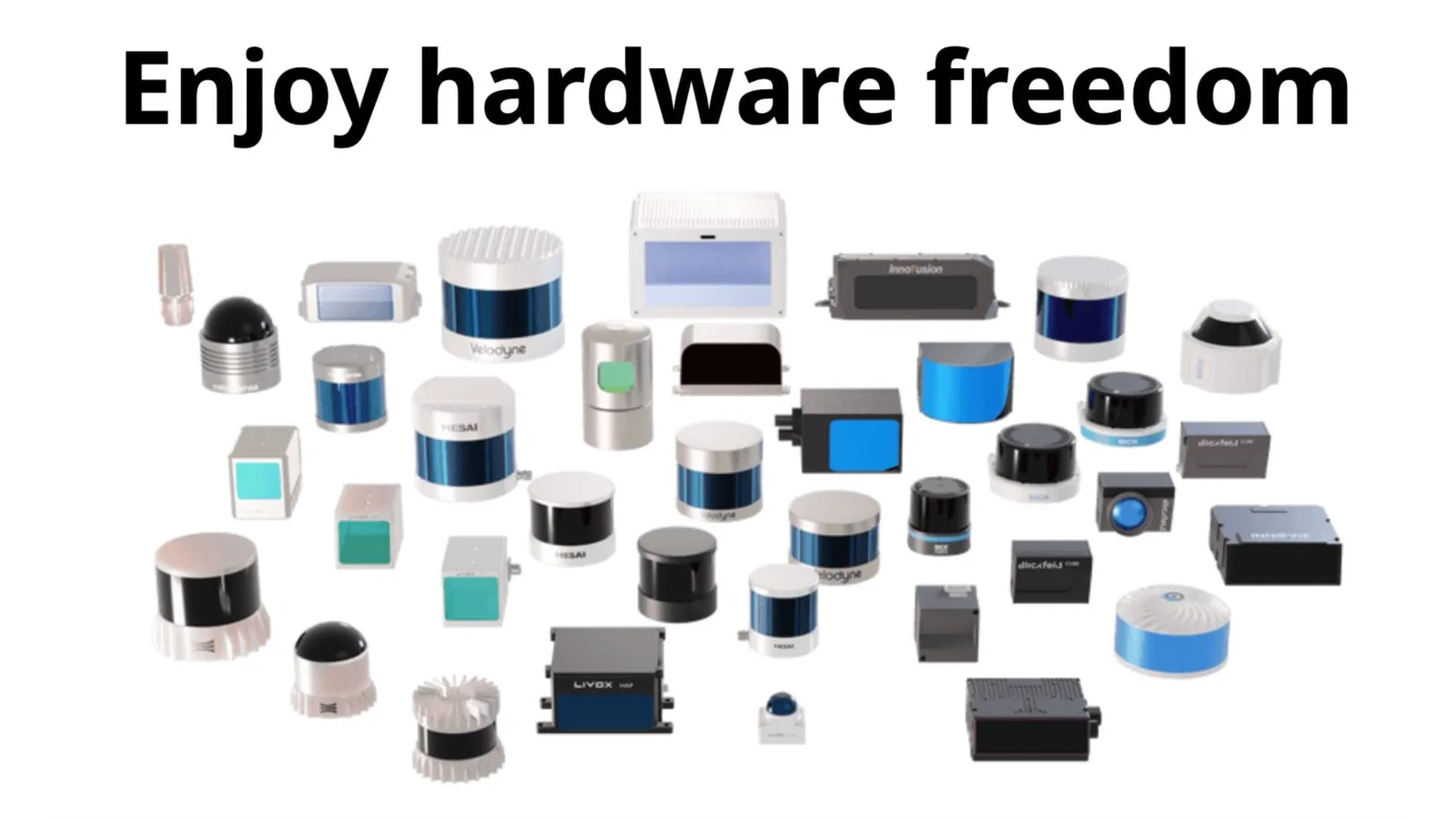
Enjoy hardware freedom

That’s why our software is compatible with multiple LiDAR sensor brands, enabling customers to retain full control over their choices, today and tomorrow.

We don’t manufacture sensors. Instead, we deliver robust, real-time, hardware-agnostic LiDAR perception software that transforms raw 3D data into actionable insights for people flow monitoring, vehicle tracking, and more.

Choosing Outsight means choosing freedom, flexibility, and future-proof technology.

Related Articles

TECHNOLOGY

Why All LiDAR Sensors Aren't Created Equal

This article explores LiDAR differences and why customers use multiple vendors to meet their needs.

TECHNOLOGY

An in-depth comparison of LiDAR, Cameras, and Radars' technology

This article explores the capabilities and limitations of each type of sensor, to provide a clear understanding of why LiDAR has emerged as a strong contender in computer vision tech race.

Let's connect

Send us a Message

Drop your email and we'll get back to you as soon as possible.

Frequently Asked Questions

  • What risks come with being locked into a single LiDAR vendor for a long-term infrastructure project?

    Beyond supply disruptions, single-vendor lock-in creates a compounding problem at software upgrade time: perception algorithms tuned to one sensor's point-cloud format often require significant rework to run on a replacement model. In the LiDAR market's short history, multiple leading manufacturers have been unable to ship products for months due to manufacturing or geopolitical setbacks. A hardware-agnostic software layer decouples those sensor transitions from the application stack, so a vendor discontinuation becomes a procurement decision rather than a system redesign. Outsight addresses this directly through its SHIFT platform, which is built for multi-vendor compatibility across sensors from Hesai, RoboSense, Ouster, Velodyne, and Seyond, allowing operators to swap or mix hardware without rebuilding the perception and analytics layer above it.

  • How does sensor-agnostic LiDAR software handle firmware or hardware generation changes?

    Sensor-agnostic software maintains an abstraction layer that normalizes point-cloud format, frame rate, and coordinate conventions across models from different manufacturers. When a sensor generation changes, only the driver or adapter for that model needs updating, not the perception, tracking, or analytics stack above it. This forward and backward compatibility is what lets infrastructure operators upgrade sensors on a rolling basis without freezing the broader system. Outsight's SHIFT platform is built on this principle, supporting multi-vendor hardware from Hesai, RoboSense, Ouster, Velodyne, and Seyond so that deployments such as those at Dallas Fort Worth or SNCF stations can evolve their sensor hardware without disrupting the Motional Digital Twin running above it.

  • Can you mix indoor and outdoor LiDAR sensors from different brands in the same deployment?

    Yes, and in practice most large-site deployments require it. Indoor corridors typically call for narrow field-of-view, high-resolution sensors, while outdoor perimeters or parking areas need long-range wide-FOV models. No single manufacturer leads across every form factor and environmental specification. This is precisely why Outsight built the SHIFT platform to be LiDAR-native with multi-vendor compatibility, supporting hardware from Hesai, RoboSense, Ouster, Velodyne, and Seyond within the same deployment. Hardware-agnostic software fuses the heterogeneous point clouds into a unified 3D scene, so the tracking and analytics layer sees one coherent spatial picture regardless of which sensors contributed which zones.

  • How does LiDAR sensor freedom affect the total cost of ownership over a multi-year deployment?

    Vendor competition has a direct effect on unit price: when operators can substitute one brand for another without reworking the software stack, they retain negotiating leverage at every procurement cycle. The LiDAR market has seen rapid price decreases alongside performance increases, meaning a system deployed today and refreshed in three years can achieve better detection quality at lower sensor cost, but only if the software layer is not tied to the original vendor's pricing. Outsight addresses this through native compatibility across multiple LiDAR manufacturers, including Hesai, RoboSense, Ouster, and Velodyne, so that hardware can be swapped or upgraded without disrupting the SHIFT platform's analytics and digital twin capabilities. This multi-vendor architecture preserves procurement flexibility across the full lifespan of a deployment.

  • What happens to a multi-site rollout when different regional contractors use different preferred LiDAR brands?

    Without software-level interoperability, each contractor's preferred sensor brand produces a different data schema and calibration workflow, creating fragmentation across sites. Operators end up running parallel stacks, making cross-site analytics, SLA benchmarking, and centralized operations dashboards impractical. A hardware-agnostic software platform normalizes output regardless of which sensor brand each regional integrator installed, preserving consistency in KPIs and reporting across the entire portfolio. Outsight's SHIFT platform is built precisely for this scenario, with native compatibility across Hesai, RoboSense, Ouster, Velodyne, and Seyond hardware, allowing multi-site operators such as those running airport or rail station networks to consolidate all sites into a single operational view without renegotiating sensor choices with local contractors.

  • Is there a standard data format for exchanging LiDAR tracking output between sensor brands and downstream systems?

    There is no universal industry standard for tracked-entity output across LiDAR vendors; each manufacturer's SDK emits proprietary point-cloud formats. Software layers that aim for sensor freedom typically define their own normalized exchange format to bridge that gap. Outsight addresses this through OSEF (Outsight Spatial Exchange Format), an open format built into the SHIFT platform that carries per-frame point clouds, tracked entity arrays, and classification metadata. This gives downstream consumers, including dashboards, APIs, and third-party systems, a consistent data contract regardless of which sensor hardware generated the raw pulses, whether that hardware comes from Hesai, RoboSense, Ouster, Velodyne, or another supported vendor.