Skip to content
Insights
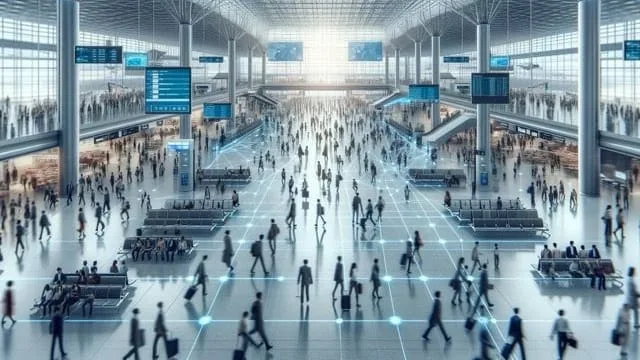
Busy airport terminal with crowd of people perfect for lidar technology

Balancing Safety with Efficiency: How LiDAR Transforms Airport Passenger Flow

Airports, as critical transportation hubs, play a dual role in ensuring passenger safety and maintaining a smooth flow of travelers.


Balancing these two aspects is a challenging endeavor, especially in the face of evolving security threats and diverse passenger needs.

The integration of emerging technologies, particularly in the field of people counting and crowd management, is revolutionizing this dynamic.

Historically, airports have relied on traditional automatic passenger counting systems, such as cameras and data from electronic boarding pass data.

These methods, especially camera-based systems, while foundational, are indicative of past approaches to managing airport operations and pose serious risk for privacy.

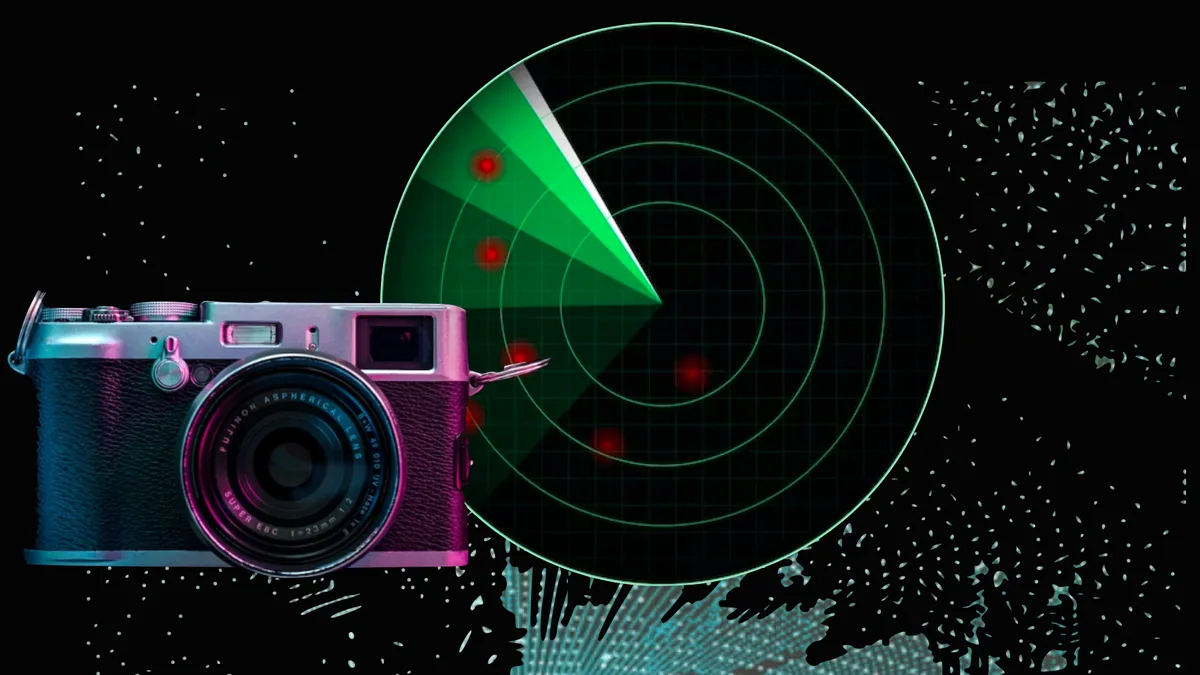
A detailed comparison of LiDAR, Radar and Camera Technology

This article explores the capabilities and limitations of each type of sensor, to provide a clear understanding of why LiDAR has emerged as a strong contender in computer vision tech race.

Read article →
Today, however, the aviation industry is embracing a significant shift with the advent of LiDAR technology.

This cutting-edge advancement is redefining airport security and passenger flow management, propelling airports into a future where security is seamlessly integrated with efficient crowd management and passenger experience, while maintaining the highest possible level of respect for privacy.

LiDAR Manages Increased Airport Traffic

See how and why Airports are increasingly using LiDAR-based software solutions to tackle their biggest challenges, leveraging the unique value of Spatial Intelligence.

Read article →

Since the events of September 11, 2001, airport security has undergone significant transformations to counter complex threats. The challenge for airports is to conduct thorough security checks without causing passenger delays.

Essential processes like body scans and baggage checks, while critical for safety, can lead to long queues and travel disruptions.

One effective solution to this challenge is the implementation of solutions to precisely measure and optimize people flow in airports.

Among these, LiDAR (Light Detection and Ranging) technology is emerging as a powerful tool, offering unique capabilities that significantly enhance both security and passenger experience.

Its key advantages, when used with the right processing software, include:

  • Accurate 3D Perception: LiDAR’s precise 3D representations of airport spaces allow for effective crowd management and monitoring of passenger density.
  • Privacy Preservation: Unlike traditional methods, LiDAR does not capture personal identifiers or facial features, aligning with modern privacy standards.

Anonymous vs. Anonymized : Learn the Difference

Understanding Anonymity in Sensor Data: discover the inherent privacy characteristics of each type of Sensor data and the potential risks associated with anonymizing sensitive information

Read article →

  • Efficiency in Diverse Conditions: LiDAR functions effectively under various lighting conditions, making it reliable for comprehensive crowd analysis indoors but also curb-side monitoring outdoors.
  • Real-time Data Processing: It enables quick Spatial Data processing, offering immediate insights to optimize passenger flow and resource allocation.
  • Advanced Analytics: Integration with AI algorithms allows for predictive analytics, assisting airports in anticipating and managing passenger volumes more effectively.

Efficient resource allocation, enhanced training in customer service and cultural awareness for security personnel, and clear communication about security procedures are also crucial for efficient airport operations. For example, the integration of pre-screening programs like TSA PreCheck and Global Entry eases the burden on standard security lines, contributing to efficient people flow.

In conclusion, while ensuring airport security is a challenging task, through strategic planning, technological advancements in people count technologies, and collaborative efforts, airports can significantly enhance security and passenger flow.

The transition from traditional camera-based systems to advanced solutions like LiDAR marks a new era in airport operations, contributing to a safer, more efficient, and streamlined travel experience.

To dive deeper, don’t miss our latest Comparative guide of People counting technologies or request a live demo with a Product Specialist.
Related Articles

AIRPORTS

Achieving Complete Synchronization in Airports with Spatial AI Technology

LiDAR technology helps achieve synchronized operations across all areas of an airport. Outsight’s Spatial Intelligence platform provides real-time tracking, efficient resource allocation, and ensures privacy.

AIRPORTS

Essential Strategies for Seamless Airport Journeys

Friction-less airport travel is now possible thanks to LiDAR-enabled computer vision. It offers comprehensive monitoring of people and vehicles from curbside to gate.

Let's connect

Send us a Message

Drop your email and we'll get back to you as soon as possible.

Frequently Asked Questions

  • How does LiDAR handle crowded security checkpoints compared to overhead cameras?

    Overhead cameras capture 2D images and struggle to distinguish individuals in dense queues because bodies overlap and occlude each other. LiDAR emits laser pulses that measure depth directly, producing a 3D point cloud where each person occupies a distinct volumetric space. This means a crowd of 50 people pressing toward a security lane is still resolved into 50 separate tracked entities, each with a position, a bounding box, and a trajectory, even when they are shoulder-to-shoulder. Camera-based analytics cannot achieve that separation without stereo or depth hardware added to the sensor. Outsight applies this principle at infrastructure scale across major airport deployments, including Dallas Fort Worth and Paris-Charles de Gaulle, where the SHIFT platform processes these 3D point clouds in real time to give security and operations teams accurate occupancy and flow data at checkpoints regardless of crowd density.

  • What latency does a real-time airport crowd monitoring system need for security alerts to be useful?

    An alert is operationally useful when staff can act before a situation escalates. Infrastructure-based Physical AI pipelines targeting live security alerting need to run end-to-end in under 50 milliseconds from raw LiDAR pulse to a triggered event. Outsight's SHIFT platform is built to that sub-50ms standard, and deployments at airports such as Dallas Fort Worth and Paris-Charles de Gaulle demonstrate it at scale. At that latency, a sudden density spike at a checkpoint or an unauthorized entry into a sterile zone surfaces on a dispatcher screen before a human observer watching CCTV would notice. Analytics workloads that only need periodic KPI updates are often delivered at slower rates to reduce storage and bandwidth cost, trading latency headroom for efficiency.

  • Can a LiDAR-based flow system work in outdoor curbside areas as well as inside terminals?

    LiDAR is an active sensor: it generates its own laser pulses and measures the return, so ambient light has no effect on its output. Direct sunlight, full darkness, and low-visibility conditions such as rain or fog do not degrade the depth measurement at the distances typical of airport curbside coverage. Camera-based analytics, by contrast, require adequate ambient or artificial illumination and degrade in backlit or high-glare outdoor conditions. This makes LiDAR the consistent choice for deployments that span both the indoor terminal and the curbside drop-off zone within a single unified sensor network. Outsight's infrastructure-based approach takes advantage of exactly this property, with deployments such as Dallas Fort Worth and Rome Fiumicino extending LiDAR coverage across both indoor and outdoor zones through the SHIFT platform.

  • Does tracking every passenger in an airport terminal require consent under GDPR?

    LiDAR captures the shape, position, and motion of objects in 3D space. It does not record pixels, faces, or any attribute that constitutes personal data under GDPR's definition. Because no personal information is collected in the first place, the tracking is anonymous by design rather than anonymized after the fact. Outsight's infrastructure-based approach relies on this property: the SHIFT platform processes 3D point clouds that carry no biometric data, making consent, retention, and erasure obligations structurally inapplicable. This contrasts with camera-based analytics, where a face image is personal data regardless of whether it is later blurred. The legal exposure is structurally different, not just procedurally managed, which is why airports such as Paris-Charles de Gaulle and Rome Fiumicino have adopted LiDAR-based passenger flow monitoring.

  • How many LiDAR sensor models are compatible with spatial intelligence platforms for airports?

    Outsight's SHIFT platform is compatible with more than 210 LiDAR sensor models from manufacturers including Hesai, RoboSense, Ouster, and Seyond. Hardware-agnostic compatibility matters for airport procurement because different terminal zones, such as high-ceiling departure halls, low-ceiling jet bridges, and outdoor curbsides, favor different sensor form factors and beam patterns. A single software platform that runs on any certified hardware lets airport engineers choose the sensor best suited to each zone without committing to one manufacturer's ecosystem across the full deployment. This flexibility is reflected in large-scale airport programs like Dallas Fort Worth, recognized as the world's largest 3D LiDAR airport deployment, where infrastructure diversity across terminals demands exactly this kind of multi-vendor support.

  • What is the difference between people counting and full passenger flow tracking at airports?

    People counting produces a number: how many individuals crossed a line or occupied a zone during a time window. Passenger flow tracking produces individual trajectories. Each person receives a unique anonymous ID at entry, and that ID is maintained with centimeter-level precision through every zone, checkpoint, and corridor until exit. The output includes dwell time per zone, queue length and wait time at each checkpoint, path choice distributions, and end-to-end journey time from curb to gate. Outsight's Motional Digital Twin applies exactly this trajectory-level approach across large-scale airport deployments, including Dallas Fort Worth and Paris-Charles de Gaulle, generating anonymous 3D tracks without capturing faces or biometric data. Those trajectory analytics support resource allocation decisions, SLA enforcement with service providers, and predictive staffing that headcount figures alone cannot provide.