Modern society frequently underestimates the significance of the energy sector despite its fundamental importance.
We often ignore the dependability of our energy resources until we face a power outage, technical failure, or interruptions caused by accidents, sabotage, or cyber-attacks. During these times, we are starkly reminded of our reliance on a consistent energy supply.
The focus on safety within the energy industry transcends mere operational continuity; it is also about safeguarding lives and environmental conservation.
Consequently, adopting security & surveillance systems, like intrusion detection software, is essential in energy management practices.
Enhancing Security with Advanced Intrusion Detection Technologies
The cornerstone of securing the energy sector’s infrastructure is safeguarding physical sites, including substations and renewable energy installations like solar parks, which are increasingly automated and, thus, vulnerable to unauthorized access, manipulation, or vandalism.

Given their often remote locations, extensive grounds, and lack of onsite security staff, these sites demand robust security measures that function reliably across various weather conditions.
A key component in the security apparatus for these facilities is the employment of Perimeter Intrusion Detection Systems (PIDS), which serve as a critical layer of defense beyond traditional fencing solutions.
Perimeter Intrusion Detection Systems (PIDS): A Closer Look
PIDS are specialized security mechanisms designed to identify and alert to potential unauthorized entries or intrusions at the outer boundaries of protected facilities.
These systems are pivotal in enabling swift and effective responses to security breaches by providing early detection of potential threats through real-time surveillance.
Nonetheless, operators and security professionals frequently grapple with issues like false alarms, theft attempts, and privacy concerns, all contributing to elevated operational costs and the challenge of alarm fatigue.
Challenges with Existing Security Surveillance Management Measures
Traditional security technologies, such as motion sensors and surveillance cameras, often face limitations in effectiveness due to poor lighting or adverse weather conditions, leading to false alarms triggered by wildlife or moving vegetation.
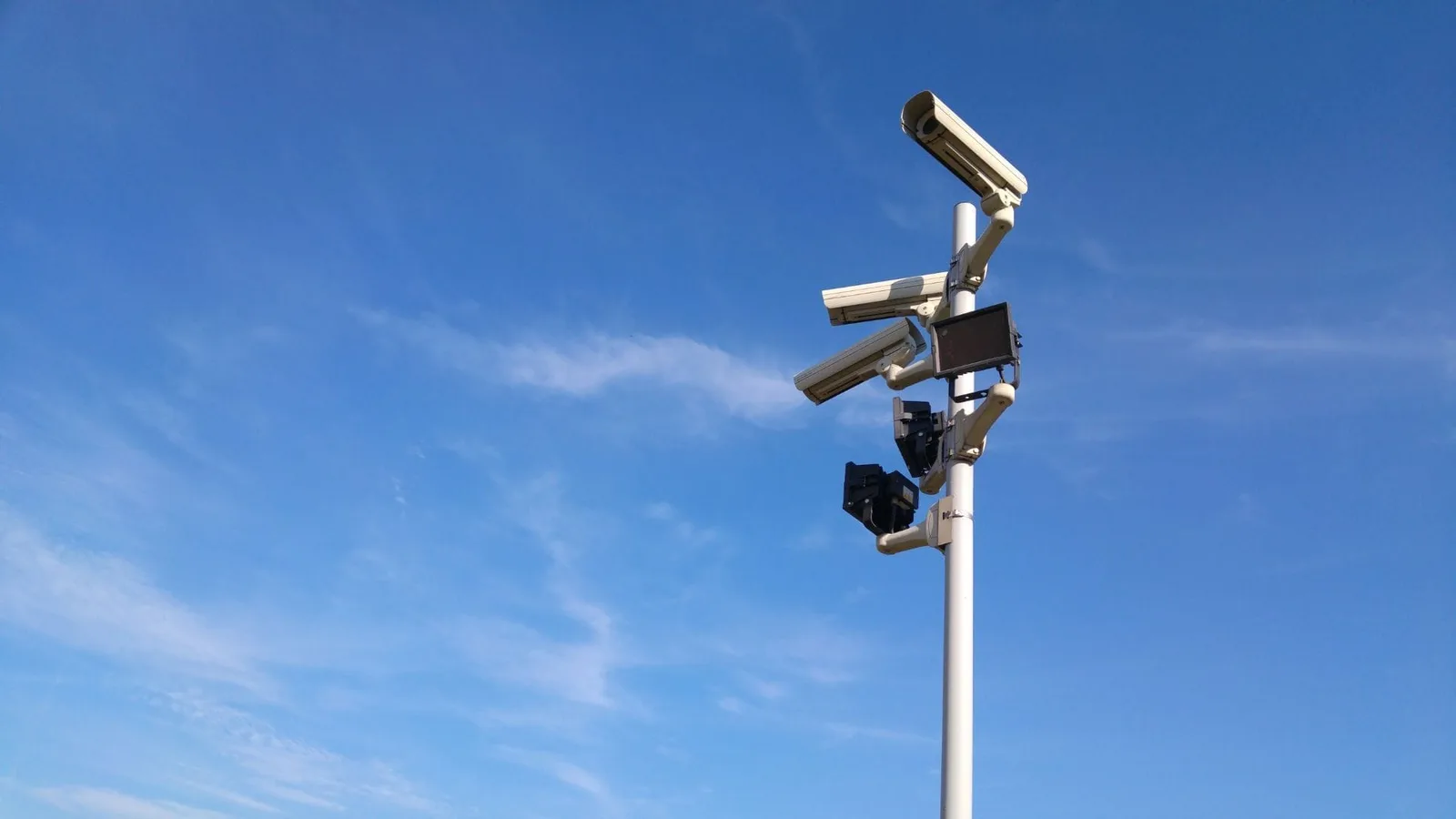
Traditional security technologies face limitations in lighting or bad weather conditions
Privacy compliance issues arise with the use of thermal cameras, particularly in urban settings, where they can inadvertently identify individuals.
Similarly, while useful, radar sensors can struggle with object distinction and generate inaccurate data in the presence of metal, a significant issue for energy facilities like substations.
Introducing 3D LiDAR Intrusion Detection Solution: A Game-Changer in Security
Enter 3D LiDAR technology, a groundbreaking solution revolutionizing the energy security landscape.
Understanding How Lidar Works
3D LiDAR is a complex technology that enables unprecedented Spatial Intelligence. Many engineering choices are possible when building a new device.
Read article →

With its ability to accurately detect intrusions in predefined security zones, regardless of ambient light conditions or weather fluctuations, 3D LiDAR perimeter intrusion detection solution offers unparalleled precision and reliability.
Unlike traditional surveillance methods, Outsight’s 3D LiDAR technology ensures privacy compliance by capturing data in a point cloud format, eliminating the risk of individual identification.
Anonymous vs. Anonymized : Learn the Difference
Understanding Anonymity in Sensor Data: discover the inherent privacy characteristics of each type of Sensor data and the potential risks associated with anonymizing sensitive information
Read article →

Conventional intrusion detection systems primarily detect intruders at perimeter boundaries.
Nonetheless, Spatial Intelligence Platforms, such as Outsight’s, offers the capability to identify and monitor intruders across sensitive premises by integrating data from various strategically positioned LiDAR sensors within the area.
Upon breaching the perimeter zones (e.g., fences), the security system triggers an alarm. Subsequently, it tracks the intruder as they navigate through the fields of view of the LiDAR sensors, providing security personnel with real-time surveillance updates on the intruder’s precise location, trajectory, and velocity within the premises.
The following image shows an example of how Outsight’s LiDAR-based security solution can receive instant alarms on perimeter intrusions and continuously track intruders’ trajectory, based on an integrated solution with Genetec VMS:
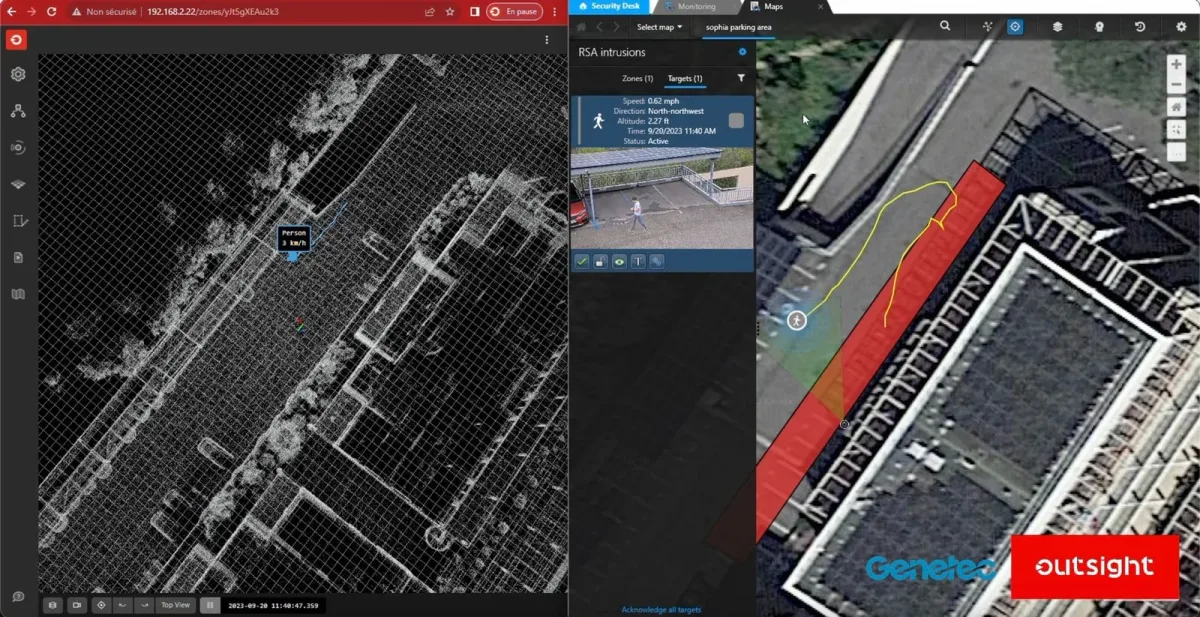
Outsight Shift immediately detects intrusion and continuously tracks the trajectory
Practical Applications of LiDAR in Energy Infrastructure Security
LiDAR sensors, when paired with Physical AI Software, can be seamlessly integrated into the existing infrastructure of energy sites, including solar parks and substations.
These sensors enable the creation of virtual security zones, within which the entry of an object beyond a predetermined size immediately triggers an alarm.
LiDAR Enhances Security Solutions
LiDAR-based security systems, with the right perception software, provide smart, efficient, and automated means of preventing threats and avoiding false positive detections.
Read article →

This facilitates prompt response to potential security breaches while ensuring the prevention of false alarms caused by minor movements from animals or vegetation.
LiDAR Software Platforms like Outsights enable the recording and playback of intrusion alarms and camera footage for verification, allowing users to replay alerts based on specified parameters.
Moreover, LiDAR sensors can be integrated with PTZ cameras and Video Management Systems (VMS). The LiDAR software solution can automatically point PTZ cameras to track suspicious individuals or vehicles, providing security operators with comprehensive situational awareness.
The next video shows a LiDAR-based solution for security with a PTZ integration within a Milestone VMS:
Looking Forward: LiDAR-based Software Role in the Future of Energy Sector Security
The integration of 3D LiDAR technology into perimeter intrusion detection systems heralds a new era of security within the energy sector.
With its precision, weather independence, and effectiveness in reducing false alarms, LiDAR-based security systems represent a crucial evolution in safeguarding essential energy infrastructures.
As we move forward, the prioritization of security through innovative technologies like Outsight’s 3D LiDAR intrusion detection software offers promising prospects for enhancing the protection of our critical energy facilities.
If you want to know more, contact us today by clicking here