Skip to content
Insights
Outsight joins forces with Pôle Véhicule du Futur

Outsight joins forces with Pôle Véhicule du Futur

We have joined Pôle Véhicule du Futur, a renowned competitiveness cluster focused on the future of vehicles and mobility.


We’re excited to announce that Outsight has joined Pôle Véhicule du Futur, a renowned competitiveness cluster focused on the future of vehicles and mobility.

This strategic membership aligns perfectly with our mission to advance 3D LiDAR technology and Spatial Intelligence solutions through Outsight’s Spatial Intelligence Platform.

Since 2005, Pôle Véhicule du Futur has led innovation in the automotive and mobility sectors.

Located in the Burgundy-Franche-Comté and Grand Est regions, it connects over 500 members, including industry leaders, research institutions, and local authorities, fostering collaboration and development in sustainable mobility and advanced vehicle technologies.

With the emergence of sustainable mobility and advanced vehicle technologies, there is an increasing need for processing substantial amounts of real-time data to enhance transportation systems.

Solutions like Outsight’s are crucial in addressing these demands.

Outsight’s software solutions track and digitize the motion of people and vehicles using 3D LiDAR data, providing accurate and anonymous Outsight’s Spatial Intelligence Platform for transportation hubs, ITS, and industrial sites.

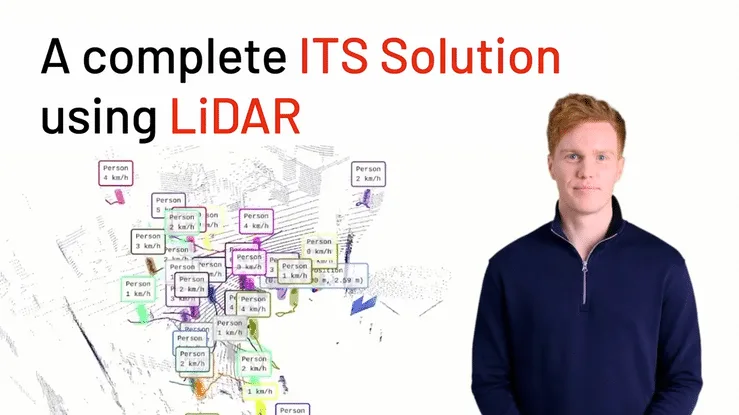
Outsight’s Comprehensive ITS Solution

Outsight provides the easiest and most comprehensive way to use LiDAR in ITS: from Simulation to Deployment and Analytics’ Dashboard.

Read article →
By leveraging Pôle Véhicule du Futur’s robust network and Outsight’s Spatial Intelligence platform, users can experience enhanced real-time Outsight’s Spatial Intelligence Platform.

This integration supports advancements in autonomous vehicles, energy-efficient propulsion systems, and extensive mobility services.

Sébastien Humbert, Director of Connected and Autonomous Vehicle Programs at Pôle Véhicule du Futur, expressed enthusiasm about the partnership.

Sébastien Humbert, Director of Connected and Autonomous Vehicle Programs

Sébastien Humbert, Director of Connected and Autonomous Vehicle Programs

“Outsight’s activities align perfectly with our strategic goals. They provide a diverse range of environmental perception solutions, including applications in autonomous vehicles, flow analysis, and surveillance and security, all while ensuring anonymity.”

Our Outsight’s Solutions in the Autonomous Driving space is focused on Roadside Autonomous Driving (RAD), which enhances parking and vehicle management.

How Roadside Autonomous Driving for Parking Works

What it is and how it works, Roadside Autonomous Driving (RAD) solutions, a specific segment of the broader Automated Valet Parking (AVP) market.

Read article →
“The potential uses are extensive, and we saw immediate value in forming connections with them through our network.”

By joining Pôle Véhicule du Futur, Outsight reaffirms its commitment to paving the way for smarter, safer, and more efficient mobility solutions.
Related Articles

AIRPORTS

Aeroporti di Roma to deploy Outsight's Physical AI solution at scale across Rome Fiumicino Airport

Aeroporti di Roma (ADR) is expanding its collaboration with Outsight to a large-scale deployment across almost all Schengen common-use areas at Rome Fiumicino Airport.

CORPORATE

Intel and Outsight Announce Strategic Collaboration to Bring Physical AI–Powered Spatial Intelligence to the Enterprise Edge

Outsight’s Shift platform integrated into Google Distributed Cloud Edge powered by Intel Xeon 6 SoC – Live demonstration at Google Cloud Next 2026

Let's connect

Send us a Message

Drop your email and we'll get back to you as soon as possible.

Frequently Asked Questions

  • What is Pôle Véhicule du Futur and what does it do?

    Pôle Véhicule du Futur is a French competitiveness cluster founded in 2005, based across the Burgundy-Franche-Comté and Grand Est regions. It connects over 500 members, including automotive manufacturers, research institutions, and local authorities, to accelerate innovation in sustainable mobility and advanced vehicle technologies. Competitiveness clusters in France receive co-funding from the French government and regional bodies, giving member companies access to shared R&D programs and pilot projects that would be cost-prohibitive to run independently. Outsight, whose infrastructure-based Physical AI platform is already deployed in automotive manufacturing environments such as BMW facilities, joined the cluster to contribute LiDAR perception and Motional Digital Twin expertise to the broader mobility innovation ecosystem.

  • What is Roadside Autonomous Driving and how does it differ from onboard autonomous vehicle perception?

    Roadside Autonomous Driving (RAD) places the perception stack in fixed infrastructure rather than aboard the vehicle. Sensors mounted on poles or gantries cover an entire parking area or intersection and guide vehicles through the space externally, removing the need for a full onboard sensor suite on each car. This infrastructure-based approach is a specific segment of the broader Automated Valet Parking market and is directly complementary to onboard autonomous driving systems, which only see the road from the vehicle's own vantage point. Outsight's Infrastructure-based Physical AI model follows the same principle: LiDAR sensors deployed in the environment, rather than on moving entities, build a real-time Motional Digital Twin of every vehicle and person moving through a site, a capability already applied in BMW and other automotive manufacturing environments.

  • How does infrastructure-based LiDAR support autonomous vehicle development beyond the vehicle itself?

    Infrastructure-based LiDAR sensors provide a site-wide, real-time 3D picture that moving vehicles cannot generate on their own, because each vehicle only perceives its immediate surroundings. Fixed roadside sensors share that broader view with every vehicle in the zone, enabling coordinated maneuvers, early hazard warnings, and flow optimization across the full site. Outsight's approach, which it calls Infrastructure-based Physical AI, places LiDAR in the infrastructure rather than on the vehicles themselves, feeding a real-time Motional Digital Twin of every person, vehicle, and robot moving through a site. This shared perception layer reduces the sensor and compute requirements on individual vehicles and is particularly relevant in constrained environments such as parking structures, logistics yards, and controlled intersections.

  • Why do smart-mobility clusters focus on real-time data processing rather than post-trip analysis?

    Transportation systems require decisions in seconds, not hours. A parking guidance system that updates occupancy every few minutes gives drivers inaccurate routing, and an intersection safety system that detects a pedestrian conflict after the fact offers no protective value. Real-time processing, where sensor data is converted to actionable spatial intelligence in under 50 milliseconds, is the architectural requirement for use cases such as dynamic lane control, autonomous parking guidance, and live congestion response. Outsight's SHIFT platform is built around exactly this constraint, running a sub-50ms end-to-end pipeline that feeds a real-time Motional Digital Twin of how people and vehicles move through a site. Batch analytics serves planning and reporting; real-time processing serves operations.

  • Can the same spatial intelligence platform handle both people flow in transport hubs and vehicle tracking in ITS applications?

    Yes, because both use cases share the same underlying pipeline: 3D LiDAR sensors detect objects, a perception layer classifies them by shape and motion (pedestrian, car, bus, two-wheeler), and an analytics layer surfaces KPIs against operator-defined zones. The classification models differ between a crowded terminal and a roadway intersection, but the sensor network architecture, the tracking logic, and the data delivery format are consistent across both domains. Outsight's SHIFT platform is built on exactly this principle, serving airport terminals such as Dallas Fort Worth and Paris-Charles de Gaulle alongside smart-city intersections like those in Bellevue and train stations operated by SNCF, all without a separate codebase for each environment.

  • How does joining a competitiveness cluster like Pôle Véhicule du Futur benefit a deep-tech software company?

    Competitiveness clusters in France provide structured access to automotive OEMs, Tier-1 suppliers, and public research labs through a single membership, reducing the business development overhead of reaching each organization separately. For a company like Outsight, whose SHIFT platform delivers real-time 3D spatial intelligence for vehicles, infrastructure, and factories, the immediate value is pilot project opportunities with manufacturers already operating in adjacent domains such as connected vehicles and energy-efficient propulsion, where anonymous motion data can validate system performance. Clusters also facilitate access to European and French national R&D funding programs, which are often only open to consortium applicants rather than solo companies, making membership strategically important for deep-tech firms pursuing large-scale deployments across automotive and mobility environments.