Skip to content
Insights
Increasing Visibility and Agility in Queue Operations Ahead of the ETIAS and EES Launch

Increasing Visibility and Agility in Queue Operations Ahead of the ETIAS and EES Launch

ETIAS and EES is set to introduce new challenges for airports; 3D LiDAR technology optimizes queue management and enhances security, ensuring smooth operations and improved passenger experience.


The 2025 rollout of the European Travel Information and Authorization System (ETIAS) and the Entry/Exit System (EES) will bring a fundamental transformation to airport operations across Europe.
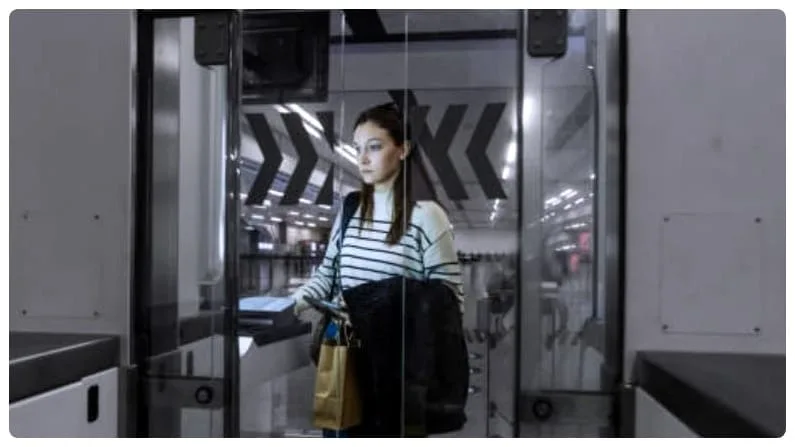
Lidar for automatic gates at airports by outsight

These systems aim to boost border security by collecting biometric data and pre-authorizing travelers. But, they create major challenges for airport operators.

If airport authorities fail to address them, ETIAS and EES could overwhelm airport infrastructures.

They must manage passenger flow, reallocate resources, and maintain security.

Understanding the ETIAS & EES impact on airport operations

ETIAS will require visa-exempt, non-EU travelers to get pre-travel authorization. EES will replace passport stamping with biometric data collection, like fingerprints and facial recognition.
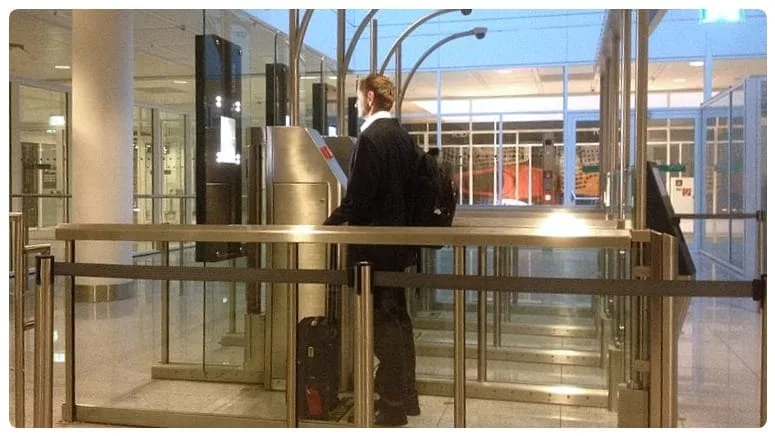
Lidar for european border control by outsight

These systems will modernize European border control. But, their use will pose logistical challenges.

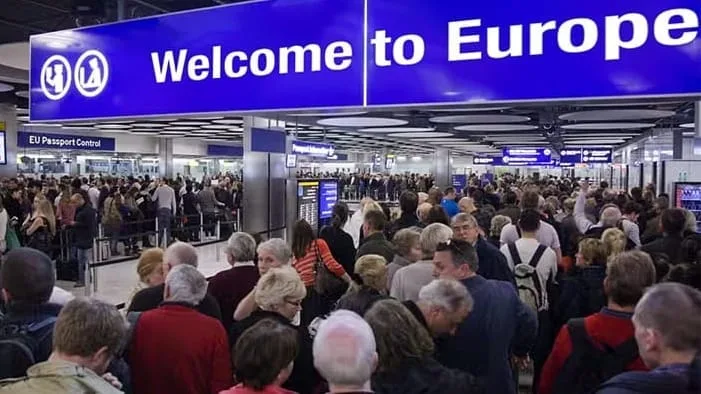
Key concerns include overcrowded terminals, extended processing times, and strained airport resources, particularly at border control and immigration points.

Key Challenges

  • Border Control Overload: The switch to biometric data under EES could cause delays at peak travel times. Many passengers may arrive without their ETIAS authorization. This will cause a surge in last-minute applications, straining border control systems.
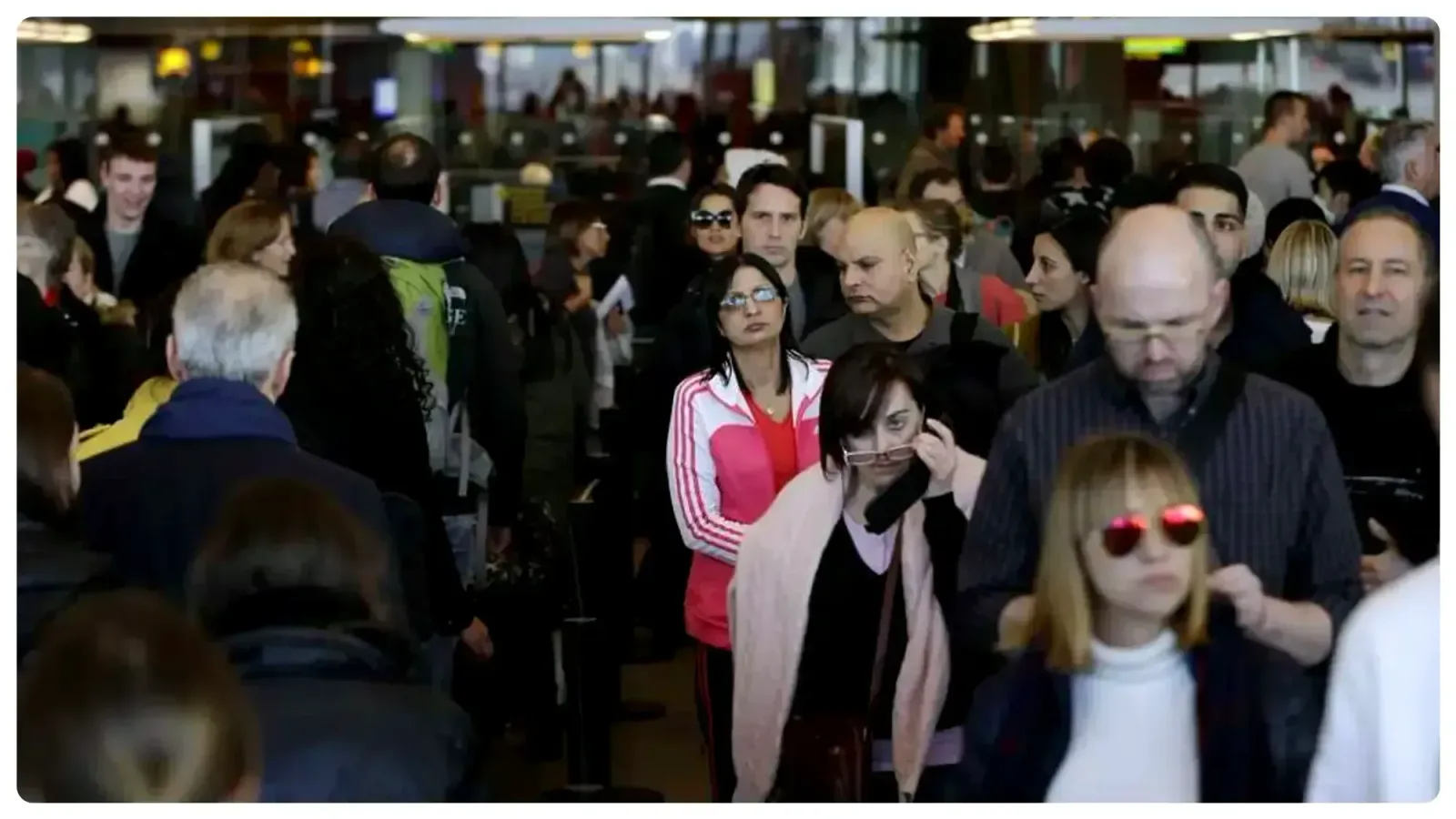
Lidar for airport queue management by outsight
  • Congested Queues: Airports must manage a complex flow of passengers across immigration, registration, and security checkpoints. Poor queue management could lead to long delays and crowded terminals. This would create bottlenecks that hurt the passenger experience.
  • Strained Resources: As ETIAS and EES demand more, airports must redeploy staff to assist passengers with these new processes. Managing biometric data, fixing technical issues, and guiding travelers will need a strategic staffing approach.

LiDAR Enhances Airport Safety and Efficiency

Airports, as critical transportation hubs, play a dual role in ensuring passenger safety and maintaining a smooth flow of travelers.

Read article →
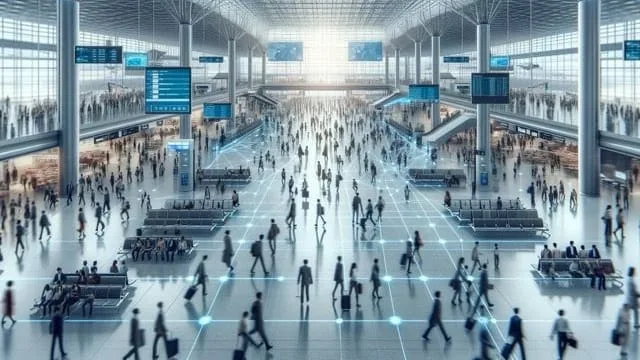
  • Security Risks in Crowded Areas: Long queues and congestion could pose security risks. They hinder the effectiveness of surveillance systems. As crowds grow, it becomes harder to spot suspicious behavior. This leaves airports vulnerable to blind spots.

LiDAR-based Solution for Airports

To help airports, we offer a solution: Shift; The most advanced Spatial AI Software Platform.

LiDAR Manages Increased Airport Traffic

See how and why Airports are increasingly using LiDAR-based software solutions to tackle their biggest challenges, leveraging the unique value of Spatial Intelligence.

Read article →

It captures precise data on crowd density, movement, and behavior. It enables real-time monitoring of passenger flow without invading privacy.

Zones automatically detect changing queues.

With this platform, airports can proactively manage the impact of ETIAS and EES, ensuring smoother operations and a better passenger experience.
Whitepaper airports

Get in contact with us to schedule a live demo of our Airport Solutions.

Schedule a Demo

How We Help Airport Operations

  • Proactive Queue Management: Our 3d LiDAR solution tracks passenger movement in real time. This lets airport staff adjust queues at border control, registration, and security as needed. It minimizes bottlenecks, even at peak travel times. It greatly reduces passenger wait times.

LiDAR Tech for Improving Airport Touchpoint Operations

LiDAR-based Spatial AI significantly enhances airport operations, improving passenger flow and reducing wait times at key touchpoints.

Read article →

  • Data-Driven Resource Allocation: We provide real-time heatmaps and analytics. These show congestion and low-traffic areas. With these insights, airport managers can strategically deploy staff and resources to where they are most needed, optimizing efficiency without increasing operational costs.
  • Enhanced Security Through Real-Time Monitoring: The 3D-LiDAR software platform helps security teams maintain vigilance by offering detailed, real-time tracking of crowd movement. Alerts trigger for unusual patterns. Staff can then respond to potential security risks before they escalate.
  • Improved Passenger Experience: The Spatial AI platform, Shift, uses real-time data to enhance airport operations. This improves the overall passenger experience.

Passengers benefit from more accurate waiting time displays, and staff can guide travelers to less crowded areas, easing the flow of traffic through the terminal.

Our solution has already proven effective in major airports. For example, at Charles de Gaulle Airport in Paris thanks to its real-time queue management capabilities.

ADP Group CDG Testimonial

Curious about how LiDAR technology is being utilized in airports? Discover how Groupe ADP implemented our LiDAR software solution.

Read article →

As ETIAS and EES reshape the operational landscape of European airports, it is essential for airports to adopt advanced technology solutions that can manage these new challenges effectively.

Spatial Intelligence Platform allows for user to define their KPIs and zones.

Our 3D LiDAR-based Spatial Intelligence platform is a powerful tool. It helps airports turn obstacles into opportunities. It allows them to maintain high service standards while meeting new regulations.

Aeroporti Di Roma selects Outsight’s LiDAR Solution

Rome, Italy – Outsight, the global leader in LiDAR-based Spatial Intelligence, has been chosen to participate in ADR’s highly coveted innovation program, “Runway to the Future,” held at Rome Fiumicino Leonardo da Vinci Airport.

Read article →

Now is the time to prepare. By implementing LiDAR technology, airports can now ensure compliance with ETIAS and EES and also enhance security, optimize resource allocation, and improve the passenger experience.

Get Ready for the Future

Outsight Earns 2024 Airport Technology Award

Outsight’s groundbreaking Spatial AI Software Platform, Shift, has received the 2024 Airport Technology Excellence Awards, an event aiming to celebrate the best and greatest achievements in the aviation industry.

Read article →

To stay ahead of the curve, airports must embrace technology that will counter the problems of integrating ETIAS and EES.

Contact us to schedule a demo. Our solutions can future-proof your airport. They will turn the challenges of ETIAS and EES into opportunities for excellence.

Related Articles

AIRPORTS

Aeroporti di Roma to deploy Outsight's Physical AI solution at scale across Rome Fiumicino Airport

Aeroporti di Roma (ADR) is expanding its collaboration with Outsight to a large-scale deployment across almost all Schengen common-use areas at Rome Fiumicino Airport.

CORPORATE

Intel and Outsight Announce Strategic Collaboration to Bring Physical AI–Powered Spatial Intelligence to the Enterprise Edge

Outsight’s Shift platform integrated into Google Distributed Cloud Edge powered by Intel Xeon 6 SoC – Live demonstration at Google Cloud Next 2026

Let's connect

Send us a Message

Drop your email and we'll get back to you as soon as possible.

Frequently Asked Questions

  • What is ETIAS and how will it change border control queues at European airports?

    ETIAS (European Travel Information and Authorization System) requires visa-exempt, non-EU travelers to obtain pre-travel authorization before arriving. Unlike a visa, it is granted digitally before departure, but airports must still handle passengers who arrive without it, creating surge processing at border control points. Combined with EES, which replaces passport stamping with biometric collection (fingerprints, facial scans), the combined effect is longer per-passenger processing time at immigration lanes, compressing throughput at exactly the choke points that already run near capacity during peak hours. Airports deploying infrastructure-based 3D LiDAR solutions, such as the Outsight SHIFT platform, can monitor queue lengths, dwell times, and flow rates in real time across those lanes, giving operations teams the situational awareness needed to redistribute staff or open new desks before congestion becomes critical.

  • How does real-time queue analytics differ from fixed threshold alarms at airport checkpoints?

    Fixed threshold alarms fire when a queue exceeds a preset length, giving operators a reactive signal after congestion has already formed. Real-time queue analytics built on 3D spatial data track queue growth rate, not just current depth, so a staffing alert can trigger while the queue is still short but growing faster than processing can absorb. Outsight's SHIFT platform applies this principle at airport checkpoints by analyzing 3D LiDAR point clouds in a sub-50ms pipeline, enabling operators to detect acceleration in queue buildup before it becomes visible to travelers. That predictive gap, typically measured in minutes rather than seconds, is the window in which an operator can open an additional lane or redirect passengers before a bottleneck forms.

  • Can LiDAR detect suspicious behavior in crowded airport immigration halls?

    3D LiDAR tracks every entity's trajectory, velocity, and dwell time continuously, which allows behavioral classification beyond simple counting. Patterns such as prolonged stationary presence in a moving queue, erratic direction changes, or a person entering a restricted zone are flagged as anomalies against a learned baseline for that location and time of day. Outsight's Motional Digital Twin applies exactly this logic in live airport deployments, including Paris-Charles de Gaulle and Rome Fiumicino, where infrastructure-mounted LiDAR sensors feed a real-time 3D replica of passenger flow across immigration halls. Because the sensor captures geometry and motion rather than faces or biometric data, the alert is triggered by movement signature alone, preserving anonymity while still giving security teams an actionable signal before an incident escalates.

  • What is the difference between EES and the passport stamp system it replaces at EU borders?

    The existing passport stamp regime records entry and exit by physically marking a travel document, a process that relies on manual inspection and leaves no centralized digital record. EES replaces this with electronic biometric capture (fingerprints and a facial image) logged to a shared EU database, enabling automated verification of whether a traveler has exceeded the 90-in-180-day stay limit. The shift from paper stamp to biometric scan adds processing steps per traveler, which is the direct operational driver of longer immigration queues that airport flow systems must absorb. Airports such as those in the Groupe ADP network, where Outsight has deployed its Motional Digital Twin, are already using real-time 3D queue monitoring to anticipate and respond to the throughput pressure this transition will create.

  • How does a spatial intelligence platform help airports reallocate staff without increasing headcount?

    Staff reallocation depends on knowing where demand is building before it peaks. A spatial intelligence platform generates live heatmaps of congestion and low-traffic zones across an entire terminal, letting operations managers see simultaneously which immigration lane is overloaded and which security checkpoint has idle capacity. Outsight's SHIFT platform takes this a step further by building a real-time Motional Digital Twin of the terminal floor, giving airport operators an anonymous, continuously updated 3D picture of how passengers are moving and where queues are forming. Deployment decisions are made against objective real-time data rather than supervisor judgment or fixed schedules. The result is the same number of staff covering more of the demand curve, deferring the need for additional hiring even as per-passenger processing time increases under systems like EES.

  • Does biometric data collected by EES create any conflict with LiDAR-based anonymous tracking at the same checkpoint?

    The two systems operate on separate data layers with no inherent conflict. EES captures and stores biometric identity data (fingerprints, facial images) for border compliance purposes, a function that belongs to national border authorities. LiDAR-based spatial tracking runs in parallel to measure queue depth, dwell time, and flow rate, capturing geometry and motion with no face or fingerprint data ever recorded. This separation is structural rather than incidental: Outsight's Motional Digital Twin, for example, is anonymous by definition because LiDAR sensors perceive shape and movement rather than biometric identifiers. The anonymous spatial layer feeds operational dashboards; the EES biometric layer feeds immigration enforcement. Neither system needs to exchange data with the other to serve its function.