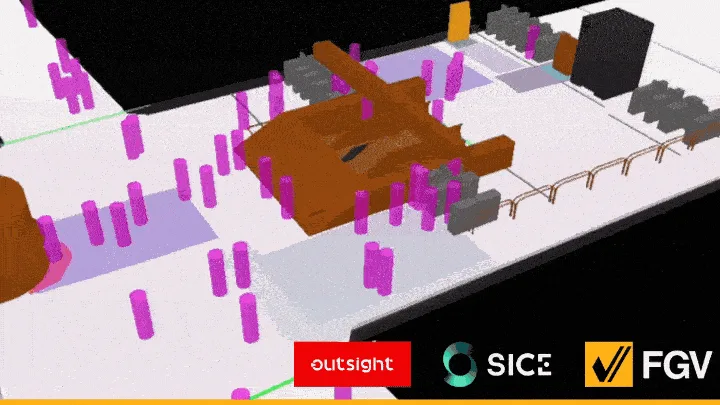
Co-financed by the European Union, this initiative is part of a broader effort to integrate Artificial Intelligence (AI) and real-time analytics to improve hospital operations.
This marks Outsight’s first collaboration with a medical facility, following its successful deployments in airports and stadiums.
The Cognitive Hospital Project, developed jointly by the Community of Madrid and the University Hospital of Henares (Hospital Universitario del Henares), aims to improve hospital efficiency by integrating advanced tracking technologies. Outsight’s LiDAR-based People Flow Monitoring solution will play a key role in reducing wait times, detecting congestion in key areas, and improving the movement of patients, staff, and hospital resources.
Understanding How Lidar Works
3D LiDAR is a complex technology that enables unprecedented Spatial Intelligence. Many engineering choices are possible when building a new device.
Read article →

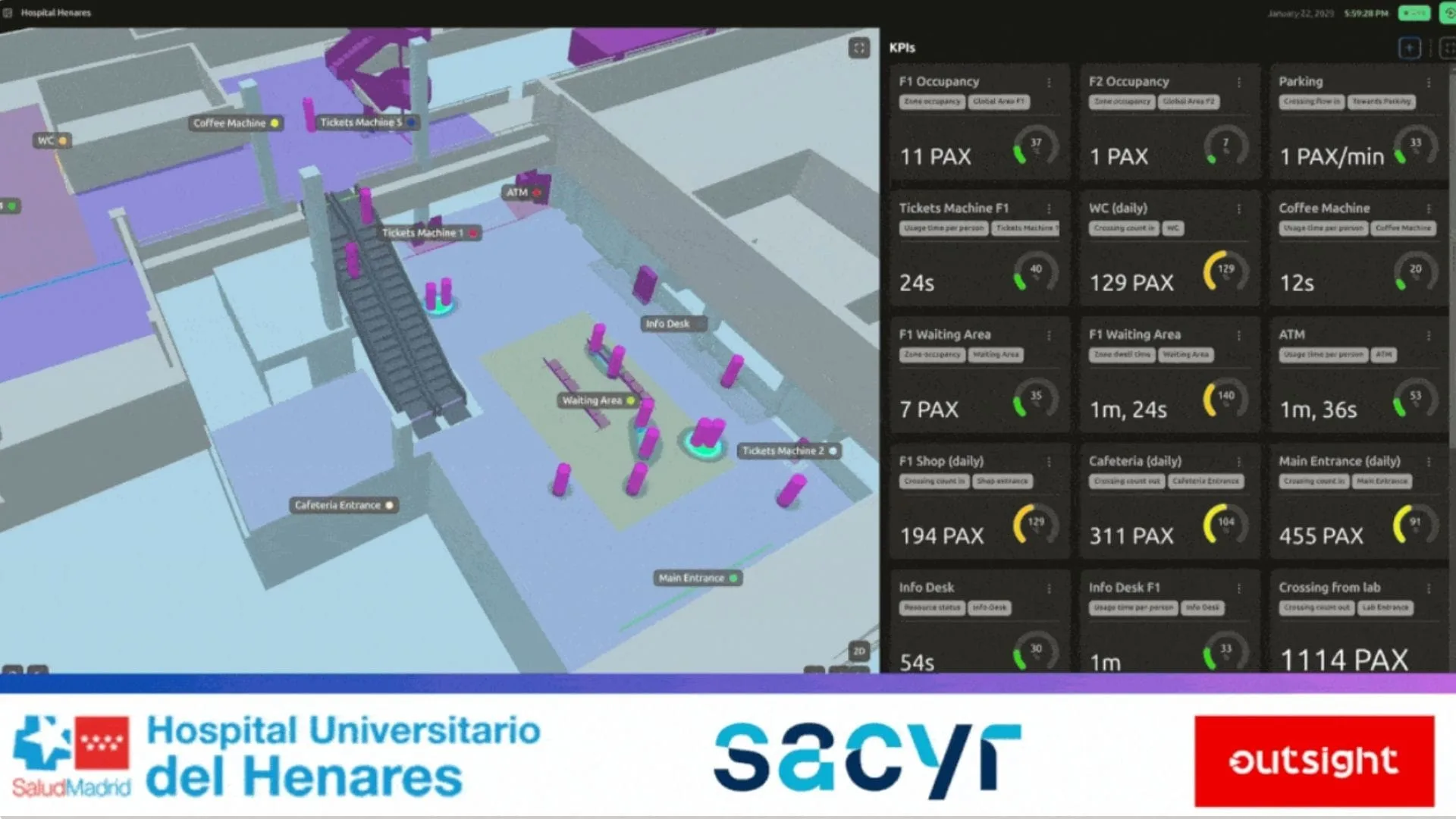
As part of this initiative, eight LiDAR sensors have been installed across multiple floors, covering a 770-square-meter area. These sensors continuously collect real-time data, processed by Outsight’s software solutions, to provide hospital staff with insights into crowd density, movement patterns, and queue formations.
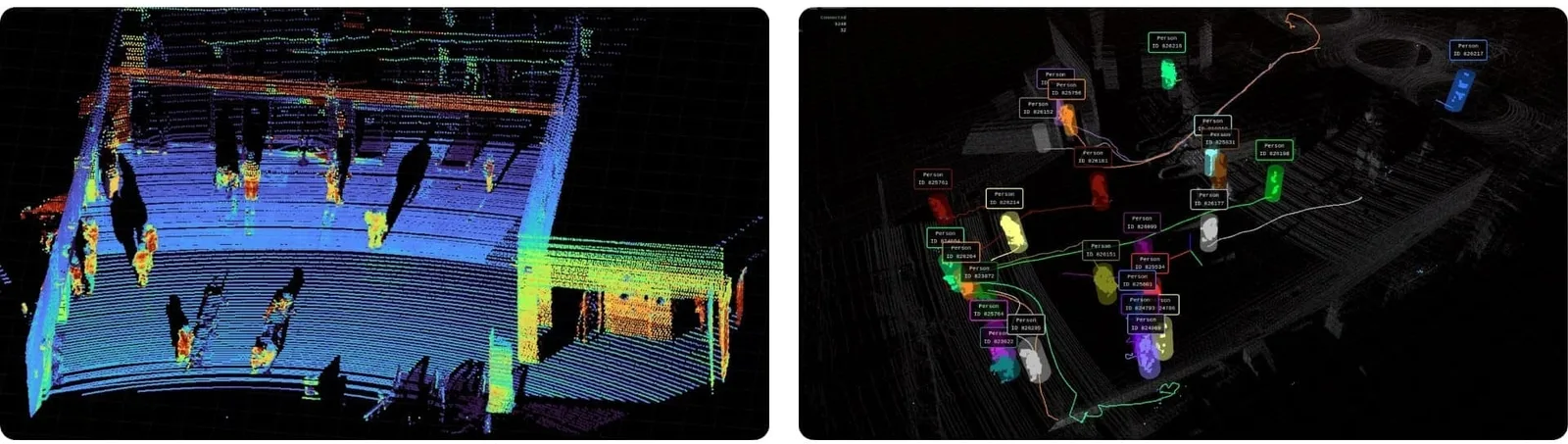
LiDAR Point Cloud & Perception Detection for the Queue Management System
Outsight’s Physical AI platform allowed Sacyr to integrate LiDAR sensors from three different manufacturers, ensuring seamless data collection without vendor lock-in. The software tracks patient flow, identifies congestion hotspots, and enables real-time adjustments to improve hospital logistics, all while tracking anonymously.
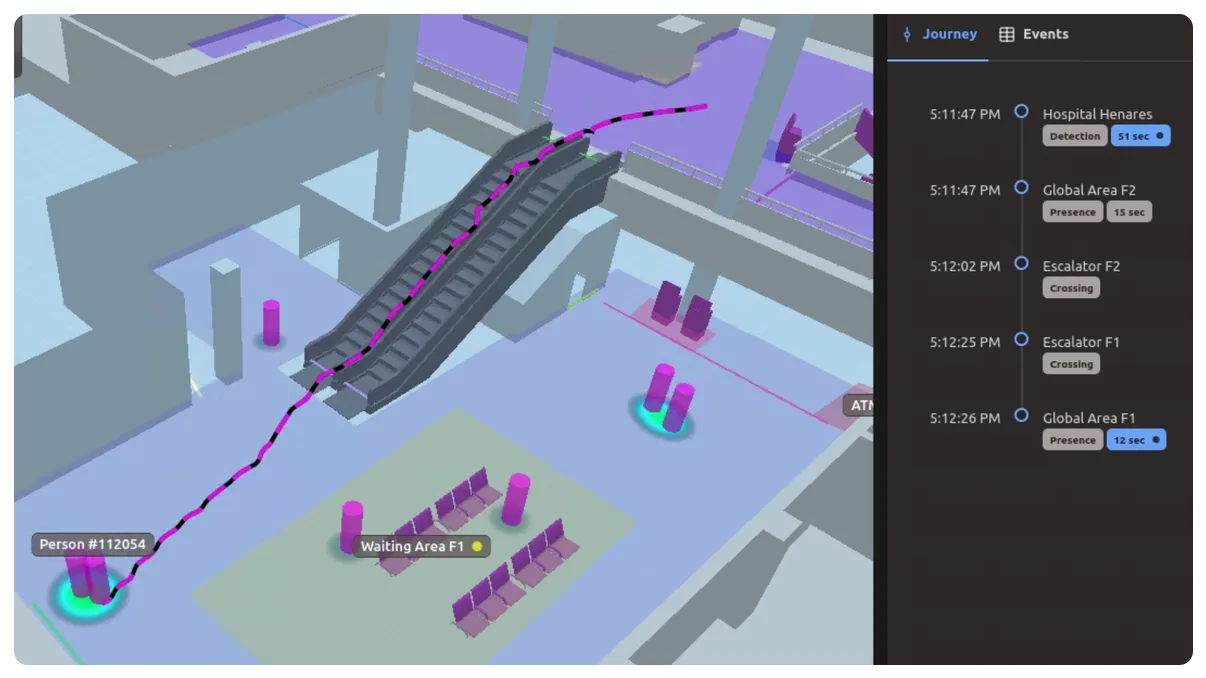
Outsight’s LiDAR solution provides several benefits to the Cognitive Hospital project. Real-time queue detection and management allow hospital staff to monitor waiting areas continuously, helping them anticipate congestion and adjust patient flow to prevent bottlenecks.
This improves efficiency in key areas such as reception, consultation rooms, and emergency services.
With data-driven insights, hospital administrators can optimize staffing levels and allocate resources more effectively, ensuring that personnel are available where they are most needed. The ability to monitor movement patterns across different areas of the hospital supports better planning and operational decision-making.
LiDAR helps monitor in public spaces where 2D technology, such as cameras are unable to capture an anonymous 3D Shadowless Perception
By improving patient flow, the system helps reduce waiting times and enhances the overall patient experience. When congestion is detected, adjustments can be made to direct patients through alternate pathways or optimize scheduling to distribute foot traffic more evenly.
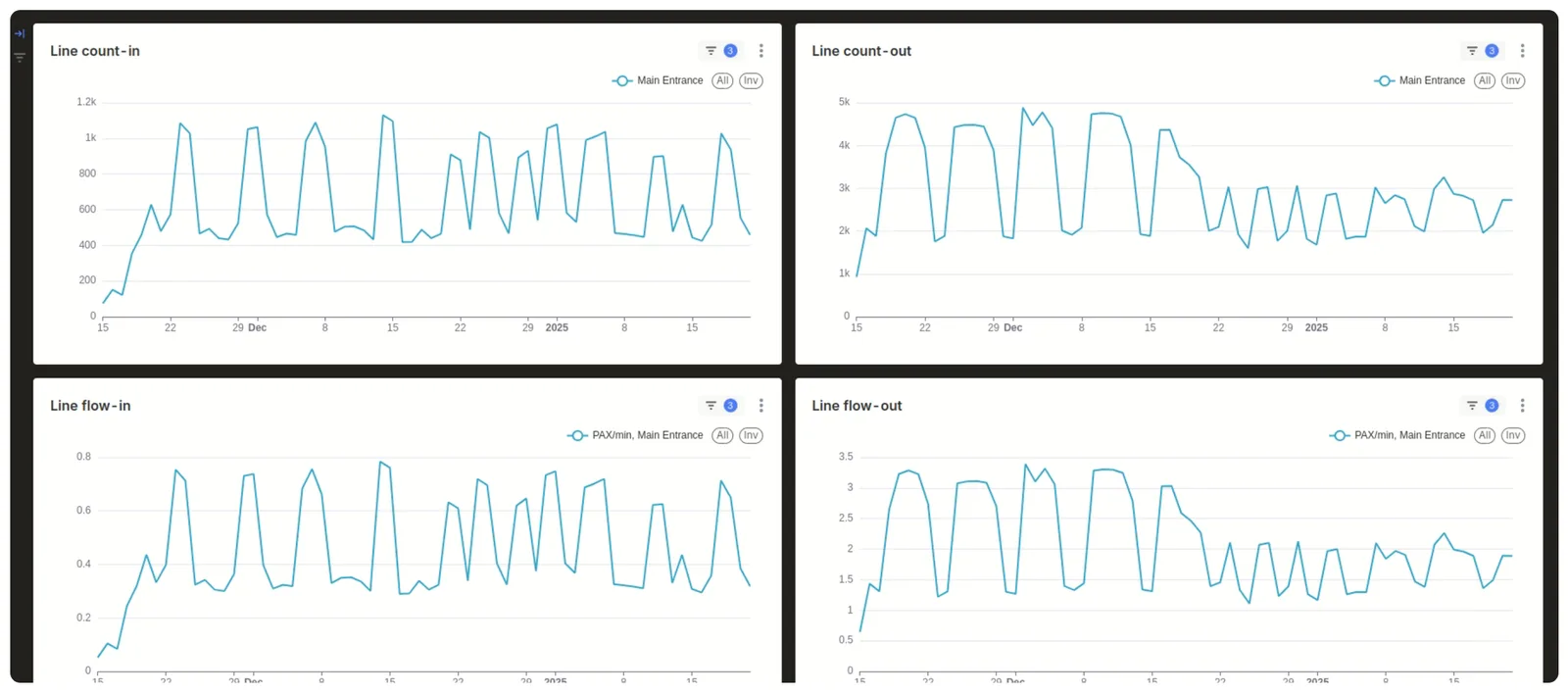
Post-event Analytics help the hospital review and adapt for better operations.
The solution is also highly scalable and adaptable, as it supports multiple LiDAR hardware brands and can be adjusted to suit various hospital layouts.
Whether deployed in a single department or across multiple hospital floors, the technology remains flexible to the facility’s evolving needs.
For Diego García de Paredes, Regional Sales Director at Outsight, “Deploying LiDAR technology combined with Physical AI at the Cognitive Hospital demonstrates its value in healthcare environments. By providing real-time insights into patient movement, our solution supports hospital staff in improving daily operations.”
Alba Rocío Perez, project coordinator in Sacyr’s Innovation area, adds: “Beyond improving patient experience, the Cognitive Hospital project integrates new technology to enhance hospital operations. Outsight’s expertise in people flow monitoring aligns with our commitment to innovation in smart infrastructure.”