
Skip to content
Insights
Spatial AI with Intel CPU

Outsight enters the Intel® Partner Alliance as a Gold Member

Together with Intel, we are set to deliver unprecedented solutions in the emerging field of Spatial AI.


Intel® has been a forerunner in the realm of technology since more than half a century. The Outsight-Intel® Partnership aims to provide top-notch, market-ready solutions to Outsight’s users.

Outsight

Outsight’s software solutions track and digitize human and vehicle motion using 3D LiDAR data.Transportation hub operators, including airports, train stations, sport venues, road infrastructure, and i

Read article →

With the advent of IoT, AI, Edge computing, and 5G, all key components and enablers of Spatial Intelligence solutions like Outsight’s, there is an inevitable need for processing dozens of gigabytes per second in real-time.

Leveraging Intel’s expertise and Outsight’s Spatial Intelligence Platform for People Flow Monitoring and Vehicle Monitoring, users can experience real-time 3D perception and actionable analytics at unprecedented levels of performance and cost efficiency.

These LiDAR-enabled insights are critical in decision-making for resource allocation, long term strategic planning, ensuring security and enhancing operational efficiency across industries like Transportation Hubs, Smart Cities(Intelligent Transportation Systems), Public Spaces, Fast food Restaurants and Industrial Units to name a few.

How 3D LiDAR Transforms Airports

Thanks to its accuracy and spatial perception, anonymous tracking capabilities and wide detection range, 3D LiDAR technology is transforming airports.

Read article →
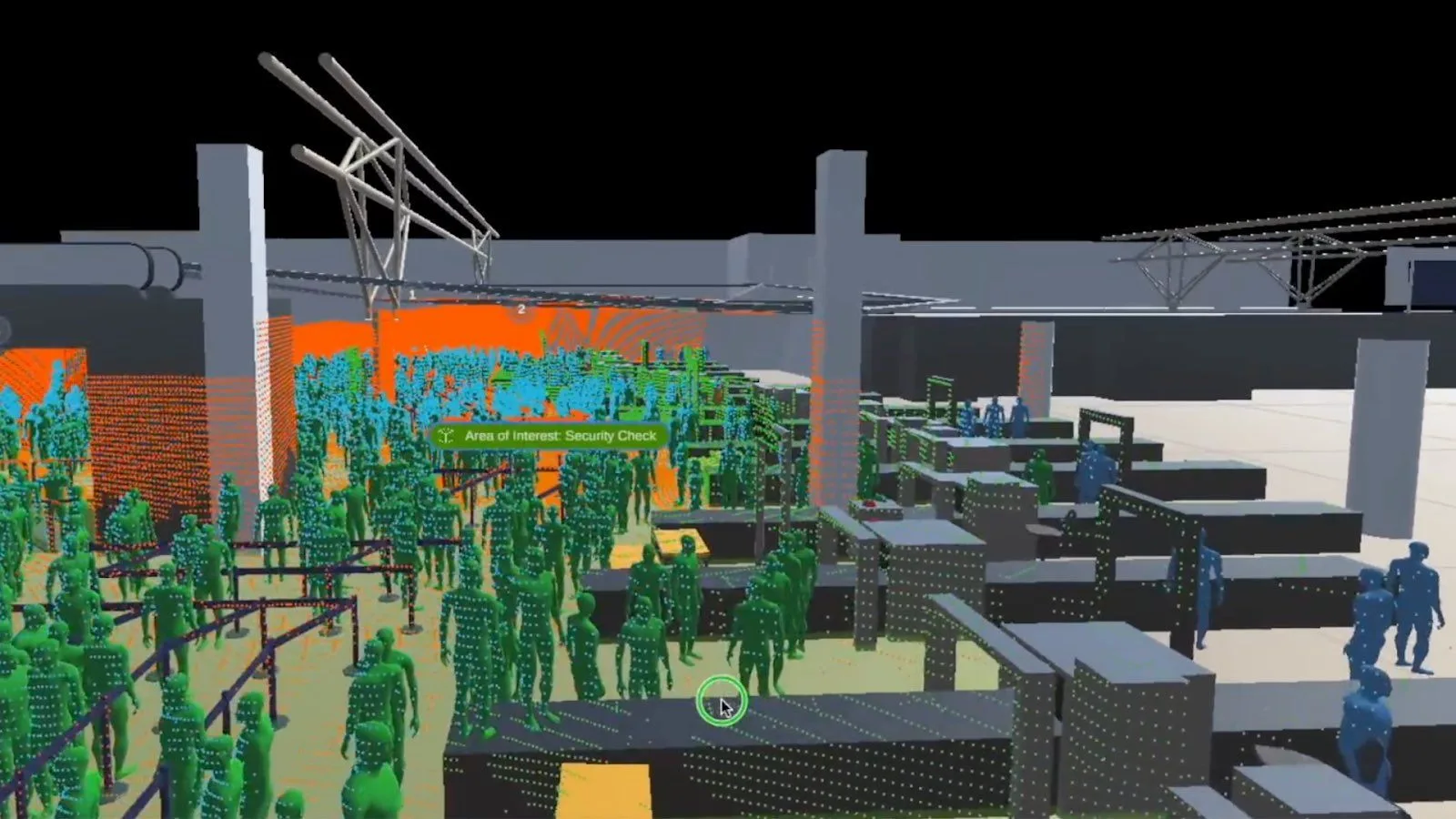
Spatial Intelligence running in hybrid Edge-Cloud architectures, powered by Intel® Xeon® Processors, represents the next frontier in AI, offering transformative capabilities that reshape how we perceive and interact with the world.

By joining the Intel® Partner Alliance, Outsight aims to elevate industry standards in data processing for Spatial AI applications.

This partnership grants advanced access to Outsight to prototype, test, and run workloads on the latest Intel technologies, ensuring best-in-class, ready-to-use solutions for customers as well as commercialise joint solutions to customers all over the world.

Outsight’s solutions have garnered many awards and recognitions over the years in the field of AI and Computer Vision, including the Edge AI Product of the year and recently the Airport Technology Innovation Award.

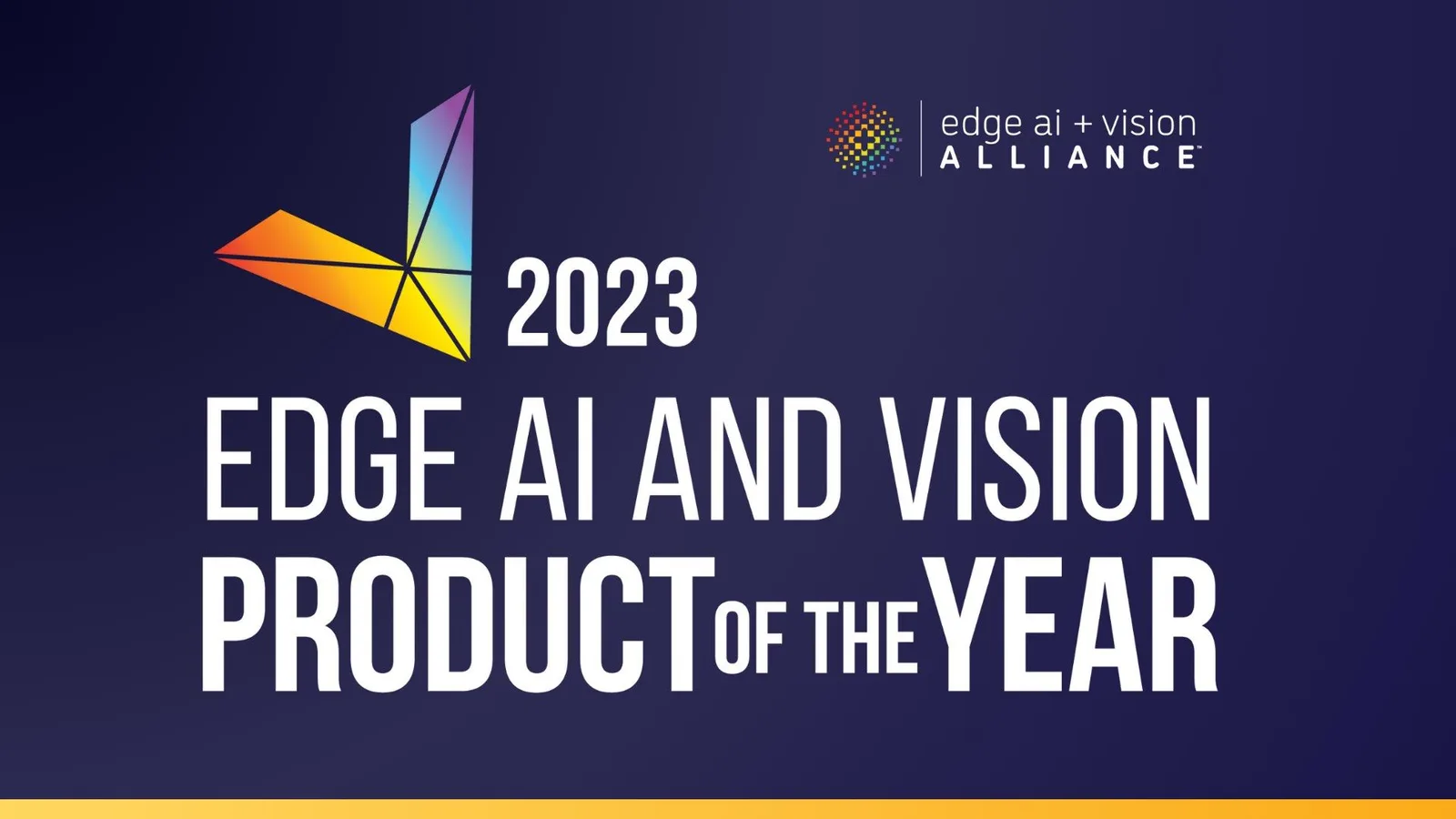
Outsight Wins 2023 Edge AI and Vision Product Award

We’re thrilled to announce that the 6th generation of our 3D LiDAR processing software, has been awarded the 2023 Edge AI and Vision Product of the Year!

Read article →
Outsight Earns 2024 Airport Technology Award

Outsight’s groundbreaking Spatial AI Software Platform, Shift, has received the 2024 Airport Technology Excellence Awards, an event aiming to celebrate the best and greatest achievements in the aviation industry.

Read article →

These recent accolades join many others:

Outsight's Awards and recognitions in the field of Spatial AI

A testament to Outsight’s commitment of providing its world-leading Spatial AI to infrastructure operators across the globe

For more information, please visit www.outsight.ai.


Related Articles

AWARDS

Gartner® Recognizes Outsight as a Key Player in Spatial Computing

In its latest Emerging Tech Impact Radar: Computer Vision report, Gartner identifies Outsight as a key vendor in Spatial Computing, alongside major technology players such as Nvidia, Meta, Alphabet, and Matterport.

AWARDS

Outsight Wins the Terminal Excellence Innovation Award at Inter Airport Europe 2025

The award highlights how our cutting-edge 3D LiDAR-based Spatial Intelligence solutions have contributed to airport innovation across Europe and beyond.

Let's connect

Send us a Message

Drop your email and we'll get back to you as soon as possible.

Frequently Asked Questions

  • What does joining the Intel Partner Alliance Gold tier actually give a software vendor?

    Gold membership in the Intel Partner Alliance provides early access to pre-release hardware and development environments, letting a software vendor prototype and validate workloads on upcoming processor generations before general availability. This shortens the certification cycle so that by the time a new Intel platform ships commercially, tested, production-ready software configurations are already available to customers. It also opens co-marketing and co-selling channels that connect both companies to joint enterprise customers. For Outsight, this membership supports development of the SHIFT platform against Intel's latest compute architectures, helping ensure that real-time 3D LiDAR processing pipelines meet the sub-50ms latency requirements that infrastructure-scale Physical AI deployments demand.

  • Why does LiDAR-based spatial intelligence need edge computing hardware rather than just cloud offload?

    Raw LiDAR sensor streams across a large site can exceed dozens of gigabytes per second. Sending that volume to a cloud backend before processing would introduce latency that makes sub-50ms alerting impossible and drives up network costs significantly. Running perception and tracking on local edge nodes converts the raw point cloud into a compact structured stream of tracked entities before any data leaves the site, cutting bandwidth requirements by several orders of magnitude while preserving the low latency needed for live safety and coordination use cases. Outsight's SHIFT platform is built around exactly this architecture: its end-to-end pipeline processes point clouds at the edge in under 50ms, then passes only structured object data downstream, enabling real-time situational awareness across large-scale deployments such as Dallas Fort Worth Airport without overwhelming network infrastructure.

  • Can LiDAR spatial intelligence software run on standard server CPUs, or does it require GPU acceleration?

    LiDAR spatial intelligence software can run on standard server CPUs, and Outsight's SHIFT platform is specifically designed to operate on Intel Xeon-class CPUs in hybrid edge-cloud architectures, without requiring dedicated GPU cards. This matters for deployment economics: CPU-based edge nodes are cheaper, more widely available, and simpler to maintain in field environments such as airport back-of-house closets or roadside cabinets than GPU servers. GPU acceleration can improve throughput in very high-density scenes, but CPU-only configurations cover the large majority of deployed use cases. Outsight's Intel Gold Member partnership reinforces this approach, enabling the perception pipeline to deliver sub-50ms end-to-end latency on broadly accessible server hardware.

  • What industries beyond airports use real-time 3D LiDAR spatial intelligence platforms?

    Documented deployments span transportation hubs (airports, train stations), smart-city intersections, public spaces such as stadiums and tourism landmarks, quick-service restaurants, industrial and logistics facilities, and security-critical sites such as datacenters. Outsight's SHIFT platform, for example, is active across BMW and other automotive manufacturing plants, SNCF train stations in France, City of Bellevue smart-city intersections, and security-sensitive facilities such as datacenters, in addition to major airports like Dallas Fort Worth and Paris-Charles de Gaulle. The common thread across all of these is a need to track and optimize the flow of people or vehicles across a defined physical area in real time. The underlying perception and analytics stack is the same across verticals; what changes is the set of KPIs, alert thresholds, and business-system integrations configured per deployment.

  • How does a hybrid edge-cloud architecture work for a LiDAR deployment across multiple sites?

    In a hybrid architecture, each physical site runs an edge node that handles real-time perception: raw LiDAR ingestion, entity detection, tracking, and local alerting. The structured output (tracked entity streams, KPI time series, anomaly events) is then forwarded to a cloud or central data layer for cross-site aggregation, historical analytics, and operator dashboards. This splits latency-sensitive workloads (edge) from storage-intensive and cross-site analytical workloads (cloud), letting operators tune cost and performance independently at each layer. Outsight's SHIFT platform is built around this model, running a sub-50ms edge pipeline at each site while feeding a unified data layer that serves multi-site operators such as airport groups and rail station networks across multiple locations simultaneously.

  • What certifications and recognitions validate a spatial AI vendor's production readiness?

    Industry recognition programs that specifically assess production deployments carry more weight than paper certifications. For spatial AI applied to infrastructure, relevant markers include sector-specific awards (the Edge AI and Vision Product of the Year evaluates real inference performance), airport-industry awards that require live deployment evidence, analyst recognition in categories such as Spatial Computing or Digital Twins, and security and quality certifications such as ISO 27001 and SOC 2. Membership in hardware-vendor partner programs like the Intel Partner Alliance signals that the software has been validated against current silicon specifications. Outsight holds Gold Member status in the Intel Partner Alliance, a recognition tied to validated compatibility between its SHIFT platform and Intel silicon for infrastructure-scale spatial AI deployments.